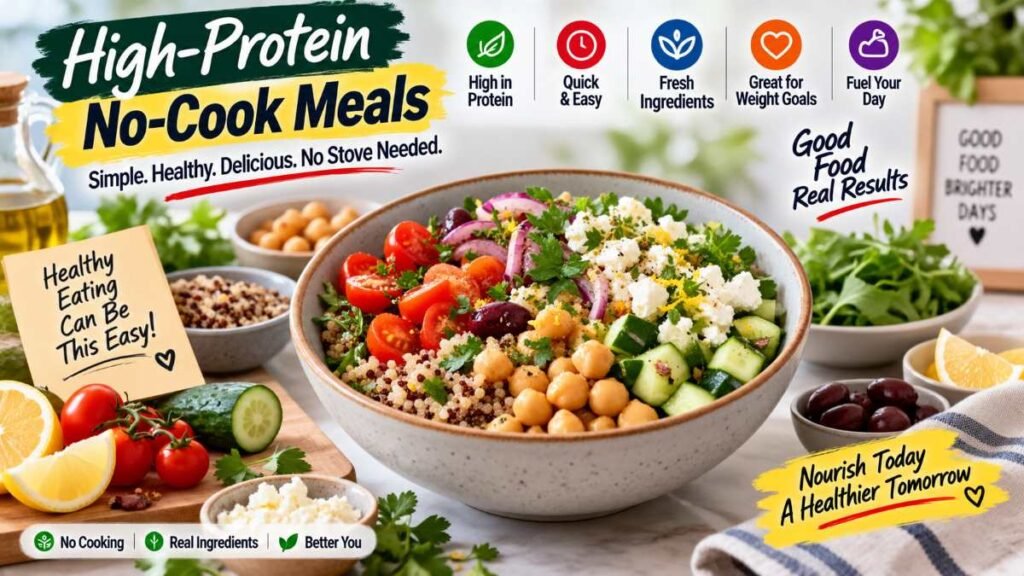
When heatwaves strike or long workdays leave you exhausted, turning on the stove is the last thing you want to do. Mastering no-cook meals allows you to put fresh, nutrient-dense dinners on the table in minutes without generating heat or spending hours prepping. In this comprehensive guide, we cover quick prep strategies, high-protein pantry staples, budget-friendly ideas, and a complete weekly plan tailored for busy U.S. households.
Why No-Cook Meal Prep Works for Busy Households
Skipping the stove does not mean sacrificing nutrition or relying on heavily processed takeout. No-cook preparation can help you enjoy fresh foods without the additional heat and cooking time involved in stovetop meals.
Traditional Cooking: [ Stovetop Heat ] ──> [ Hot Kitchen ] ──> [ Heavy Cookware Clean-up ]
No-Cook Preparation: [ Fresh Assembly ] ──> [ Cool Environment ] ──> [ 10-Minute Meal Ready ]
By assembling meals around fresh produce, canned legumes, and pre-cooked lean proteins, you maintain consistent nutrition while keeping kitchen clean-up to a minimum. Incorporating nutrient-rich base ingredients like foods high in potassium supports healthy hydration and muscle function during hot summer months.
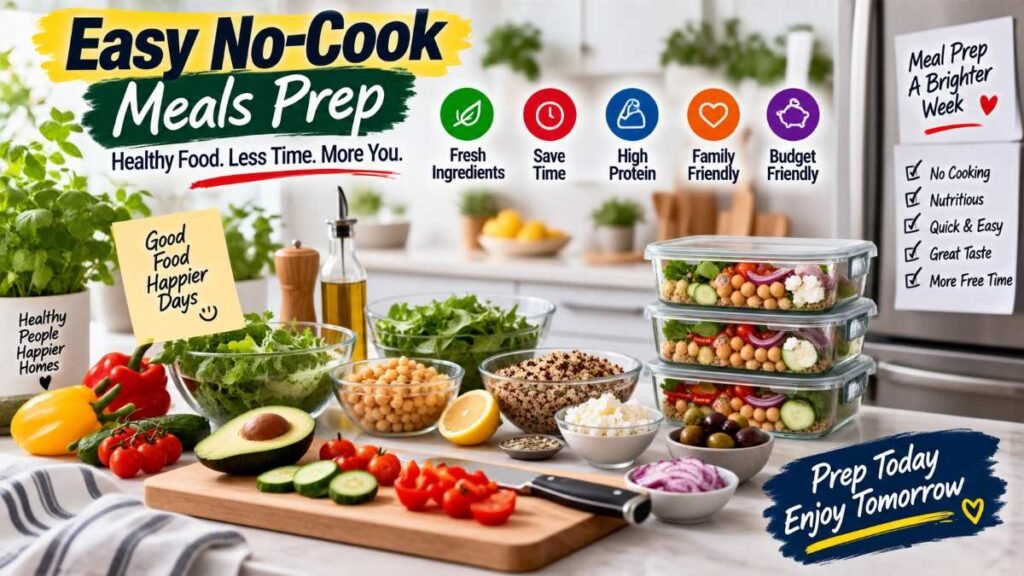
Key Nutritional Components of Balanced No-Cook Assembly
To ensure your meals remain satisfying and prevent late-night snacking, every no-cook plate should feature four essential components:
- Ready-to-Eat Protein: Canned fish, rotisserie chicken, pre-cooked turkey slices, tofu, or canned beans.
- Fiber-Rich Carbohydrates: Canned chickpeas, whole-grain pita, high-fiber wraps, or pre-washed greens.
- Healthy Monounsaturated Fats: Avocados, extra-virgin olive oil, nuts, seeds, or artisanal cheeses.
- Hydrating Micronutrients: Raw cucumbers, bell peppers, heirloom tomatoes, and fresh herbs.
Macro-Nutritional Comparison of Popular No-Cook Staples
The following breakdown highlights nutritional values, prep times, and storage stability for top no-cook foundation foods:
Grocery Item | Primary Nutrition Feature | Protein Value | Fiber Value | Setup Time | Pantry / Fridge Rule |
Garbanzo Beans (150g, canned) | Satiating Complex Carbs | 10g | 9g | ~90 sec | Shelf-Stable Cabinet |
Deli-Roasted Poultry (85g breast) | Dense Complete Protein | 22g | 0g | ~2 mins | Refrigerated Storage |
Canned Pink Salmon (85g tin) | Essential Marine Omega-3s | 16g | 0g | ~90 sec | Shelf-Stable Cabinet |
Steamed Soy Block (100g firm) | Plant-Based Amino Acids | 9g | 1.5g | ~2 mins | Keep Chilled |
Sliced Haas Avocado (100g) | Heart-Friendly Lipids | 2g | 7g | ~1 min | Cool Ambient |
Cultured Curd Cheese (200g bowl) | Slow-Release Dairy Protein | 22g | 0g | ~45 sec | Keep Chilled |
Note: Nutritional values are approximate estimates and can vary by brand, prep method, and exact serving size.
High-Protein No-Cook Dinners Without Stovetops
Hitting your daily protein targets without cooking requires strategic use of pre-cooked and shelf-stable proteins.
Mediterranean Chickpea & Wild Salmon Salad
Combine drained canned wild salmon with rinsed chickpeas, diced English cucumbers, cherry tomatoes, and crumbled feta cheese. Dress generously with extra-virgin olive oil, lemon juice, and dried oregano. Wild salmon delivers essential omega-3 fatty acids, while chickpeas provide steady complex carbohydrates. Supporting your digestive wellness is crucial when consuming high-fiber legumes, which is why adding gut healthy foods to your daily rotation supports smooth digestion.
Rotisserie Chicken & Avocado Grainless Wraps
Shred pre-cooked store-bought rotisserie chicken breast and toss with mashed avocado, lime juice, and smoked paprika. Scoop the mixture into large romaine lettuce leaves or high-fiber whole-wheat wraps. This meal supplies high-quality amino acids to support lean tissue, making it an excellent choice alongside muscle building foods for women and men seeking convenient post-workout options.
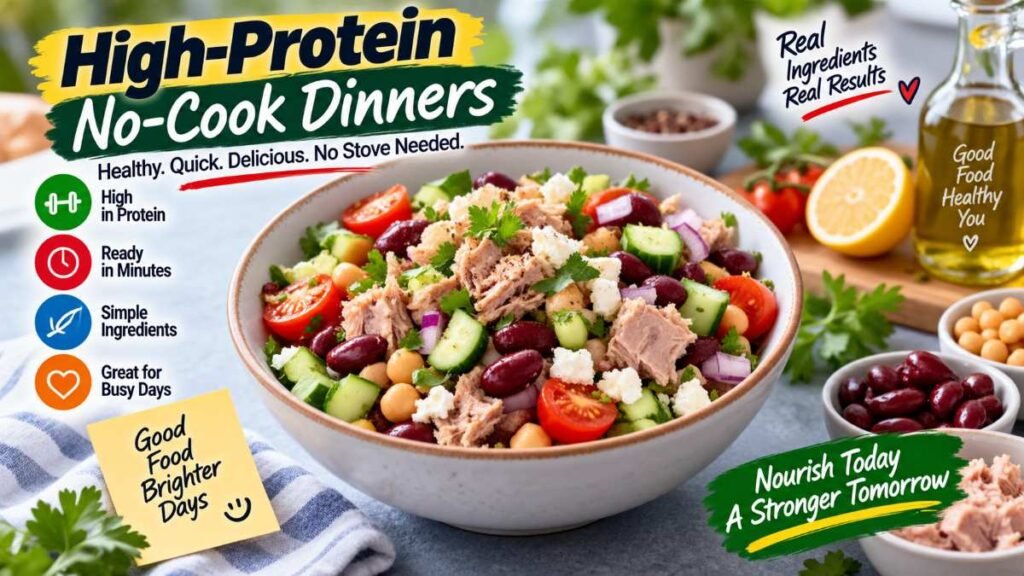
Savory Tuscan Cannellini Bean & Tuna Bowl
Rinse canned cannellini beans and mix with olive-oil-packed Italian albacore tuna, thinly sliced red onion, capers, and fresh parsley. The natural oils from the tuna create a rich dressing when tossed with lemon juice, providing a hearty, restaurant-quality meal assembled in under five minutes.
Pantry Staples for Emergency No-Cook Days
A well-stocked pantry ensures you can assemble delicious no-cook meals even when your fresh refrigerator drawers are empty.
Canned Legumes and Premium Seafood
Keep a steady supply of canned black beans, chickpeas, lentils, sardine fillets, and wild tuna. Canned seafood is naturally shelf-stable and loaded with micronutrients.
Seeds, Nuts, and Nut Butters
Flaxseeds, chia seeds, hemp hearts, and walnuts add crunch and essential minerals to cold meals. Ensuring your pantry includes magnesium rich foods helps support muscle recovery and relaxation after busy workdays.
Shelf-Stable Whole Grains & Crackers
Pre-cooked quinoa pouches (which can be eaten cold), whole-grain pita bread, and high-fiber Scandinavian crispbreads serve as sturdy bases for spreads, cheeses, and cold meats.
Budget-Friendly No-Cook Meals for the Whole Family
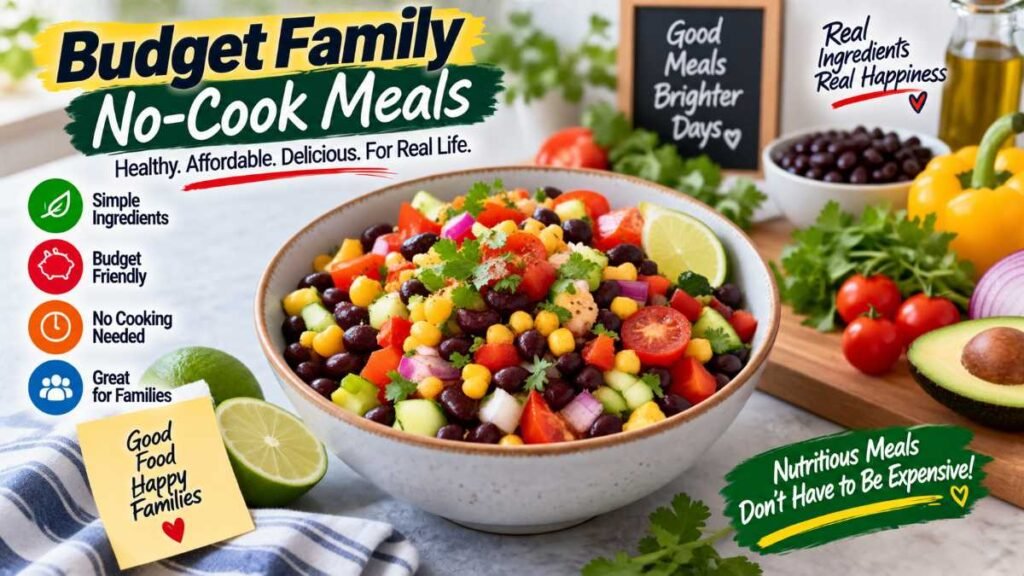
Eating fresh, raw, and assembled foods does not require expensive specialty items. You can keep household grocery bills low with smart ingredient overlap.
- Southwestern Black Bean & Corn Bowl: Toss together rinsed black beans, crisp sweet corn, chopped bell peppers, and fresh cilantro with your favorite jarred salsa. Scoop it up with whole-grain tortilla chips for a quick, crunchy bite.
- Classic Peanut Butter & Banana Crispbreads: Spread natural peanut butter over high-fiber rye crispbreads and top with sliced bananas and hemp seeds for a quick budget dinner or lunch.
- Greek Cottage Cheese Bowls: Scoop plain cottage cheese into a bowl and top with chopped cucumbers, kalamata olives, black pepper, and a drizzle of olive oil for an affordable high-protein bowl.
Portable Lunchbox Options for Work & School
Packing no-cook options for work or travel prevents soggy ingredients and keeps food fresh until lunchtime.
Packing Hierarchy:
Bottom Layer: Heavy Produce (Cucumbers, Radishes)
Middle Layer: Proteins & Legumes (Chickpeas, Chicken)
Top Layer: Delicate Greens & Herbs (Spinach, Arugula)
Side Container: Salad Dressings & Sauces
Storage & Transport Guidelines
- Keep Dressings Separate: Always pack vinaigrettes or sauces in small leak-proof containers to preserve vegetable crispness.
- Use Hard Bento Boxes: Protect delicate ingredients like berries, avocados, and wraps from getting crushed in your bag.
- Observe Safe Temperatures: According to food safety guidelines from the U.S. Department of Agriculture (USDA), perishable foods left in the “Danger Zone” between 40°F and 140°F (4°C to 60°C) for more than two hours should be discarded. Always use insulated lunch bags equipped with frozen ice packs for chilled items.
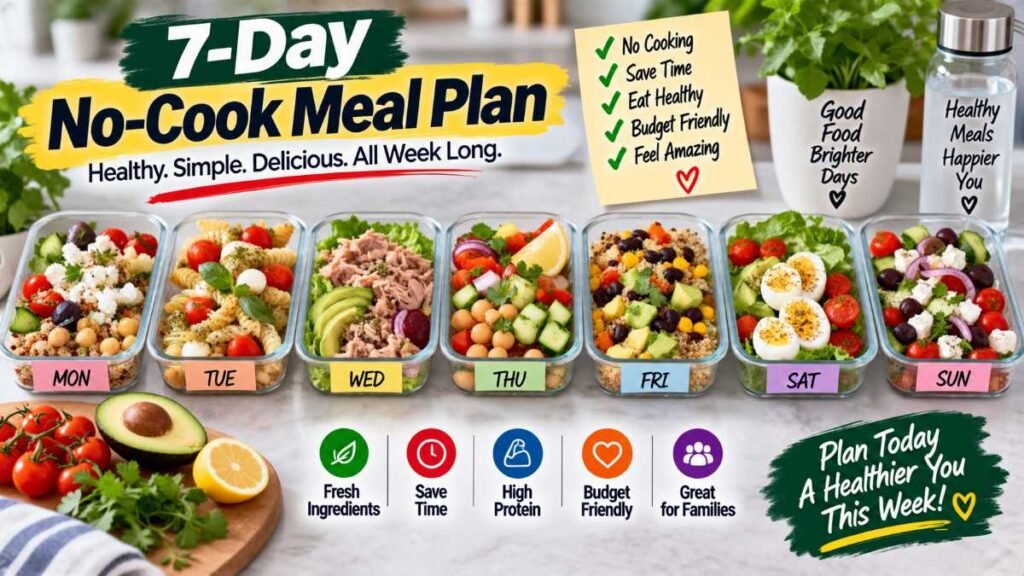
A Complete 7-Day No-Cook Meal Plan
This streamlined weekly plan minimizes food waste by cross-utilizing fresh ingredients across multiple days.
- Monday: Mediterranean Chickpea & Salmon Salad with whole-grain pita.
- Tuesday: Pulled chicken and fresh avocado wrap served alongside crisp baby carrots.
- Wednesday: Tuscan Cannellini Bean & Italian Tuna Salad over bed of arugula.
- Thursday: Greek Cottage Cheese Bowls with cucumbers, tomatoes, and kalamata olives.
- Friday: Pecos Black Bean, Sweet Corn & Salsa Salad with tortilla chips.
- Saturday: Chilled Tofu Peanut-Noodle Bowls (using pre-cooked cold buckwheat noodles).
- Sunday: Crispbread topped with smoked salmon, creamy spread, and tangy capers, served with a side of mixed berries.
Simple No-Cook Meal Prep & Storage Hacks
Maximizing freshness without cooking comes down to proper cold storage techniques:
- Prep Crisp Vegetables Ahead: Wash, dry, and chop sturdy vegetables like cucumbers, bell peppers, and celery on Sunday. Store them in airtight glass containers lined with paper towels to absorb excess moisture.
- Revive Wilted Greens: Submerge tired leafy greens or herbs in a bowl of ice water for 10 minutes to restore their crisp texture before assembling salads.
- Prevent Avocado Browning: Toss diced avocados in fresh lemon or lime juice and store them with a piece of sliced red onion in a sealed container to slow oxidation.
No-Cook Meal Safety: How to Avoid Foodborne Illness Without Heat
Without Heat
When you skip the traditional cooking step, you lose the natural heat barrier that kills bacteria. Practicing safe raw-food assembly ensures your summer meals stay clean, fresh, and completely safe for your family:
- Rinse Canned Goods Thoroughly: Always wash the tops of canned chickpeas, beans, and fish before opening, then rinse the contents under cold running water to remove excess sodium and debris.
- Prevent Cross-Contamination: Use separate cutting boards for ready-to-eat produce and raw deli meats or pre-cooked proteins to avoid transferring unwanted bacteria.
- The 2-Hour Chill Rule: Never leave dairy, cut seafood, or pre-cooked chicken sitting on the counter. Store perishable ingredients in the refrigerator at or below 40°F (4°C) within two hours of preparation.
- Cross-Check Internal Temp: When using leftover rotisserie chicken, ensure it was properly chilled immediately after purchase and consumed within 3 to 4 days.
Mindful Flavor Building: How to Make Raw Meals Taste Gourmet
Without the Maillard reaction (the browning process from heat), cold meals rely entirely on texture, acid, and raw seasoning layers to build deep flavor profiles:
- Acid Balance: Brighten heavy canned legumes or fatty fish using fresh lemon zest, lime juice, or quality apple cider vinegar.
- Textural Contrast: Pair soft ingredients like cottage cheese, mashed avocados, or cold beans with high-crunch elements like pumpkin seeds, raw radishes, or toasted walnuts.
- Fresh Herb Infusions: Chopped dill, cilantro, basil, and mint add a fresh aroma that makes simple assembly meals feel restaurant-crafted.
- Cold-Pressed Finishing Oils: Drizzle extra-virgin olive oil, toasted sesame oil, or avocado oil just before serving to lock in moisture and increase satiety.
Summary & Final Kitchen Tips
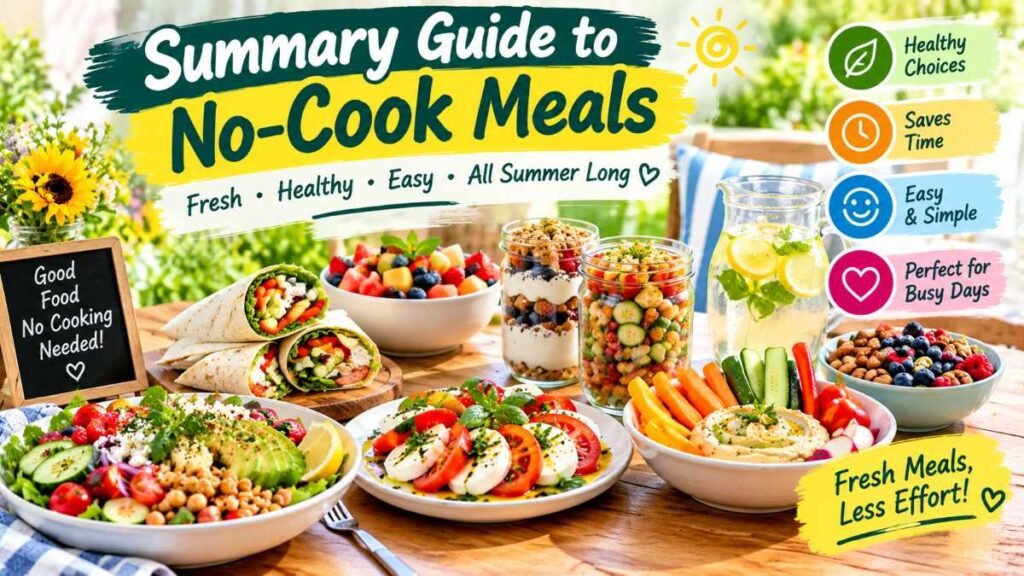
Integrating no-cook meals into your weekly routine saves time, lowers kitchen heat, and ensures you eat wholesome food regardless of how busy life gets. By combining shelf-stable pantry items with pre-cooked proteins and fresh produce, you can create balanced lunches and dinners in under ten minutes. For more wholesome everyday food inspiration, explore our guide on healthy meal ideas for busy families to keep your health goals effortless all year round.
Frequently Asked Questions
Q1. What meals can I make without cooking?
You can assemble delicious no-cook meals like Mediterranean chickpea bowls, canned salmon salads, and peanut butter rye crispbreads in under ten minutes.
Q2. What food can you eat without cooking?
Shelf-stable canned legumes, wild tuna, rotisserie chicken, avocados, and fresh veggies form the base of balanced no-cook meals.
Q3. What to have for dinner with no oven?
Try high-protein Tuscan bean bowls or stuffed avocado lettuce wraps for quick, heat-free no-cook meals.
Q4. What are the best no-cook lunch ideas?
Layered bento salad bowls with separate dressings make perfect portable no-cook meals for work and school.
External References & Scientific Data Sources
- U.S. Department of Agriculture (USDA) – Food Safety, Inspection, and Temperature Danger Zone Standards.
- USDA FoodData Central – Official Macronutrient and Micronutrient Database.
- U.S. Food and Drug Administration (FDA) – Food Safety & Safe Storage Handling Practices.
Nutrition, Safety & Editorial Disclaimer
Nutrition & Safety Disclaimer: The information provided in this guide is intended solely for educational and informational purposes and does not constitute medical or professional nutritional advice. Individuals with specific medical conditions, food allergies, or dietary restrictions should consult a qualified healthcare provider or registered dietitian before making significant changes to their diet. Always observe proper food safety guidelines when handling raw or refrigerated ingredients.
About the Author
Dambar C.P.R. is the founder and head editor at FitLifePeak. Driven by a passion for real-food nutrition, he turns complex dietary concepts into simple, practical, and budget-friendly home cooking strategies. Dambar believes that healthy eating shouldn’t feel like a full-time job—it should seamlessly fit into your daily routine with everyday pantry ingredients, zero fuss, and delicious results.