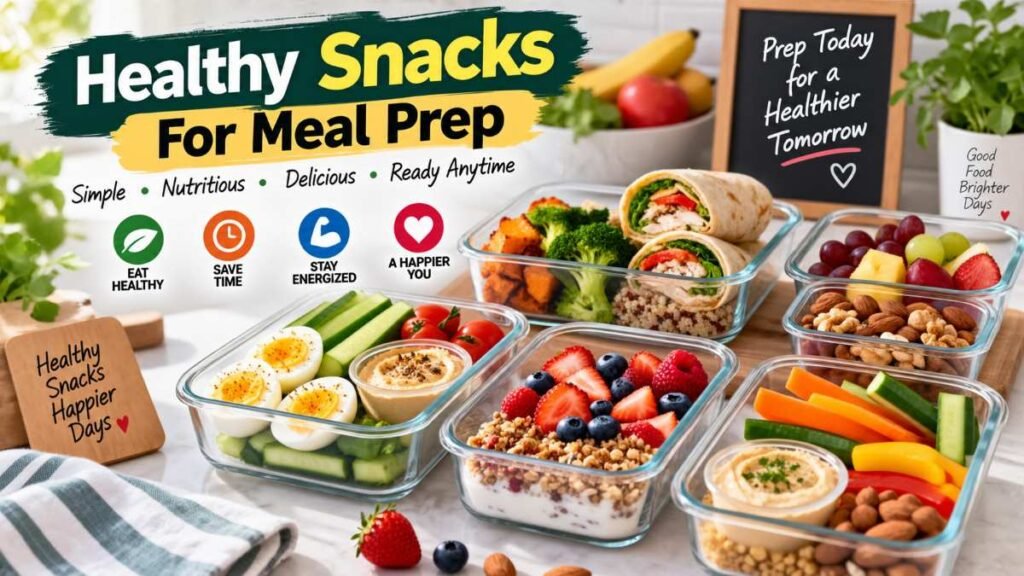
What if your afternoon snack was already waiting for you—without another complicated recipe to cook? The right healthy snacks for meal prep can save time, reduce last-minute food choices, and make busy weekdays easier. The trick is not preparing dozens of perfect containers. It is choosing simple foods that taste good, store well, and keep you satisfied between meals. From yogurt and berries to hummus, eggs, fruit, and nuts, a few smart combinations can cover an entire workweek.
What Makes a Meal-Prep Snack Actually Good?
A practical snack should fit your real routine, not just look healthy on paper.
Look for four things:
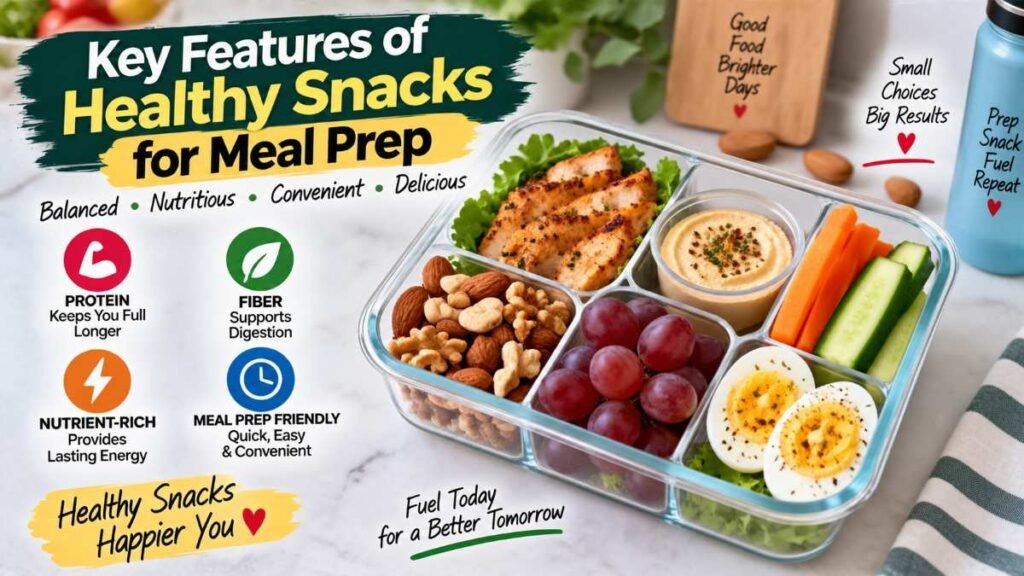
It is satisfying. Protein, fiber, healthy fats, or a combination can make a snack more substantial.
It is convenient. If preparation takes too long, you are unlikely to repeat it every week.
It stores well. Yogurt, eggs, and cut vegetables need different storage than whole fruit or nuts.
You enjoy it. Taste matters. Food sitting untouched in the refrigerator is not useful meal prep.
A simple formula is to combine a protein-rich food with fruit, vegetables, or another fiber-rich carbohydrate. Add healthy fat when it fits.
Snack combination | What it brings |
Greek yogurt + berries + chia seeds | Protein, fruit, fiber and fat |
Apple + peanut butter | Fruit, protein and fat |
Hummus + vegetables + whole-grain crackers | Vegetables, plant protein and carbohydrate |
Cottage cheese + pineapple | Protein and fruit |
Egg + whole-grain toast | Protein and carbohydrate |
Edamame + fruit | Plant protein, fiber and carbohydrate |
This is a flexible framework, not a strict nutrition rule. A banana alone can still be a perfectly reasonable snack, particularly before physical activity.
Building consistent eating habits can also support a balanced routine, as explained in this guide to healthy eating habits.
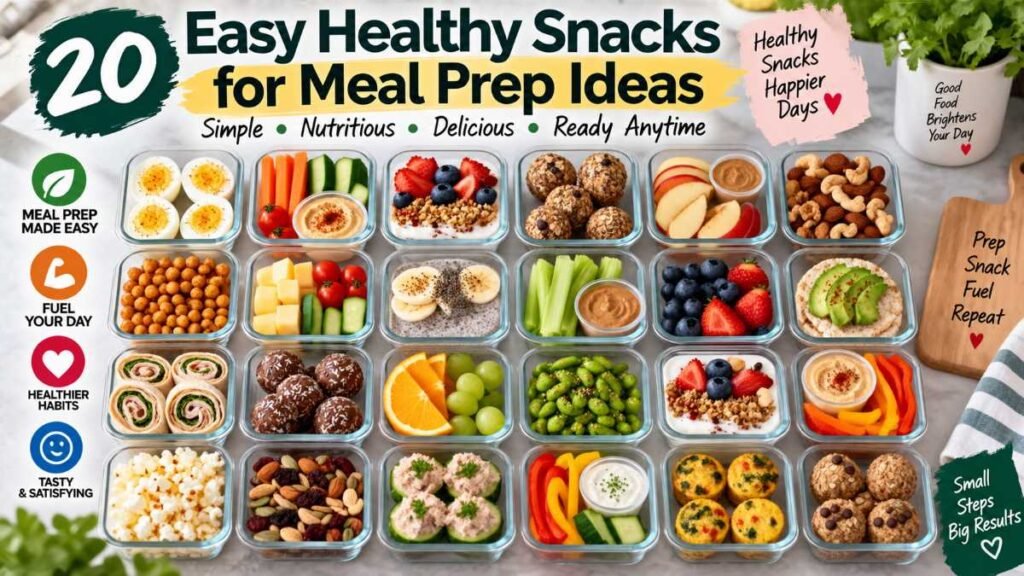
20 Healthy Snack Ideas You Can Prepare Ahead
You do not need to prepare all 20. Choose four or five that suit your schedule and rotate them. These healthy snacks for meal prep are designed to keep preparation simple while giving you enough variety for the week.
Greek Yogurt, Berries and Chia
Portion plain Greek yogurt into small containers and add berries. Keep chia seeds, nuts, or another crunchy topping separate if you prefer more texture.
It is an easy refrigerator snack that requires almost no cooking.
Apple and Peanut Butter
Keep whole apples in your bag or refrigerator and portion peanut butter separately.
Keeping the apple whole until you are ready to eat also avoids the browning and texture changes that can happen after slicing.
Hummus and Vegetable Cups
Prepare individual portions of hummus with carrots, cucumbers, bell peppers, celery, or snap peas.
Add whole-grain crackers when you want the snack to be more substantial.
Hard-Boiled Eggs and Fruit
Prepare a small batch of eggs and pair one with grapes, berries, an orange, or another fruit.
This is particularly useful if you prefer savory snacks over sweet choices.
Small Overnight-Oat Cups
Don’t limit oats to the morning. A mini jar of overnight oats is perfect for beating that mid-afternoon slump.
Use rolled oats with milk or yogurt, chia seeds, cinnamon, and fruit. Adjust the serving according to your appetite and the rest of your day’s meals.
Cottage Cheese and Fruit
Cottage cheese works well with berries, peaches, pineapple, or melon.
Prepare the fruit separately if you want to preserve its texture for longer.
Roasted Chickpeas
Roast chickpeas until crisp and season them with paprika, cumin, garlic powder, black pepper, or another combination you enjoy.
Let them cool completely before storing so trapped moisture does not quickly soften them.
Portion-Controlled Trail Mix
Combine nuts, seeds, dried fruit, and, if desired, a small amount of whole-grain cereal.
Because nuts and dried fruit are concentrated foods, individual portions are more practical than repeatedly eating from one large container.
Chia Pudding
Mix chia seeds with milk or a fortified dairy-free alternative and refrigerate until thick.
Add berries or sliced fruit before eating. It is particularly useful when you want something that can be prepared the night before.
Edamame Cups
Cooked shelled edamame can be divided into individual containers and paired with fruit or whole-grain crackers.
It is a convenient plant-based choice when fruit alone does not feel substantial enough.
Simple Energy Bites
Combine oats, peanut butter, chia or ground flax, and a modest amount of dried fruit.
Keep the recipe simple. The point is convenience, not creating a dessert disguised as a wellness product.
Mini Vegetable Egg Muffins
Whisk eggs with chopped vegetables such as spinach, peppers, mushrooms, or tomatoes and bake in a muffin pan.
Once cooled, portion them for quick savory snacks.
Pear and Almond Butter
A whole pear travels well. Pair it with a small portion of almond butter when you want something more filling.
Whole-Grain Crackers and Cheese
Pre-portion crackers and cheese, then add grapes or sliced vegetables if desired.
A divided container helps keep the crackers crisp.
Popcorn Snack Bags
Air-popped popcorn can be divided into individual portions and seasoned with herbs, spices, or a modest amount of salt.
Remember that toppings can substantially change the nutrition of an otherwise simple snack.
Banana and Nut Butter
A banana requires no refrigeration and is easy to carry.
Pair it with peanut or almond butter when you want more staying power. It can also provide a convenient carbohydrate source before exercise.
Cottage Cheese and Berries
This is a simple variation worth keeping in rotation if you enjoy dairy-based snacks.
Keep the berries separate if you prefer firmer fruit.
Frozen Yogurt Berry Bites
Spoon small portions of Greek yogurt onto a lined tray, add berries, and freeze.
They work best as a freezer snack and may need a few minutes at room temperature before eating.
Homemade Snack Boxes
Build a small box with three or four foods you enjoy:
- Cheese
- Whole-grain crackers
- Grapes
- Cucumber
- A small portion of nuts
The advantage is variety without needing a separate recipe for every ingredient.
Fruit, Nut and Seed Cups
Combine berries or grapes with nuts and seeds in individual containers.
This is one of the simplest options for office refrigerators and requires almost no cooking. It is also useful when you want healthy snacks for meal prep ready without spending extra time in the kitchen.
How to Build a Week of Snacks Without Over-Prepping
The biggest mistake in meal prep is often making too much.
You do not need seven elaborate recipes. Choose foods from different categories and let them overlap.
For example, one grocery trip could provide:
Protein-rich foods: Greek yogurt, eggs, cottage cheese, hummus and edamame
Produce: apples, bananas, berries, carrots and cucumbers
Pantry staples: oats, peanut butter, nuts, seeds, chickpeas and whole-grain crackers
From those ingredients, you can create several combinations without buying a long list of specialty products.
A simple prep session might take 30–45 minutes:
- Wash and dry produce.
- Cook eggs or another food that requires preparation.
- Portion nuts, crackers and seeds.
- Assemble yogurt or cottage-cheese cups.
- Prepare hummus and vegetable containers.
- Refrigerate perishable foods promptly.
That is enough.
If you know you are away from home four days this week, preparing four days of healthy snacks for meal prep is more sensible than making seven days’ worth and hoping your schedule cooperates.
Storage and Food Safety: What to Prep Now and What to Assemble Later
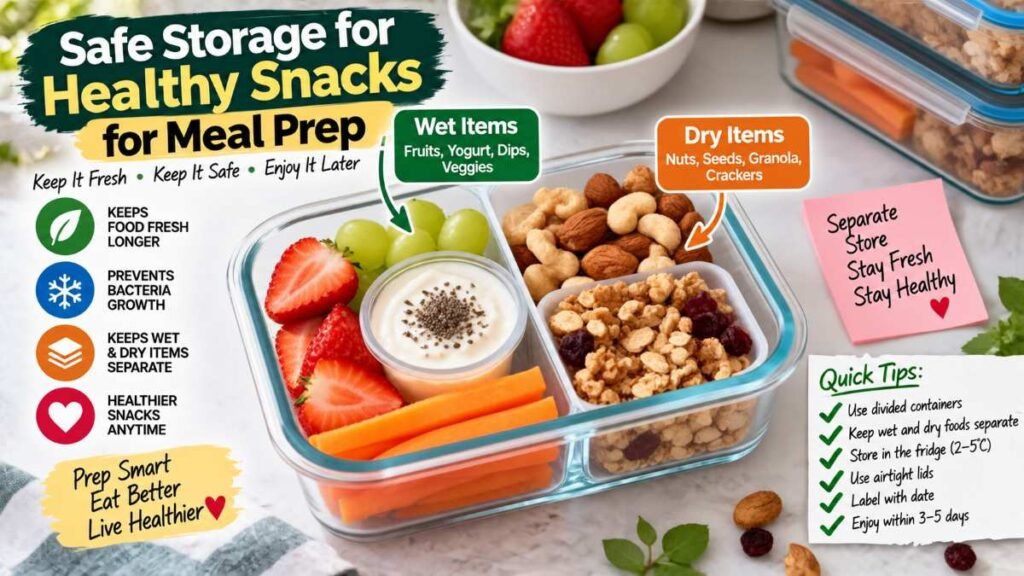
Meal prep becomes easier when you separate foods according to how they behave in storage.
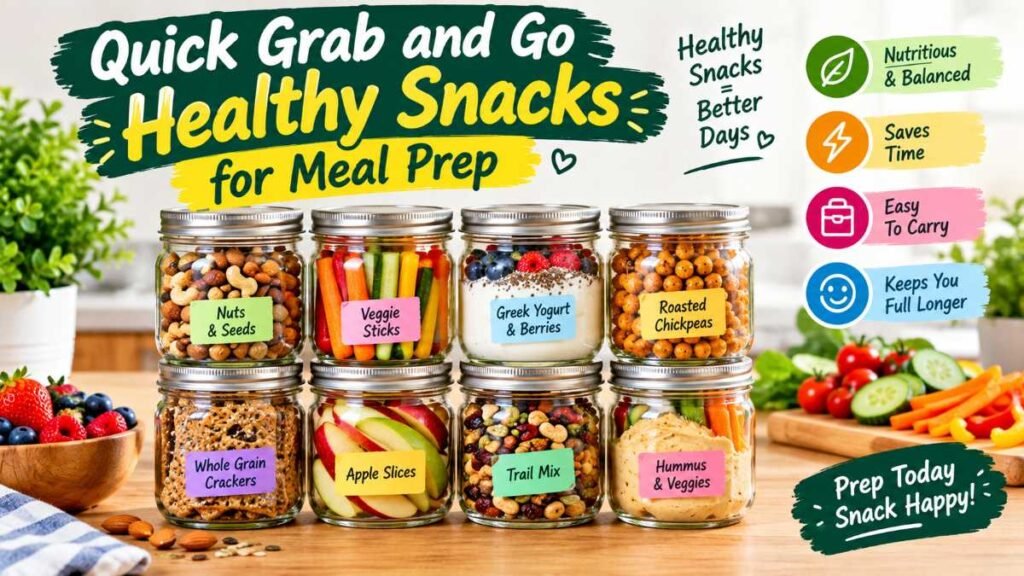
Keep whole when possible: apples, pears, bananas and oranges.
Store separately: crackers, granola, nuts, seeds and other crunchy toppings.
Refrigerate: yogurt, cottage cheese, eggs, hummus, cut vegetables and other perishable foods according to their storage requirements.
Freeze when appropriate: certain yogurt bites, cooked egg dishes and some homemade snack preparations.
For perishable foods, the USDA recommends keeping the refrigerator at 40°F (4°C) or below. Prepared food should also be handled and refrigerated promptly rather than left at room temperature for extended periods.
The USDA Food Safety and Inspection Service food-safety guidance provides practical information on safe storage and handling.
The FDA’s food-safety guidance for home is another useful reference for refrigerated foods and prepared meals.
One small habit makes a surprisingly big difference: keep wet and crunchy ingredients apart until you are ready to eat.
Hummus can make crackers soggy. Yogurt can soften granola. Cut vegetables can release moisture. A divided container or two small containers often solves the problem.
If you are uncertain whether a perishable food has been stored safely, do not rely on smell or appearance alone.
High-Protein, Budget-Friendly and Work-Friendly Options
Not everyone needs the same kind of snack.
If you want something more protein-focused, Greek yogurt, cottage cheese, eggs, edamame, hummus, chickpeas, and nuts are useful choices. Protein can contribute to satiety, but there is no need to turn every healthy snack for meal prep into a high-protein recipe.
If your priority is budget, start with foods that have multiple uses. Oats can become overnight oats or energy bites. Peanut butter can pair with apples or bananas. Eggs can be eaten with fruit or whole-grain toast. Chickpeas can become hummus or roasted snacks.
If your priority is work convenience, choose foods that are easy to portion and transport:
- Whole fruit
- Nuts
- Roasted chickpeas
- Peanut butter
- Crackers
- Appropriate shelf-stable foods
For refrigerated options, use an appropriate insulated lunch bag and cold source when a refrigerator is not available.
For additional protein-focused breakfast combinations, high-protein breakfast ideas can provide useful inspiration.
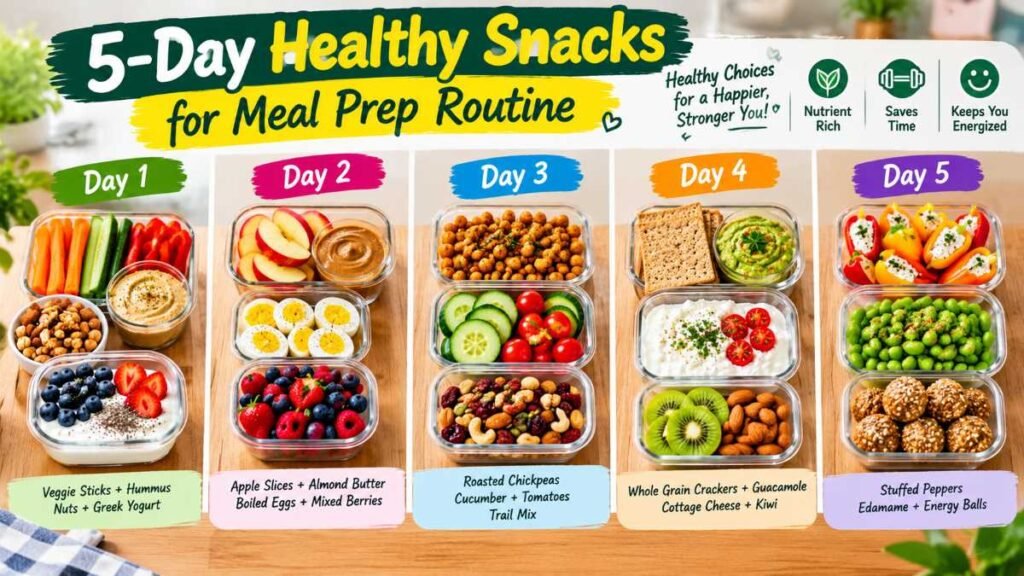
A Simple 5-Day Meal-Prep Snack Plan
Use this as a starting point and swap foods according to preference.
Day | Snack 1 | Snack 2 |
Monday | Greek yogurt + berries | Apple + peanut butter |
Tuesday | Hard-boiled egg + grapes | Hummus + carrots |
Wednesday | Cottage cheese + berries | Roasted chickpeas |
Thursday | Chia pudding | Cheese + whole-grain crackers |
Friday | Edamame + fruit | Portion of trail mix |
The plan is intentionally repetitive.
That is not a flaw. Repeating a few foods can lower grocery costs, simplify preparation, and reduce the number of decisions you make during a busy week.
You can also match the snack to the situation. A carbohydrate-containing food may be useful before exercise, while a protein-and-fiber combination may work better when you need something that carries you comfortably to the next meal.
For more ways to add fiber-rich foods to everyday meals, this high-fiber foods list offers practical options.
Mistakes That Make Meal-Prep Snacks Less Useful
The first is over-prepping. A refrigerator full of identical containers can look organized on Sunday and become unappealing by Thursday.
The second is ignoring texture. Food that tastes good immediately may not taste good after several days. Keep crunchy and wet ingredients separate when necessary.
The third is making every snack extremely small. The purpose of a snack is not simply to minimize calories. If you are genuinely hungry, a more substantial combination may make more sense than eating a tiny portion and immediately looking for another snack.
The fourth is forgetting the rest of your diet. A healthy snack does not need to compensate for an otherwise unbalanced day. Look at your meals and snacks together.
Finally, avoid assuming that “homemade” automatically means “healthy.” Ingredients and portions still matter. Likewise, packaged foods are not automatically unhealthy. A convenient food can fit into a nutritious eating pattern when choosing healthy snacks for meal prep that suit your needs.
Frequently Asked Questions
FAQ 1: What are some good meal prep snacks?
Greek yogurt cups, hard-boiled eggs, and roasted chickpeas are top-tier choices. Preparing healthy snacks for meal prep ahead saves time and stops unhealthful mid-day craving sprees.
FAQ 2: What are the 10 healthiest snacks to eat between meals?
Smart options combine protein and fiber—like apples with peanut butter, chia pudding, or cottage cheese. These healthy snacks for meal prep keep your metabolism stable between main meals.
FAQ 3: What are 20 healthy snacks?
You can blend nuts, seeds, edamame, and cut veggies into versatile portioned boxes. Rotating simple healthy snacks for meal prep keeps your diet interesting without spending hours cooking.
FAQ 4: What snack kills hunger?
High-protein and fiber-dense combos—like eggs, hummus with whole-grain crackers, or trail mix—effectively crush appetite. Including these healthy snacks for meal prep in your routine guarantees steady energy all afternoon.
The Bottom Line
Good meal prep should simplify your week, not complicate it. Choose a few healthy snacks for meal prep you enjoy, portion them realistically, store them safely, and rotate them. A simple routine can make nutritious choices easier on even the busiest days.
Authoritative External References
Medical Disclaimer: The information on FitLifePeak is for general educational purposes only and does not substitute professional medical or nutritional advice. Every body is unique, so individual dietary needs may vary. Always speak with a certified dietitian or doctor before making major changes to your diet, particularly if you have underlying health conditions or severe food allergies.
About the Author
Dambar C.P.R. is the founder of FitLifePeak. He focuses on sharing practical nutrition information and simple home-cooking strategies to help readers make informed, healthy dietary choices.