
For many people, a carbohydrate-heavy breakfast may contribute to hunger or an energy dip later in the morning. Sleep, hydration, stress, activity level, and overall meal composition can all affect how you feel. Starting your day with a high protein breakfast, paired with fiber-rich carbs and healthy fats, may support a steadier blood glucose response, help you feel more satisfied, and make busy mornings easier to manage. Here is a practical, evidence-informed guide to building a morning routine that fits your lifestyle.
The 11 AM Energy Crash: Fix Your Breakfast
If you find yourself reaching for a second cup of coffee or checking the fridge by 11 AM, your breakfast is likely to blame. Most traditional morning meals—cereal, toast, fruit smoothies, or pastries—are heavy on quick-digesting refined carbohydrates. They spike your blood sugar rapidly, giving you a short burst of energy followed by a steep crash, brain fog, and intense hunger pangs before lunchtime.
When you switch the core foundation of your meal to quality protein, everything changes. Protein takes significantly longer to digest and triggers the release of satiety hormones like GLP-1 and Peptide YY, while dialing down ghrelin (your body’s primary hunger trigger). Instead of a sharp blood sugar spike and dip, protein creates a smooth, sustained release of fuel that keeps your mind clear and your stomach quiet until your next meal.
Easy 30g Protein Morning Formula
Hitting a meaningful protein target in the morning doesn’t mean sitting down to a heavy, time-consuming meal or eating half a dozen eggs every day. The sweet spot for most adults looking to curb cravings and fuel morning productivity is 20 to 30 grams of protein.
Here is how to easily hit that target using simple, everyday whole foods:
- The Quick Dairy Base: 1 cup of plain Greek yogurt or low-fat cottage cheese instantly gives you 14g to 23g of protein with zero cooking required.
- The Plant Power Combo: 1/2 block of extra-firm tofu scrambled with black beans and spinach yields around 22g of protein along with a solid dose of gut-healthy fiber.
- The Whole Egg + Booster: 2 whole eggs give you ~12g of protein. Pair them with a side of turkey sausage or blend cottage cheese directly into your egg batter to jump from 12g straight to 28g+ without extra effort.
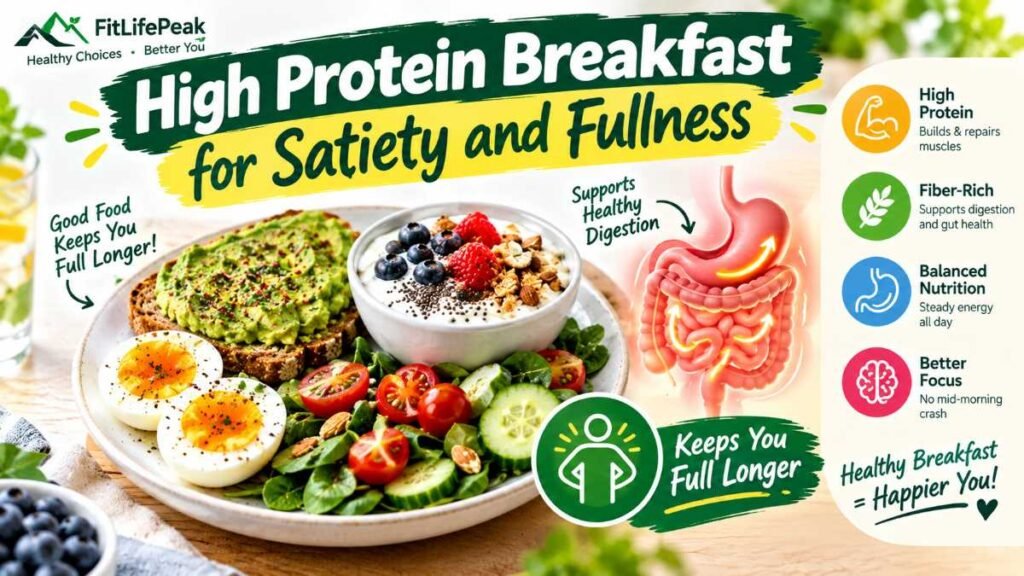
How Much Protein Should You Eat at Breakfast?
There is no universal protein target that applies to everyone. For many adults, a breakfast containing roughly 20 to 30+ grams of protein can be a practical baseline to help meet daily nutritional needs, though individual requirements vary based on body size, activity level, age, and health status.
- 15g – 20g: Ideal for lighter eaters or quick morning bites.
- 20g – 30g+: Optimal standard range for prolonged fullness.
- 30g – 40g+: Recommended for active individuals or muscle-building goals.
Note: These are practical example ranges, not universal requirements. Individual protein needs depend on total daily intake, body size, age, activity level, and health status. If you have kidney conditions or specific medical restrictions, consult a registered dietitian or healthcare provider to determine your personal targets.
Best High-Protein Breakfast Foods
Protein amounts are approximate and can vary by brand, preparation method, and serving size. Be sure to review the Nutrition Facts panel on product packages for exact values.
Food Source | Typical Serving Size | Approx. Protein | Key Benefit | Best Morning Use |
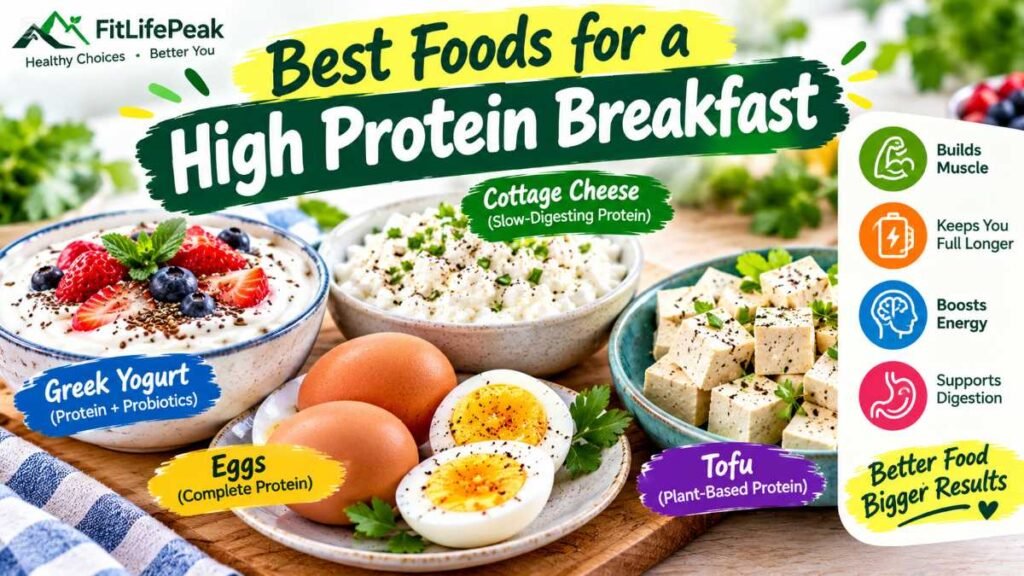
Plain Greek Yogurt | 1 Cup (240g) | ~20g–23g | High in protein; some varieties contain live active cultures. | Parfaits, smoothies, savory dip bases. |
Cottage Cheese (Low-Fat) | 1/2 Cup (113g) | ~14g | High casein content for gradual digestion. | Scrambled eggs booster, fruit bowls, toast. |
Whole Eggs | 3 Large | ~18g | Complete protein containing essential nutrients like choline. Combine with best iron-rich foods like spinach. | Egg bites, omelets, poached on sprouted grain. |
Extra Firm Tofu | 3.5 oz (100g) | ~10g–12g | Plant-based complete protein with a versatile texture for savory meals. | Savory morning scrambles with turmeric & veggies. |
Lean Turkey or Chicken Sausage | 3 oz (85g) | ~18g–22g | Dense lean protein for savory breakfast lovers. | Sheet pan breakfast bakes, breakfast wraps. |
7 Easy High-Protein Breakfast Ideas
Here is a 7-day plan that mixes quick prep with varied protein sources:
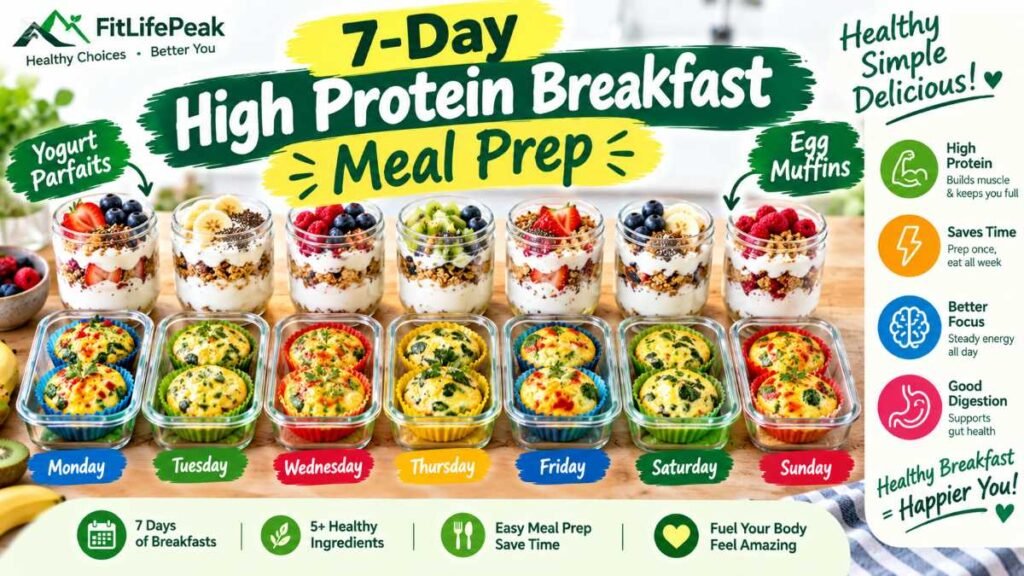
- Monday — Cottage Cheese & Spinach Egg Muffins (~28g Protein): Blend 3 eggs with a half-cup of cottage cheese for a creamy, low-carb base. Stir in diced bell peppers and fresh spinach, transfer into muffin tins, and bake until firm. These protein-packed egg bites hold up exceptionally well for weekday meal prep, giving you a quick, savory option on hectic mornings.
- Tuesday (Greek Yogurt Parfait): 1 cup plain Greek yogurt layered with 1 tbsp chia seeds, berries, and 1 scoop protein powder (~35g Protein).
- Wednesday (Savory Tofu Scramble): 1/2 block scrambled extra-firm tofu with black beans, diced bell peppers, and salsa (~22g Protein).
- Thursday (Overnight Protein Oats): 1/2 cup rolled oats soaked in soy milk, chia seeds, and protein powder. Follow our simple overnight oats recipe for exact proportions (~30g Protein).
- Friday (Turkey Sausage & Sweet Potato Hash): 3 oz cooked turkey sausage tossed with roasted sweet potato cubes (~25g Protein).
- Saturday — Smoked Salmon & Poached Egg Toast (~26g Protein): Layer 1 oz of cold-smoked salmon over toasted sprouted bread, then top with two runny poached eggs for an omega-3-rich morning upgrade.
- Sunday (Cottage Cheese & Oat Pancakes): Blended oats, cottage cheese, and egg white batter cooked into fluffy pancakes (~25g Protein).
5 Quick Breakfasts for Busy Mornings (Under 10 Minutes)
If you commute, work long hours, or simply don’t have time to cook in the morning, these high-efficiency meals deliver high protein with zero hassle:
Meal Option | Total Time | Approx. Protein | Preparation Tip |
Greek Yogurt & Chia Bowl | 2 Minutes | ~25g | Scoop yogurt, sprinkle chia & berries, eat immediately. |
Cottage Cheese & Berries | 2 Minutes | ~20g | Top low-fat cottage cheese with sliced strawberries. |
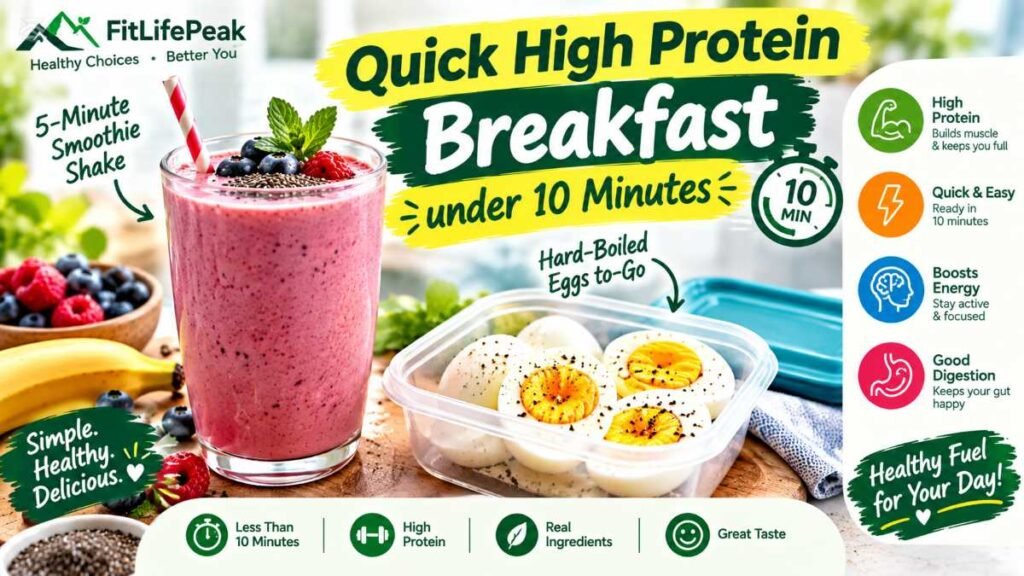
Pre-Cooked Eggs with Whole Almonds | 3 Minutes | ~22g | Peel 3 batch-boiled eggs and pair them with a handful (about 20–25) of raw almonds for a convenient, mess-free protein pack. |
Protein Smoothie Shake | 5 Minutes | ~28g | Blend 1 scoop protein powder, soy milk, and frozen berries. |
Tofu Scramble & Toast | 8 Minutes | ~24g | Crumble tofu in a skillet with turmeric, serve on toast. |
High-Protein Breakfast for Weight Management
For individuals focusing on weight management, a high protein breakfast can be a useful tool to support appetite control. High-protein meals increase satiety hormones, which may naturally help reduce mid-morning snacking or overeating later in the day.
When building a meal for weight management, prioritize nutrient-dense whole foods with moderate calories:
- Combine lean protein (egg whites, non-fat Greek yogurt, tofu) with high-fiber vegetables or berries.
- Keep added fats (oils, nuts, butter) in moderate portions.
- If you are looking for nutrient-dense additions to keep you full, consider adding items from our list of gut healthy foods.
High-Protein Breakfast for Muscle Building
If your goal is building muscle or recovering from intense training, eating sufficient protein early in the day helps initiate muscle protein synthesis. Research published in NCBI PubMed Literature Reviews suggests that distributing protein intake evenly across meals—rather than consuming most of your daily protein at dinner—may support muscle protein synthesis and make it easier to meet overall physical needs.
- Pair 25–35+ grams of high-quality protein with complex carbohydrates to replenish glycogen stores.
- For optimal workout performance and recovery ideas, check out our guide on the best foods before workout.
Meal Prep and Food Safety Guidelines
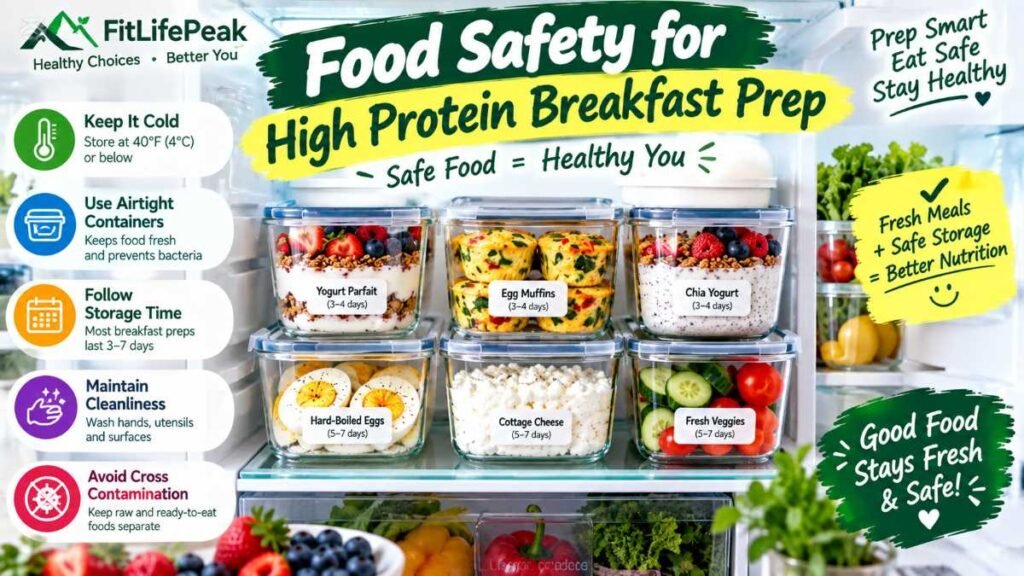
Batch-cooking morning meals saves time, but following proper food handling procedures is essential to prevent foodborne illness.
According to leftovers handling guidelines from the USDA Food Safety and Inspection Service, prepped egg dishes, cooked meats, and breakfast muffins should be refrigerated at or below 40°F (4°C) within 2 hours of cooking and consumed within 3 to 4 days. When reheating leftovers, use a food thermometer and reheat them to 165°F where applicable under USDA guidance.
Vegetarian and Vegan Options
You don’t need meat or poultry to fuel your morning with quality protein. Plant-based protein sources offer diverse amino acid profiles, so incorporating a mix of legumes, soy, whole grains, nuts, and seeds throughout your day ensures you easily meet your body’s daily muscle-building and recovery needs.
Vegetarian Choices
- Whole Eggs & Egg Whites: Excellent sources of complete protein that easily mix into morning scrambles, skillet bakes, and savory bowls.
- Greek Yogurt & Cottage Cheese: High-protein dairy options that supply slow-release protein to keep you full, alongside essential bone-building minerals.
- Whey Protein Powder: A quick, high-yield protein addition for morning smoothies, chia puddings, or oatmeal.
Vegan Choices
- Tofu & Tempeh: Versatile soy products packed with complete protein—ideal for savory skillet scrambles.
- Plant-Based Protein Powders: Clean isolates derived from pea, soy, or hemp that mix easily into shakes or breakfast batters.
- Seeds & Whole Grains: Nutritious add-ins like hemp hearts (providing around 10g of protein per 3 tbsp), chia seeds, and sprouted whole-grain bread slices.
- Hearty Legumes: Fiber-packed black beans, edamame, and lentils that add texture and lasting fullness to morning hashes.
If you are sticking to a budget while shopping for plant proteins, explore our favorite choices for healthy foods on a budget.
What If You Don't Eat Breakfast?
You do not have to eat breakfast simply because it is morning. Time-restricted feeding, intermittent fasting, or simply lacking a morning appetite are common. If you prefer a later first meal, focus on meeting your overall daily protein and nutritional needs during your active eating window rather than forcing a heavy meal early.
Summary & Practical Next Step
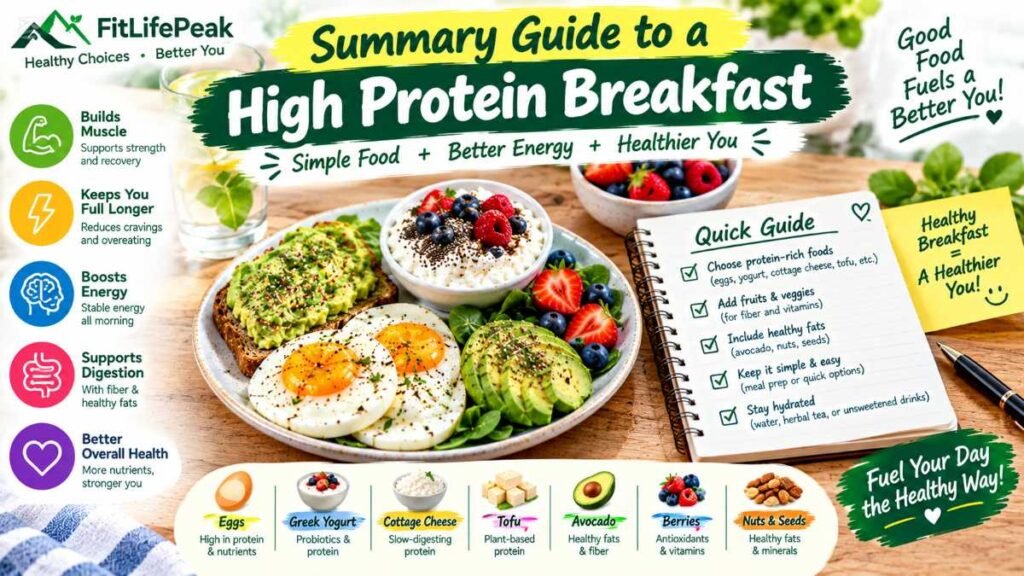
Building a protein-rich, balanced breakfast may help some people feel fuller and more consistently energized through the morning. Rather than attempting a complete overhaul of your routine overnight, start with one high protein breakfast option that fits your schedule and adjust it based on your hunger, preferences, and individual nutritional needs.
Frequently Asked Questions
Q1: How can I get 40g of protein for breakfast?
Ans: Scramble 3 eggs with 1/2 cup cottage cheese and 2 turkey sausage links, or blend 1 scoop whey protein into a Greek yogurt bowl for a 40g high protein breakfast.
Q2: How can I get 30g of protein first thing in the morning?
Ans: Mix 1 cup plain Greek yogurt with protein powder, or serve 3 eggs over sprouted grain toast topped with hemp seeds.
Q3: What are 10 foods high in protein?
Ans: Greek yogurt, eggs, cottage cheese, tofu, turkey sausage, whey protein, tempeh, hemp seeds, chia seeds, and sprouted whole-grain bread.
Q4: How to get 30g protein breakfast?
Ans: Blend cottage cheese into eggs, layer Greek yogurt with seeds, or drink a plant-protein smoothie to hit a 30g high protein breakfast in 5 minutes.
Q5: What are 7 foods rich in protein?
Ans: Seven staples for a high protein breakfast are eggs, Greek yogurt, cottage cheese, tofu, turkey sausage, black beans, and plant protein powder.
Authoritative External Sources & Research References
Protein & Satiety Research: Harvard T.H. Chan School of Public Health — Protein Guide
Leftovers & Meal Prep Safety Standards: USDA Food Safety and Inspection Service — Leftovers and Food Safety
Protein Timing & Muscle Protein Synthesis: NCBI PubMed Central — Dietary Protein Distribution and Muscle Health
Editorial & Food Safety Disclaimer
The nutritional information provided in this guide is for educational purposes only and should not be taken as medical advice. Individual dietary requirements vary based on age, health status, and medical history. Always consult a qualified physician or registered dietitian before making significant changes to your nutrition plan. Follow standard USDA guidelines for food handling and refrigeration.
About the Author
Dambar C.P.Rajbanshi. is the founder of FitLifePeak and a health and wellness content creator who focuses on making nutrition and healthy-living information practical and easy to understand.