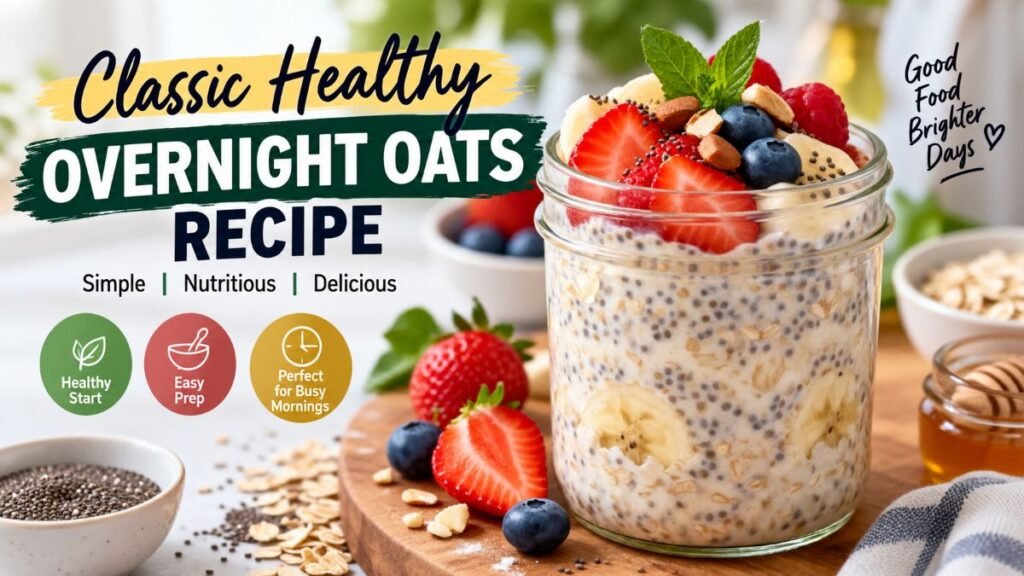
Mornings in America move at breakneck speed. Between pressing snooze and rushing out the door, a balanced breakfast is usually the first sacrifice—leaving you reliant on drive-thru pastries or mid-morning sugar crashes. What if you could wake up to a chef-level, creamy breakfast with zero morning effort? Mastering a simple overnight oats recipe completely eliminates prep stress, turning basic pantry staples into slow-burning, effortless fuel before your day even starts.
Why Cold Soaking Oats Works (Without Cooking)
To make a meal prep jar that tastes great and maintains a good texture, it helps to understand what happens while your oats soak overnight.
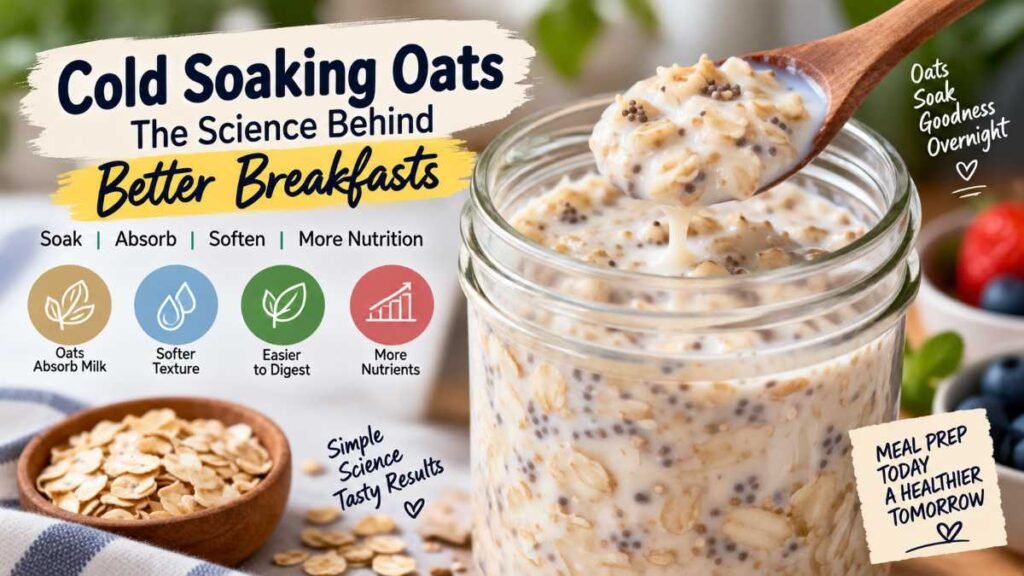
When whole grain oats soak in liquid over several hours, their natural soluble fiber—specifically beta-glucan—absorbs the liquid and swells. This slow hydration process softens the oat flakes while preserving a pleasant, chewy texture. Unlike microwaved oatmeal, which can turn sticky when overcooked, cold soaking creates a consistently smooth consistency.
Soaking Stage | Biological Process | Practical Result |
Initial Mixing (Hour 0) | Oats and chia seeds begin absorbing surrounding liquid base. | Prevents dry oat pockets at the bottom of the container. |
Mid Soak (Hours 2–4) | Beta-glucan soluble fiber swells and binds free water. | Creates a creamy texture without requiring stovetop heat. |
Full Hydration (Hours 6–8) | Enzymatic hydration softens husk fibers and grain structure. | May help reduce phytic acid levels during soaking, although the effect can vary. |
Cold soaking also offers practical digestive benefits. Raw oats naturally contain phytic acid, an organic compound found in plant seeds that can bind to essential minerals. Soaking oats in liquid may help reduce phytic acid levels during soaking, although the effect can vary. Additionally, oats provide fermentable carbohydrates and fiber that can contribute to a healthy diet.
The Proportions: Finding the Right Oats-to-Liquid Ratio
A common frustration when making an overnight oats recipe for the first time is getting the liquid balance wrong. Too much liquid creates a watery bowl, while too little leaves the oats dry and stiff.
A 1:1 ratio of oats to liquid serves as a reliable starting point. From there, you can adjust slightly based on whether you prefer a thicker or lighter consistency, or if you plan to add protein powder or chia seeds.
Ingredient Component | Standard Portion (1 Serving) | Recommended Types | Purpose in Texture |
Whole Grain Oats | 1/2 cup (40g) | Old-fashioned rolled oats | Retains structure; absorbs liquid evenly. |
Liquid Base | 1/2 cup (120ml) | Whole milk, unsweetened almond, oat, or soy milk | Hydrates oats and activates chia seed gelling. |
Creaminess & Thickening Booster | 1 tbsp chia seeds (or 2 tbsp plain Greek yogurt) | Organic chia seeds or unsweetened Greek yogurt | Naturally absorbs extra milk so your oats turn out rich and spoonable instead of runny. |
Flavor Base | 1/2 tsp vanilla + pinch of sea salt | Pure vanilla extract and fine sea salt | Enhances flavor profile and balances natural oats. |
Natural Sweetener | 1 tsp to 1 tbsp (optional) | Pure maple syrup or raw honey | Provides subtle, adjustable sweetness. |
Step-by-Step Instructions
Following a consistent routine ensures every jar turns out smooth and well-balanced.
- Combine Dry Ingredients: In a 16-ounce glass Mason jar or meal prep container, combine 1/2 cup of rolled oats, 1 tablespoon of chia seeds, and a small pinch of fine sea salt. Stir the dry ingredients together so the chia seeds distribute evenly.
- Add Liquid and Flavoring: Pour in 1/2 cup of your preferred milk, 1 teaspoon of pure maple syrup, and 1/2 teaspoon of vanilla extract.
- Stir Well: Mix thoroughly with a spoon for about 30 seconds, making sure no dry oats remain stuck at the bottom corners.
- Rest and Second Stir: Let the jar sit on the counter for 3 to 5 minutes, then give it one final stir to break up any remaining chia clumps.
- Refrigerate: Cover with a secure lid and place in the refrigerator at or below 40°F (4°C) for at least 6 hours, or overnight for best results.
Selecting Your Ingredients: Oats, Liquids, and Extra Protein
Using the right combination of pantry staples ensures your meal prep turns out flavorful and satisfying.
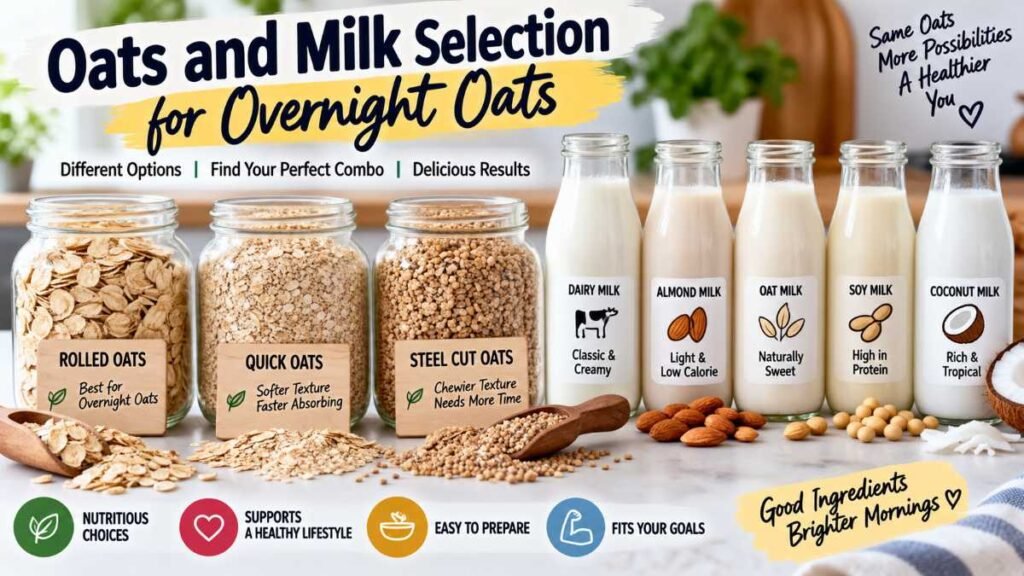
- Rolled Oats vs. Quick Oats vs. Steel-Cut
- Old-Fashioned Rolled Oats (Best Option): These steamed and flattened oat groats offer the ideal balance of absorption and chewy texture.
- Quick / Instant Oats: Processed into thinner flakes, quick oats tend to break down too much during an overnight soak, yielding a soft, pasty consistency.
- Steel-Cut Oats: These coarse oat kernels remain chewy even after overnight soaking. If you use steel-cut oats, increase the liquid ratio slightly (about 1:1.25 or 1:1.5) and allow them to soak for 12 to 24 hours.
- Choosing a Liquid Base
- Dairy Milk: Delivers a rich flavor, creamy texture, and roughly 8 grams of protein per cup.
- Unsweetened Almond Milk: A lighter, lower-calorie option with a subtle nut flavor that works well with sweet toppings.
- Oat Milk: Naturally sweet and extra creamy, though slightly higher in total carbohydrates.
- Soy Milk: A solid plant-based alternative that provides a similar protein content to dairy milk.
- Adding Protein Boosts
If you want to make your breakfast more filling, consider stirring in 2 tablespoons of plain Greek yogurt or half a scoop of your favorite protein powder. When adding protein powder, remember to add 2 to 3 extra tablespoons of liquid to keep the mixture from becoming too dense.
5 Practical Flavor Variations
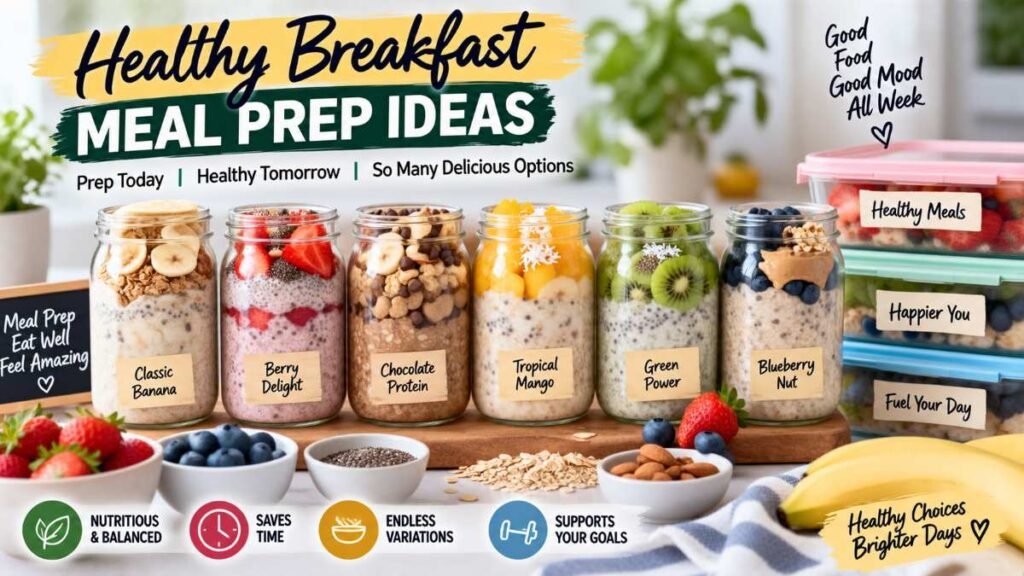
Once you master the basic ratio, you can customize your jars using fresh ingredients you already have in your kitchen:
Flavor Profile | Essential Additions | Practical Preparation Note |
1. Peanut Butter Banana | 1 tbsp natural peanut butter, 1/2 ripe banana (mashed), 1/2 tsp cinnamon | Mashed ripe banana naturally sweetens the base, reducing the need for added syrups. |
2. Apple Cinnamon Walnut | 1/4 cup finely chopped apple, 1/2 tsp cinnamon, 1 tbsp raw walnuts, 1 tsp maple syrup | Dice the apples small so they mix evenly throughout the jar rather than sitting on top. |
3. Blueberry Lemon Zest | 1/4 cup blueberries, 1/2 tsp lemon zest, 2 tbsp plain Greek yogurt | Fresh lemon zest cuts through the richness of the yogurt and adds a clean, bright aroma. |
4. Dark Chocolate Espresso | 1 tbsp cocoa powder, 1/4 tsp instant espresso powder, 1 tbsp maple syrup, 1 tbsp chocolate chips | The tiny amount of espresso powder enhances the cocoa flavor without making the oats taste like coffee. |
5. Tropical Coconut Pepita | 1/4 cup diced mango, 1 tbsp unsweetened coconut flakes, 1 tbsp pumpkin seeds (pepitas) | Pumpkin seeds add a nice, firm crunch that contrasts well with soft fruit. |
Nutrition Profile & Whole-Food Balance
Eating a balanced overnight oats recipe provides a combination of carbohydrates and dietary fiber.
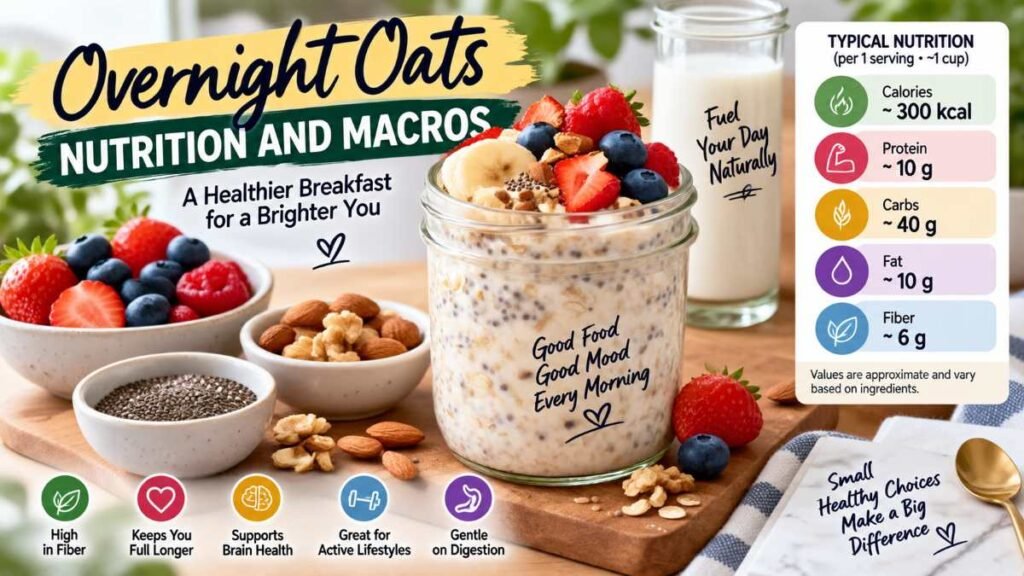
What’s Inside: Macro Profile for the Base Recipe
- Calories: ~270 kcal (estimated)
- Protein: 8g (estimated)
- Carbohydrates: 42g (estimated)
- Dietary Fiber: 10g (estimated)
- Sugars: 7g (estimated, primarily natural)
- Fat: 7g (estimated, mostly heart-healthy unsaturated fats)
- Calcium: 25% DV (estimated)
- Iron: 20% DV (estimated)
Building healthy habits works best when you view your daily nutrition as a whole. Pair your morning oat jars with nutrient-dense options later in the day, such as whole-food choices from a list of foods high in potassium or targeted selections from magnesium-rich foods to support daily muscle function and overall wellness.
Storage, Meal Prep & Food Safety Guidelines
Prepping meals in advance saves time, but keeping food fresh requires basic food-safety precautions:
Prep Window | Freshness Status | Action / Handling Guidelines |
Days 0–2 | Peak Texture & Freshness | Ideal window to consume; stir in delicate fresh toppings right before eating. |
Days 3–4 | Safe Refrigeration Window | USDA guidance recommends using refrigerated leftovers within 3–4 days at or below 40°F (4°C). |
Day 5+ | Beyond Recommended Window | For food-safety purposes, discard leftovers kept beyond the recommended refrigerated storage period. |
- Storage Containers: Use clear 8 oz or 16 oz glass Mason jars or BPA-free containers with tight-fitting lids. Glass is easy to clean and does not retain food odors.
- Refrigeration Temperature: Keep your refrigerator set consistently at or below 40°F (4°C). Store prep jars on an interior shelf rather than in the door, where temperature fluctuates.
- Safe Storage Window: For optimal freshness and safety, consume refrigerated overnight oats recipe meals within 3 to 4 days.
- Topping Tip: Keep delicate ingredients—like sliced fresh berries, sliced bananas, or crispy granola—in separate small containers and add them right before eating. This keeps fresh fruit from getting soggy and prevents nuts from losing their crunch.
Troubleshooting Common Texture Issues
- Oats seem dry or dense: You may have used extra protein powder or chia seeds without enough liquid. Simply stir in 2 to 3 tablespoons of extra milk right before eating.
- Oats feel too thin or watery: Ensure you are using whole rolled oats rather than instant varieties. Adding 1 tablespoon of chia seeds or 2 tablespoons of Greek yogurt naturally thickens the mixture.
- Flavor tastes plain: Don’t skip the tiny pinch of salt in the base overnight oats recipe. Salt highlights natural flavors and balances sweetness.
Frequently Asked Questions
FAQ 1: What is the perfect recipe for overnight oats?
The perfect overnight oats recipe mixes equal parts rolled oats and milk with chia seeds, vanilla, and a pinch of salt. Just stir and chill overnight for a creamy, effortless breakfast.
FAQ 2: Are overnight oats actually healthy?
Yes! Making a healthy overnight oats recipe keeps slow-digesting fiber intact, which helps stabilize blood sugar, improves digestion, and keeps you full all morning without cooking.
FAQ 3: What is the best ratio for overnight oats?
The golden ratio for any overnight oats recipe is 1 part oats to 1 part liquid. Add an extra tablespoon or two of milk if using chia seeds or protein powder for a creamy texture.
FAQ 4: What is the basic formula for making overnight oats?
The simple formula for a basic overnight oats recipe is Oats + Liquid + Thickener + Sweetener. Combine them in a glass jar, stir well, and refrigerate overnight.
10.More Healthy Breakfast & Meal Prep Ideas
If you enjoy simple morning meal prep, explore these practical food guides from our team:
- Simple steps to assemble balanced morning options: easy breakfast recipes
- Protein-focused morning meal prep ideas: high protein breakfast
- Fast, nutrient-packed blender options: healthy smoothie recipes
- Practical strategies to organize your week: best way to plan meals for the week
The Bottom Line: Streamline Your Breakfast Prep Today
Mastering this 5-minute overnight oats recipe is hands-down the easiest morning win you’ll claim all week. Ditch the drive-thru rush—prep 3 or 4 jars tonight, toss them in the fridge, and reclaim your mornings with zero stress and pure, sustained energy.

References & Sources
- Harvard T.H. Chan School of Public Health: Oats Nutrients & Health Benefits
- U.S. Department of Agriculture (USDA) FoodData Central: Nutritional Profile of Rolled Oats
- Mayo Clinic: Dietary Fiber: Essential for a Healthy Diet
Editorial & Food Safety Disclaimer
This content is provided for educational and informational purposes only and should not replace professional medical advice, nutrition counseling, or diagnosis. Always consult a qualified healthcare provider or registered dietitian regarding specific dietary needs. Keep prepared foods stored in a refrigerator set at or below 40°F (4°C) and consume within 3 to 4 days.
About the Author
Dambar C.P.R. is the founder of FitLifePeak, a digital publication focused on evidence-based health, sensible nutrition, and practical meal preparation strategies. He creates clear, straightforward guides to help busy adults build sustainable daily habits with real, whole foods.