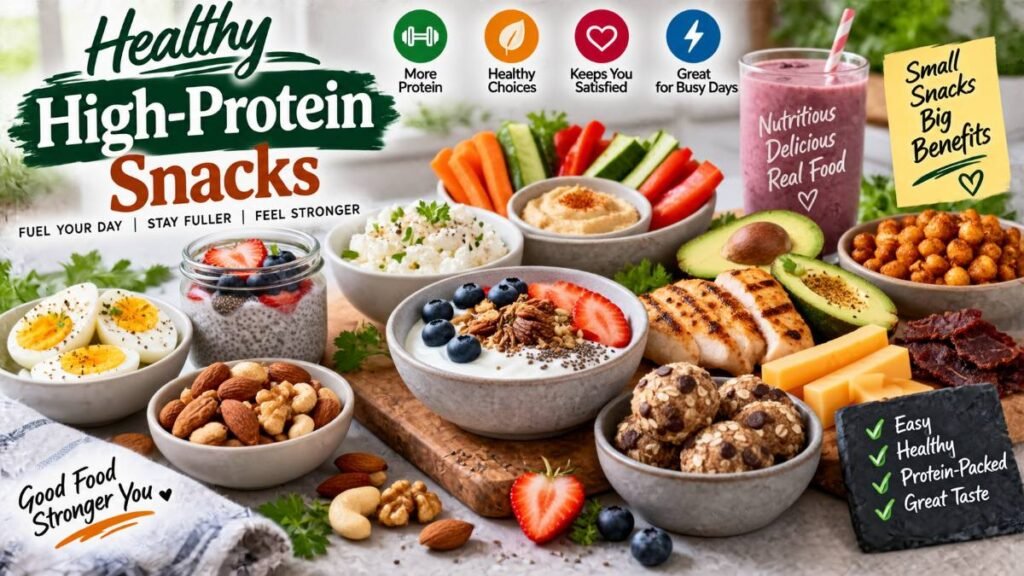
Ever find yourself staring blankly at your computer screen at 2:45 PM while your energy suddenly plummets? That sharp afternoon slump hits hard, and the breakroom vending machine instantly starts calling your name. One common contributor to these crashes is a lack of sustained, balanced nourishment. When a snack consists mostly of refined carbohydrates, blood glucose may rise quickly, and hunger can return sooner than expected. Swapping sugar-laden treats for balanced high protein snacks can support feelings of fullness and may help you stay satisfied between meals until dinner.
What Counts as a High-Protein Snack?
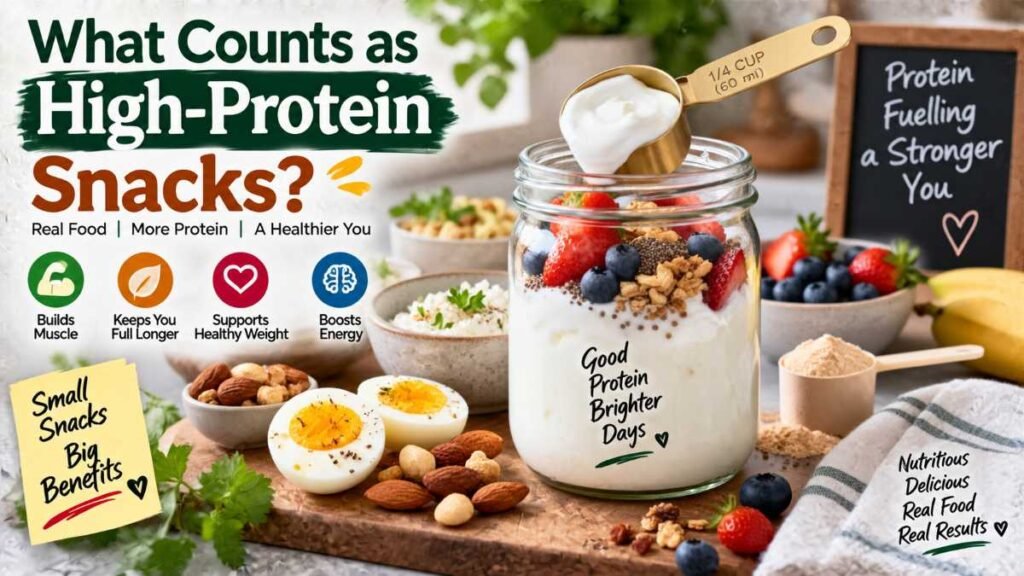
A full meal generally provides 25 to 40 grams of protein, whereas a practical target for High Protein Snacks is around 10 to 20 grams of protein per serving, although individual needs vary. This range supplies enough amino acids to foster satiety without feeling heavy like a full lunch or dinner.
Individual protein needs depend on age, body weight, physical activity levels, and broader wellness goals. Choosing protein-rich snacks can help you work toward your overall daily protein needs while building sustainable daily routines. Learn more about the importance of healthy eating habits for long-term health.
Best High-Protein Snacks at a Glance (Quick Picks)
Snack Option | Approx. Protein* | Prep Time | Primary Benefit |
Pure Greek Yogurt & Berry Bowl | ~15–20g per cup | 2 min | Excellent protein booster rich in essential calcium |
Hard-Boiled Eggs (2 whole) | ~12g per 2 eggs | Pre-prep | Complete protein packed with vital nutrients |
Lightly Salted Steamed Edamame Pods | ~17g per cup | 5 min | Clean plant-based protein with high dietary fiber |
Low-Fat Cottage Cheese + Fruit | ~14–18g per 1/2 cup | 2 min | Slow-digesting casein protein |
Canned Water-Packed Tuna & Crispbreads | ~20–25g per can | 2 min | Ready-to-eat option rich in lean muscle-building protein |
Roasted Soybeans or Lupini Beans | ~14–18g per 1/2 cup | 1 min | Quick, crunchy plant-based option |
*Protein values are approximate estimates and can vary based on brand, serving size, preparation method, and product type.
10 Top Whole-Food High-Protein Snacks
- Tart Greek Yogurt Bowl with Berries (~15–20g protein): High-protein strained yogurt forms a creamy, calcium-rich base. Layer with vibrant berries for a punch of dietary fiber and antioxidant benefits.
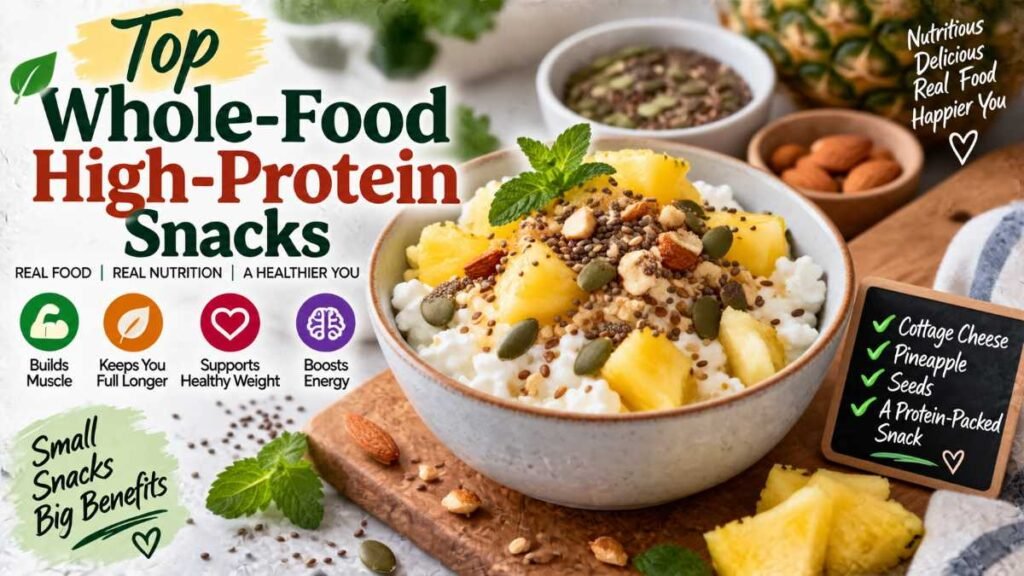
- Curd Cottage Cheese with Pineapple (~14–18g protein): Packed with sustained-release casein, offering a continuous supply of vital amino acids over an extended period.
- Hard-Boiled Eggs (~12g protein per 2 eggs): A complete protein source packed with essential vitamins and choline for brain health.
- Steamed Edamame (~17g protein per cup): Young soybeans offer a complete plant-based protein profile along with high dietary fiber. Check out our guide to foods high in zinc to pair protein with essential micronutrients.
- Canned Tuna or Salmon (~20–25g protein per can): Convenient and budget-friendly, delivering lean protein and beneficial fats. Serve on whole-grain seeded crackers.
- Low-Sodium Jerky or Biltong (~10–15g protein per oz): Shelf-stable beef, turkey, or salmon jerky offers ultra-portable, concentrated protein for busy schedules.
- Dry-Roasted Chickpeas or Broad Beans (~6–8g protein per oz): Crisp, fiber-packed legumes that do not require refrigeration and make great desk snacks.
- Roasted Pumpkin Seeds (~9g protein per handful): Pepitas are packed with plant protein, healthy fats, and magnesium.
- Deli Turkey & Cheese Roll-Ups (~12–15g protein): Slice high-quality turkey breast and wrap it around thin slices of cheese or cucumber for a low-carb bite.
- Chia Seed Pudding with Protein (~12–15g protein): Combine chia seeds with milk and half a scoop of plant protein powder overnight for a creamy, high-fiber treat.
Best Snacks for Work & Travel (No Refrigeration Required)
When working at a desk, commuting, or traveling, keeping non-perishable high protein snacks on hand prevents emergency trips to fast-food outlets:
- Shelf-Stable Tuna or Salmon Pouches: Pre-seasoned pouches open without a can opener and provide 15–20g of protein.
- Dry-Roasted Edamame or Lupini Beans: High-protein legumes offering 13–15g of plant protein per half-cup serving.
- Single-Serve Nut & Seed Packs: Almonds, walnuts, and pumpkin seeds offer 6–9g of protein plus sustained healthy fats.
Low-Sugar Protein Bars: Keep bars with a solid protein ratio and low added sugar in your desk drawer or bag. Discover more portable options in our overview of healthy snack ideas for adults.
Plant-Based High-Protein Options (Vegetarian & Vegan)
You do not need meat or dairy to hit your snack goals. Plant-based options provide fiber alongside quality amino acids:
- Air-Fried Tofu Cubes (~12–15g protein per cup): Toss firm, cubed tofu with soy sauce and spices, then bake or air-fry until crisp.
- Seasoned Tempeh Strips (~15–18g protein per 3 oz): Tempeh is a fermented whole-soy product rich in protein, fiber, and gut-friendly nutrients.
- Hemp Seed Hummus & Pita (~10–12g protein): Upgrade classic chickpea hummus by topping it with two teaspoons of hemp seeds. Serve alongside warm whole-wheat pita for a quick, plant-based protein boost.
- Lupini Beans (~13–15g protein per half cup): Mediterranean legumes with an exceptionally high protein-to-calorie ratio and zero preparation required.

Power Triad: Combining Protein, Fiber, and Fats
While protein is essential for muscle maintenance and hunger control, pairing high protein snacks with complex carbohydrates, dietary fiber, and healthy unsaturated fats creates a far more effective nutritional synergy.
- The Protein + Fiber Advantage: Fiber slows down the breakdown of carbohydrates in the digestive tract. Combining a high-protein item (like Greek yogurt or cottage cheese) with high-fiber ingredients (like chia seeds, berries, or sliced apples) helps sustain steady physical energy levels without digestive discomfort.
- Adding Healthy Fats for Longevity: Fats delay stomach emptying even further. Pairing a protein source with healthy fats—such as almond butter on whole-grain toast or a small handful of walnuts with hard-boiled eggs—promotes lingering satiety while supporting optimal nutrient absorption for fat-soluble vitamins (A, D, E, and K).
How to Overcome Common Snacking Pitfalls
Even with the best intentions, daily snacking habits can easily get derailed by busy schedules or misleading product claims. Here is how to navigate the most common obstacles:
- Avoiding Over-Reliance on Sweet Treats: Many commercial protein bars rely heavily on artificial sweeteners or sugar alcohols, which can sometimes trigger digestive discomfort or leave you craving actual sweets. Rotating whole-food options like hard-boiled eggs or edamame helps keep your palate balanced.
- Portion Awareness with Mindless Eating: Snacks like nuts, seeds, and dried bean mixes are nutrient-dense but calorie-rich. Pre-portioning these into individual containers instead of eating straight from a large bag prevents accidental overconsumption while working at your desk.
- Planning for Cravings vs. Genuine Hunger: Ask yourself if you are truly hungry or simply bored, stressed, or thirsty. Drinking a glass of water first or choosing a protein snack paired with high-volume fresh veggies helps satisfy oral fixation while keeping your overall energy balanced.
How to Choose a Protein Snack (Label-Reading Tips)
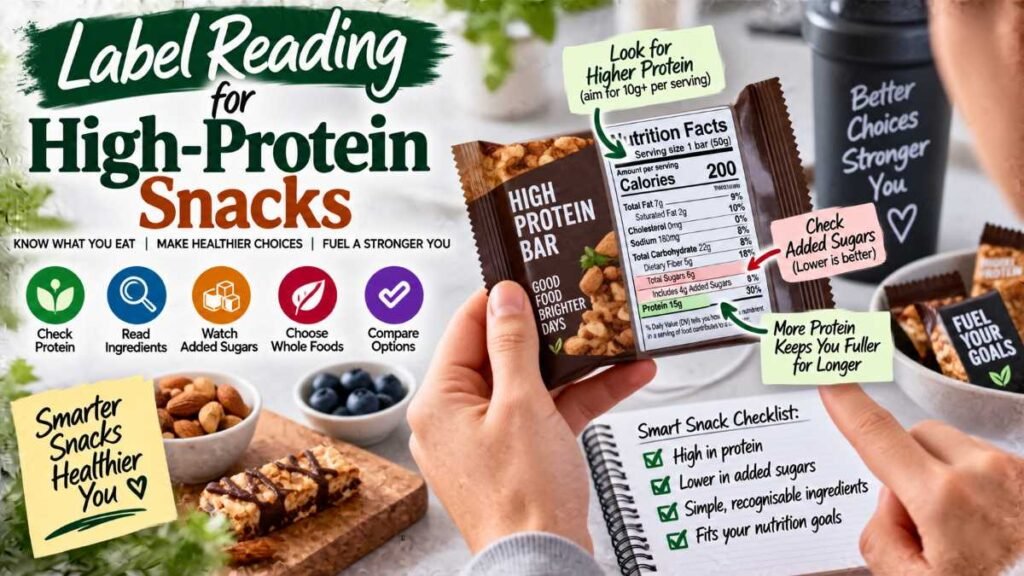
Not every product labeled “high-protein” is nutritional gold. Use these 5 practical benchmarks when evaluating packaged options:
- Target 10–20g Protein: Compare products to ensure the snack delivers enough protein to make a meaningful contribution to satiety.
- Keep Added Sugars Modest: Compare added-sugar amounts on nutrition labels and choose lower-sugar options when practical to help avoid energy slumps.
- Watch Sodium Content: Check sodium levels on jerkies and canned goods to align with your personal nutrition goals.
- Look for Dietary Fiber: Consider snacks with extra fiber (nuts, seeds, legumes) to support healthy digestion.
- Remember: High Protein Automatically Healthy: A bar with 20g of protein can still be high in saturated fat or artificial additives. Always review the complete nutritional profile.
Food Safety Basics for Snack Prep
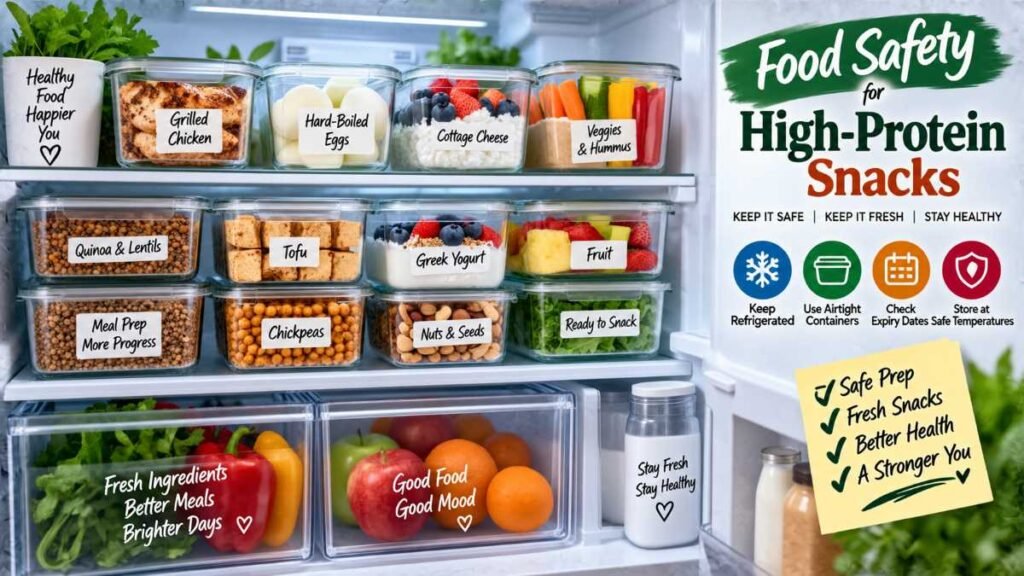
Preparing snacks in advance saves money and time, but safety comes first. Follow these guidelines from the USDA Food Safety and Inspection Service and the U.S. Food and Drug Administration (FDA):
- The Two-Hour Rule: Never leave perishable foods (dairy, cooked eggs, meats, or seafood) at room temperature () for longer than 2 hours (1 hour if temperatures exceed ).
- Recipe-Specific Storage: Store perishable snacks like Greek yogurt parfaits or hard-boiled eggs in airtight glass containers in the fridge. Eggs keep in their shell for up to 7 days, while opened dairy lasts 3–5 days.
- Use Insulated Bags: Transport perishable high protein snacks in an insulated bag with an ice pack if you lack fridge access at work.
- When in Doubt, Discard: Follow recommended storage times and temperatures rather than relying only on smell or appearance, as unsafe bacteria do not always alter how food looks or smells. When you are unsure whether a perishable food has been stored safely, discard it. Streamline your routine further with these healthy meal prep ideas for lunch.
Looking to save money while building your routine? Explore our practical guide on healthy foods on a budget.
7-Day High-Protein Snack Plan
Day | Morning Snack (~10:30 AM) | Afternoon Snack (~3:30 PM) | Approx. Protein From Both Snacks* |
Mon | Plain Greek Yogurt + 1 tbsp Chia Seeds | 2 Hard-Boiled Eggs + Everything Seasoning | ~27–32g |
Tue | Cottage Cheese + Sliced Peaches | 1 oz Turkey Jerky + Handful of Almonds | ~22–26g |
Wed | Steamed Edamame in Pods + Sea Salt | Tuna Pouch + Whole-Grain Crackers | ~32–37g |
Thu | Chia Seed Pudding with Protein Powder | Dry-Roasted Chickpeas + Apple Slices | ~22–27g |
Fri | Crispy Air-Fried Tofu Cubes + Soy Dip | Greek Yogurt Dip + Raw Veggie Sticks | ~25–30g |
Sat | Roasted Pumpkin Seeds + Fresh Orange | Sliced Turkey & Swiss Cheese Roll-Ups | ~20–25g |
Sun | Cottage Cheese + Cinnamon & Walnuts | Homemade Oat & Peanut Butter Protein Balls | ~22–26g |
*Protein values are estimated averages based on standard portion sizes.
Frequently Asked Questions
FAQ 1: What snack is very high in protein?
Canned tuna, plain Greek yogurt, cottage cheese, and edamame are among the top High Protein Snacks that deliver maximum protein with minimal prep time.
FAQ 2: How can I get 20g of protein in a snack?
You can reach 20g easily by pairing one cup of Greek yogurt with hemp seeds, or eating a pouch of tuna on whole-grain crackers as quick High Protein Snacks.
FAQ 3: How to get 100g of protein a day?
Distribute your goal across three main meals (~25g each) and include two solid High Protein Snacks (~12–15g each) like eggs or pumpkin seeds throughout the day.
FAQ 4: How to get 30g protein in a snack?
Combine a scoop of protein powder with cottage cheese or chia pudding, creating power-packed High Protein Snacks to crush cravings and sustain real physical energy.
Key Takeaways
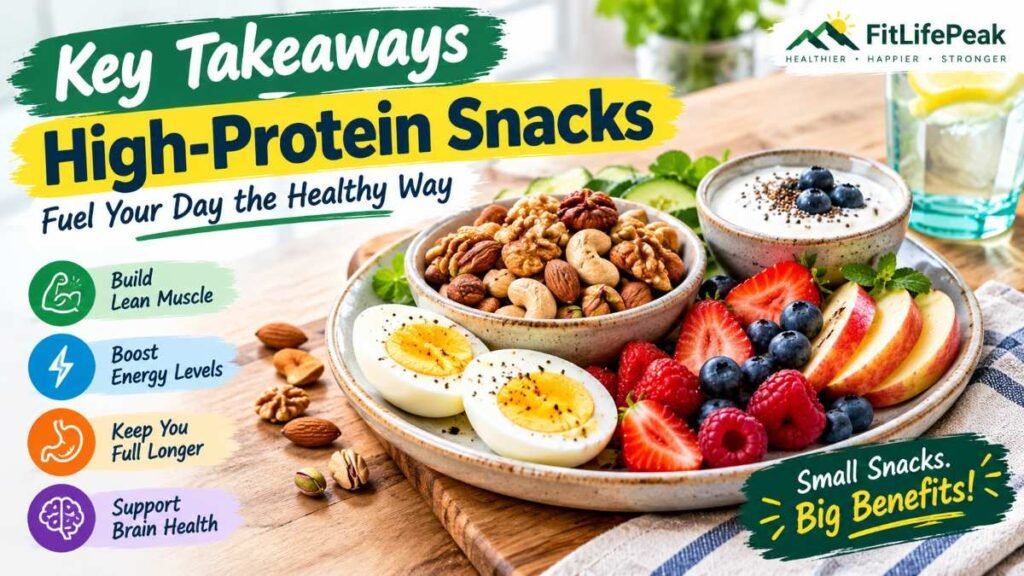
Aim for 10–20g Protein: Pick high protein snacks within this target range to sustain energy and manage hunger between main meals.
Combine Protein with Fiber & Fats: Pair these options with fresh fruit, vegetables, nuts, or whole grains to support fullness and overall digestive health.
Keep Options Accessible: Store non-perishable items (jerky, roasted beans, seeds) at your desk and fresh items (Greek yogurt, eggs) in the fridge so healthy choices are always effortless.
References & External Sources
- S. Department of Agriculture (USDA) & U.S. Food and Drug Administration (FDA): Food Safety Basics for Handling and Storing Perishable Foods
- Harvard T.H. Chan School of Public Health: The Nutrition Source – Protein, Satiety, and Muscle Health
- National Institutes of Health (NIH) Office of Dietary Supplements: Protein and Amino Acids in Human Nutrition
Disclaimer: Nutritional requirements vary by individual. This article is for informational purposes only and does not constitute medical advice. Always consult a registered dietitian or healthcare provider for personalized dietary guidance suited to your specific health status and fitness goals.
About the Author
Dambar C.P.R. is the founder and lead editor at FitLifePeak. A hands-on home cook and practical nutrition enthusiast, he skips the fluff to share simple, budget-friendly meal ideas that actually fit into a busy schedule. Dambar believes eating well should feel effortless, tasty, and zero-stress.