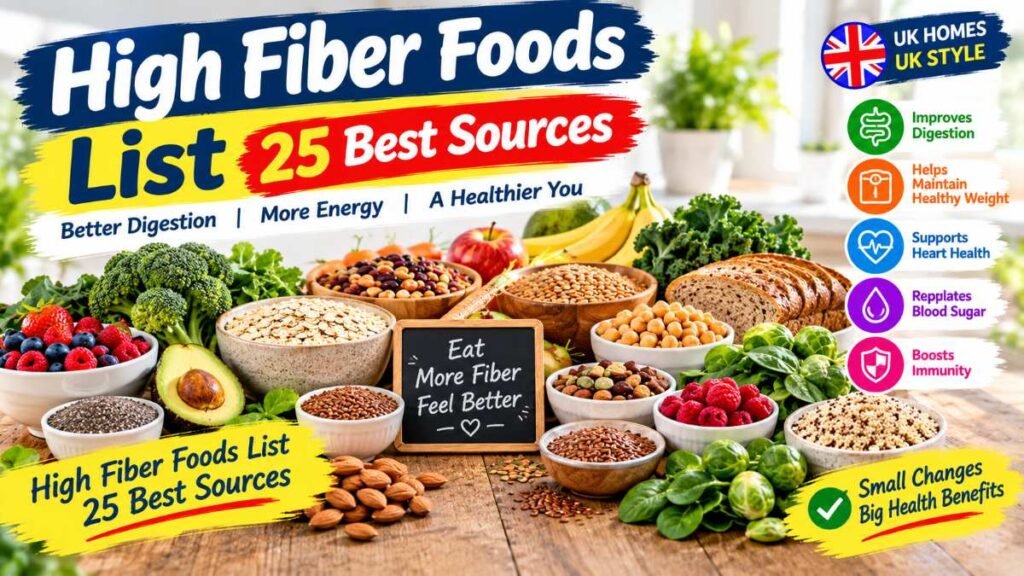
Incorporating a variety of nutrient-dense plant foods does much more than support regular digestion; it provides a stable foundation for metabolic balance, supports gut microbiome diversity, and helps maintain overall vitality throughout your day. Eating a balanced diet that includes high fiber foods can support digestive health and overall well-being.
Why Dietary Fiber Matters for Daily Well-Being
Think of fiber as the internal structural support system your digestive tract relies on to function smoothly. Unlike other carbohydrates that break down quickly into simple sugars, dietary fiber passes through your digestive system largely intact. According to findings outlined in the Harvard T.H. Chan School of Public Health Fiber Guide, maintaining a consistent intake of dietary fiber plays an essential role in supporting metabolic equilibrium and long-term vitality.
- Steady Energy Release: Because dietary fiber slows down digestion and nutrient absorption, it can help support balanced blood sugar levels for many individuals. To learn more about building a wholesome meal pattern, explore our importance of healthy eating habits overview.
- Gut Microbiome Support: Some fibers are fermented by gut bacteria and can support the gut microbiome. For deeper insights into nurturing your digestive system, take a look at our selection of gut healthy foods.
- Cardiovascular Support: Certain types of soluble fiber may help lower LDL cholesterol as part of a balanced dietary pattern by binding to bile acids and assisting the body in eliminating them naturally.
If you often feel persistent tiredness despite eating well, you might also want to review our detailed breakdown of vitamin b12 deficiency symptoms or check your daily nutritional balance using tips from our magnesium rich foods guide.

25 High-Fiber Foods: Fiber Content and Serving Sizes
To help you navigate U.S. grocery store aisles (such as Trader Joe’s, Whole Foods, or Kroger) with a practical guide to serving sizes and estimated fiber content, here are 25 distinct high-fiber foods categorized by food group, with approximate serving sizes and fiber content based on standard food data references like the USDA FoodData Central Database:
Legumes, Beans, and Lentils (The Heavy Hitters)
- Split Peas (Boiled): Delivers roughly 16.0g of dietary fiber per single cooked cup, offering a hearty texture ideal for daily meal prep.
- Lentils (Boiled): A versatile legume yielding about 15.5g of fiber per cooked cup.
- Black Beans (Boiled): Provides roughly 15.0g of fiber per cooked cup, making them a fantastic addition to grain bowls and salads.
- Chickpeas (Canned/Cooked): Supplies about 12.5g of fiber per cooked cup for easy weeknight cooking.
- Lima Beans (Boiled): A nutrient-dense, buttery legume yielding roughly 13.2g of dietary fiber per cooked cup, which adds a creamy texture to side dishes.
- Kidney Beans (Boiled): Provides approximately 11.3g of fiber per single cooked cup, making them a hearty, satisfying addition to warm chilis and homemade soups.
- Pinto Beans (Boiled): Supplies roughly 11.0g of fiber per cooked cup.
Fruits
- Raspberries (Raw): Yields roughly 8.0 grams of dietary fiber per raw cup while supplying an abundance of natural cellular antioxidants.
- Pears (with skin): A refreshing, fiber-dense choice yielding about 5.5g per medium fruit, which makes for a convenient on-the-go snack.
- Avocado: Provides roughly 5.0g of fiber per 0.5 cup along with healthy plant fats.
- Apples (with skin): A portable snack yielding about 4.5g of fiber per medium fruit.
- Blackberries (Raw): Supplies roughly 7.6g of fiber per raw cup.
- Pomegranates: Packed with edible seed sacs (arils), supplying approximately 7.0g of fiber per packed cup.
- Bananas: A popular tropical fruit yielding about 3.0g of fiber per medium fruit.
Vegetables
- Artichokes (Cooked): A nutrient-dense vegetable option providing roughly 9.6g of fiber per cooked cup.
- Green Peas (Boiled): A vibrant garden staple delivering about 9.0g of dietary fiber per cooked cup.
- Broccoli (Boiled): A versatile cruciferous vegetable offering around 5.0g of fiber per cooked cup.
- Brussels Sprouts (Boiled): Provides approximately 4.5g of fiber per cooked cup when boiled and tenderly prepared.
- Acorn Squash (Baked): Delivers roughly 9.0g of fiber per single cubed cooked cup, offering natural sweetness and steady complex carbs.
- Sweet Potato (Baked with skin): A wholesome root vegetable supplying about 3.8g of fiber per medium-sized baked potato.
Whole Grains and Seeds
- Chia Seeds: Delivers roughly 10.0g of fiber per 1 ounce (approx. 2 tablespoons), perfect for hydration gels and smoothies.
- Whole-Wheat Spaghetti (Cooked): A satisfying whole-grain alternative yielding approximately 6.0g of fiber per cooked cup.
- Quinoa (Cooked): A gluten-free pseudocereal offering about 5.0g of fiber per cooked cup.
- Rolled Oats (Uncooked): Supplies roughly 4.0g of fiber per 0.5 cup dry, ideal for warm morning bowls.
- Ground Flaxseed: Delivers roughly 3.0 grams of dietary fiber per two-tablespoon serving (about 14g), blending smoothly into morning yogurt bowls or homemade baked goods
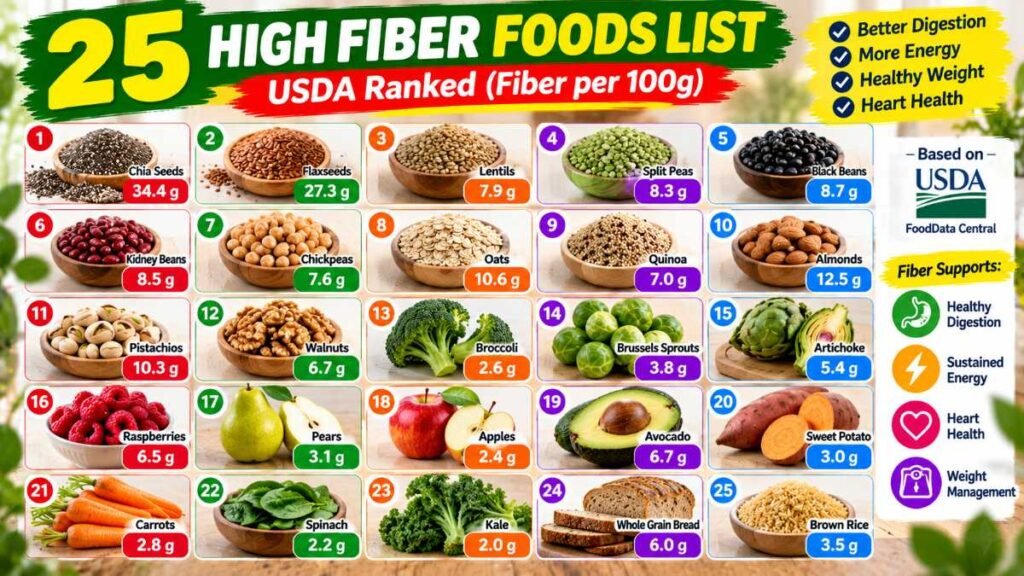
High-Fiber Foods Comparison Chart
Food Category | Top Item | Serving Size | Dietary Fiber Content | Practical Culinary Use |
Legumes | Split Peas (Boiled) | 1 Cup (Cooked) | 16.0 Grams | Hearty soups, purees, and grain bowls |
Seeds | Chia Seeds | 1 Ounce (2 Tbsp) | 10.0 Grams | Smoothies, overnight oats, or yogurt toppers |
Vegetables | Artichokes (Cooked) | 1 Cup | 9.6 Grams | Roasted side dishes or Mediterranean salads |
Fruits | Raspberries | 1 Raw Cup | 8.0 Grams | Fresh snacks, oatmeal toppings, or salads |
Grains | Whole-Wheat Pasta | 1 Cup (Cooked) | 6.0 Grams | Family weeknight dinners and meal prep |
For Busy Readers
If your schedule is demanding and you lack hours to spend cooking in the kitchen, these three convenient options are easy ways to add fiber to everyday meals:
- Canned Black Beans: A convenient choice—just open, rinse thoroughly to minimize sodium, and toss directly into salads or grain bowls.
- Rolled Oats: A satisfying, wholesome breakfast option that prepares in minutes, providing natural soluble fiber to help kickstart your morning schedule.
- Chia Seeds: A convenient pantry staple requiring zero cooking—simply mix into yogurt, oatmeal, or smoothies.
Soluble vs. Insoluble Fiber: Understanding the Mechanics
- Soluble Fiber: Dissolves in water to form a gel-like consistency in the gut, which can help slow down digestion and support balanced blood sugar levels. Commonly found in oats, chia seeds, and beans.
- Insoluble Fiber: Does not dissolve in water; it adds bulk to stool and helps food pass efficiently through the digestive tract. Commonly found in fruit skins, whole grains, and fibrous vegetables.
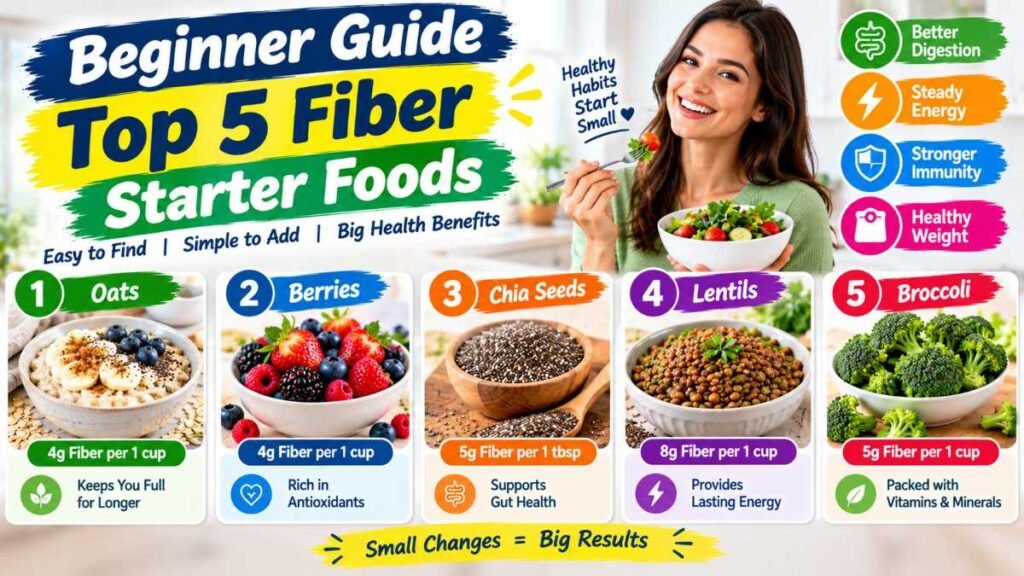
Beginner’s Guide: Top 5 Easy Starter Foods to Boost Intake
If you are transitioning from a standard diet, incorporating a higher fiber diet should be done thoughtfully. Start by exploring these 5 accessible choices:
- Rolled Oats: Quick to prepare; individual digestive tolerance varies.
- Apples & Pears (with skin): Easy, portable snacks that deliver soluble fiber on the go.
- Canned Black Beans: Pre-cooked and convenient—just rinse thoroughly to reduce excess sodium.
- Frozen Broccoli: Affordable, pre-chopped, and ready to steam in minutes for quick weeknight dinners.
- Chia Seeds: A versatile topping that easily blends into yogurts or smoothies.
Practical Grocery & Budget-Friendly Tips
Eating a fiber-rich diet doesn’t require expensive specialty items. You can easily stock an American pantry on a budget:
- Buy Canned and Frozen: Canned black beans, chickpeas, and frozen broccoli offer comparable nutritional profiles to fresh produce at competitive prices.
- Shop Bulk Bins: Purchasing dry lentils, split peas, and rolled oats from bulk sections at stores like Trader Joe’s, Sprouts, or local co-ops helps save money.
- Eat Seasonal Produce: Apples, pears, and root vegetables are cost-effective and naturally rich in fiber when purchased in season.
- Rinse Canned Goods: Flushing canned legumes thoroughly with cold water before preparation helps lower excess sodium levels while keeping their core fiber content intact.
Crafting a Balanced Daily Meal Plan
Note: According to the Harvard T.H. Chan School of Public Health, daily fiber recommendations generally range between 25g to 35g for adults, though individual needs vary based on age, gender, and activity level. The estimates below represent an approximate total calculation based on standard serving sizes.
- Morning Breakfast (Approx. 11.5g fiber): 0.5 cup of dry rolled oats (~4g) cooked in almond milk, stirred with 1 tablespoon of pre-soaked chia seeds (~3.5g) and topped with 0.5 cup of fresh raspberries (~4g).
- Midday Lunch (Approx. 11.5g fiber): A mixed green salad tossed with 0.5 cup of canned chickpeas (~6g), diced cucumbers, and a light olive oil dressing, paired with a medium pear with skin (~5.5g). For additional meal planning inspiration, browse through our collection of foods high in zinc.
Evening Dinner (Approx. 9.5g fiber): 0.5 cup of cooked quinoa (~2.5g) served alongside 1 cup of steamed
Overcoming Common Roadblocks: How to Increase Fiber Comfortably
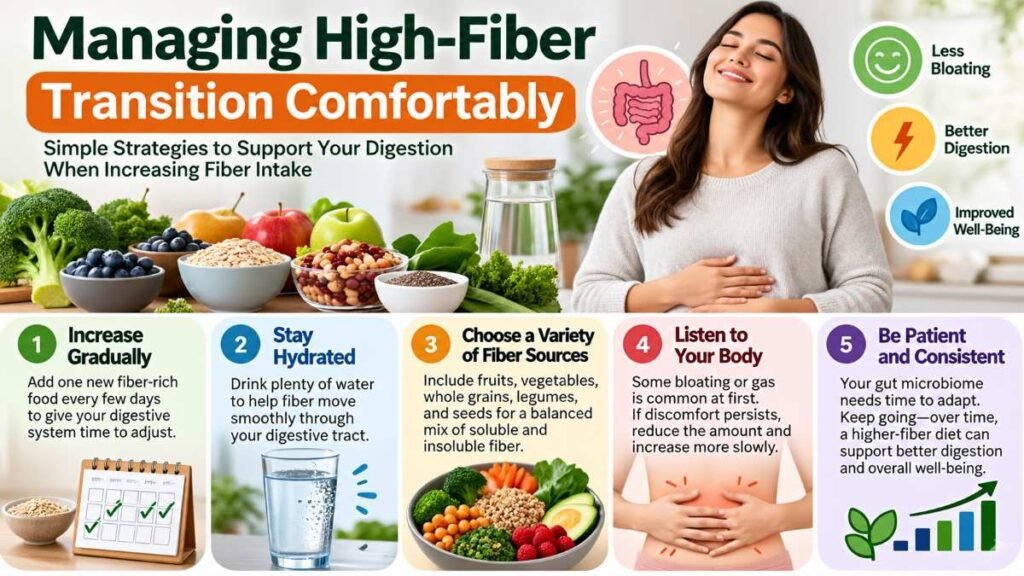
Transitioning too quickly from a low-fiber diet to a higher fiber diet can sometimes cause temporary gas or bloating. Follow these guidelines:
- Ramp Up Gradually: Introduce one new fiber-rich food every few days to give your digestive system adequate time to adjust.
- Hydrate Consistently: Fiber requires adequate water to move smoothly through the digestive tract. Pair your meals with water and other suitable fluids throughout the day. To help organize your weekly nutrition, find helpful strategies in our healthy meal prep ideas for lunch.
💡 FitLifePeak Expert Tip (Beating Bloating): Many individuals experience mild gas or bloating when first increasing fiber intake because the digestive system needs time to adapt. According to guidance from the National Institute of Diabetes and Digestive and Kidney Diseases (NIDDK), increasing fiber slowly and drinking plenty of fluids can help manage discomfort. If beans cause issues, soaking dry varieties for several hours before cooking may also help some people.
Your 7-Day Fiber Kickstart Challenge
Reading theory is helpful, but true wellness shifts require steady action. Try this simple 7-day challenge starting today:
- Days 1 to 3: Add 1 tablespoon of pre-soaked chia seeds or flaxseeds to your morning breakfast.
- Days 4 to 5: Incorporate half a cup of rinsed black beans or a fresh pear with its skin into your midday meal.
- Days 6 to 7: Drink fluids regularly and increase them as needed while gradually adding more high fiber foods to your routine.
Gradual steps can help support your gut microbiome and daily wellness journey without overwhelming your digestion!
. Frequently Asked Questions
Q1: What food gives us the most fiber? Ans: Nutrient-dense legumes like split peas and black beans lead the category of high fiber foods, providing maximum daily value.
Q2: How can I get 100% fiber daily? Ans: Maintain a balanced plate featuring a diverse selection of plant-based high fiber foods across every individual meal.
Q3: Is 1 banana a day enough fiber? Ans: A single banana yields roughly 3g, meaning you must pair it with other high fiber foods to achieve your full target.
Q4: What drink is high in fiber? Ans: Smoothies blended with chia seeds, flaxseed, and berries serve as refreshing liquid options packed with high fiber foods.
Q5: What food has the highest amount of fiber in the world? Ans: Dried split peas and specialty grains rank among the top global sources of high fiber foods for balanced nutrition.
Conclusion: Supporting Digestive Health & Well-Being
Building a sustainable, higher fiber diet is about making mindful, gradual changes that support long-term wellness rather than chasing quick fixes. By incorporating wholesome options from this high fiber foods list, you help support healthy digestion, nurture your gut microbiome, and maintain overall daily well-being.
Take Action Today: Pick just one high-fiber swap for tomorrow’s breakfast—such as adding a tablespoon of chia seeds or a fresh pear to your morning meal—and drink an extra glass of water to support your transition. Your journey toward balanced nutrition begins with a single purposeful plate!

Authoritative Reference Resources
Dietary Standards: Daily intake guidelines are adapted from the Harvard T.H. Chan School of Public Health Fiber Guide.
Nutritional Data: Food composition values are verified using the USDA FoodData Central Database.
Digestive Insights: Pacing and transition tips are guided by the National Institute of Diabetes and Digestive and Kidney Diseases (NIDDK).
Editorial & Food Safety Disclaimer
The content provided in this article is for informational and educational purposes only and is not intended as medical advice. Always consult with a qualified physician or registered dietitian before making significant changes to your diet, especially if you manage underlying gastrointestinal conditions or take prescription medications.
About the Author
Dambar C.P. Rajbanshi is the founder of FitLifePeak. All content is prepared in accordance with standard wellness guidelines and authoritative U.S. health resources to ensure accuracy, safety, and transparency.