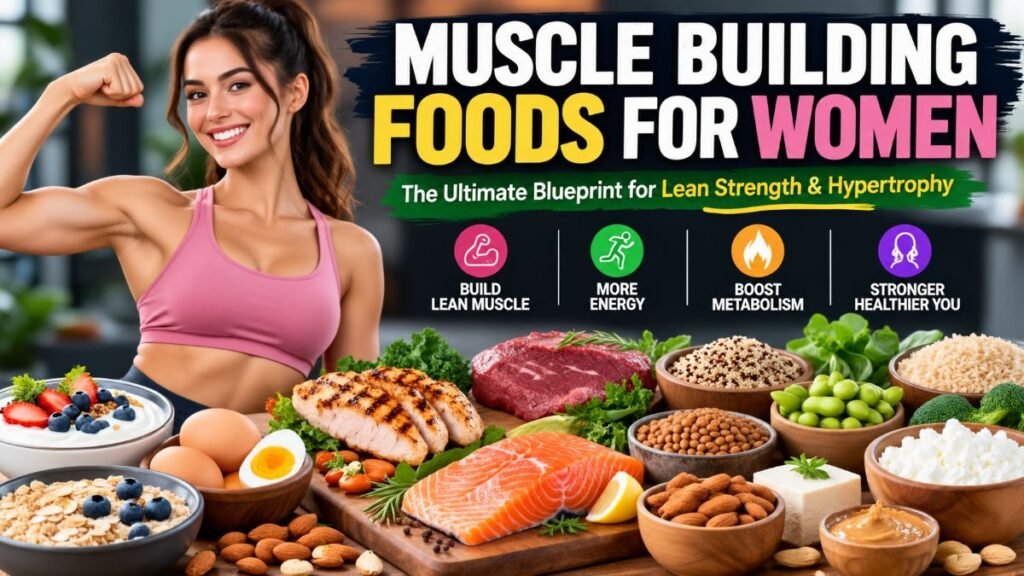
Tired of grinding through leg days and seeing zero muscle definition? Let’s be real—building true strength as a woman isn’t about guesswork or starving your metabolism. Most active women unknowingly shortchange their protein intake, leaving recovery stalled before it even starts. Unlocking your true athletic potential begins right here in your kitchen by mastering muscle building foods for women that drive real hypertrophy.
Why Protein, Carbs, and Whole Foods Matter
Lifting heavy weights creates microscopic structural stress in muscle tissue, but lifting alone does not build size or tone. To initiate muscle protein synthesis and recover efficiently, your system requires precise nutritional building blocks. According to the International Society of Sports Nutrition Position Stand on Protein and Exercise, active individuals looking to optimize body composition generally benefit from a protein intake ranging between 1.4 to 2.0 grams per kilogram of body weight daily (approximately 0.64 to 0.91 grams per pound).
However, protein is only one piece of the puzzle. Complex carbohydrates help replenish muscle glycogen and support training intensity, while balanced dietary fats support overall hormonal health and cellular integrity. To support post-workout recovery and overall wellness, you can also explore our Importance of Healthy Eating Habits guide. Choosing the right muscle building foods for women ensures your hard work in the gym translates directly into sustainable, visible progress. For general daily vitality, balancing these macros alongside a focus on Healthy Fat Foods and Healthy Carbohydrate Foods will keep your metabolism operating smoothly.
Calorie Needs and Personal Protein Baselines for Muscle Gain
Before stocking your kitchen, it helps to understand that cookie-cutter diet plans rarely work. Every woman’s energy expenditure and metabolic rate are unique.
- Protein Estimation: Start with a reliable baseline of around 1.6 grams of protein per kilogram of body weight (approximately 0.73 grams per pound) and adjust based on your recovery speed and training volume. Note that 1.4–2.0 g/kg/day is a general evidence-based range for active individuals, and personal requirements will vary.
- Flexible Calorie Approach: Some women may benefit from a modest calorie surplus to support muscle growth, while beginners and those returning to resistance training may build muscle at maintenance calories. Start by eating enough to support your training and recovery, then adjust your intake based on progress, energy levels, and individual needs.
By calculating your personal targets rather than following rigid restrictions, you can incorporate muscle building foods for women in a way that feels nourishing rather than restrictive.
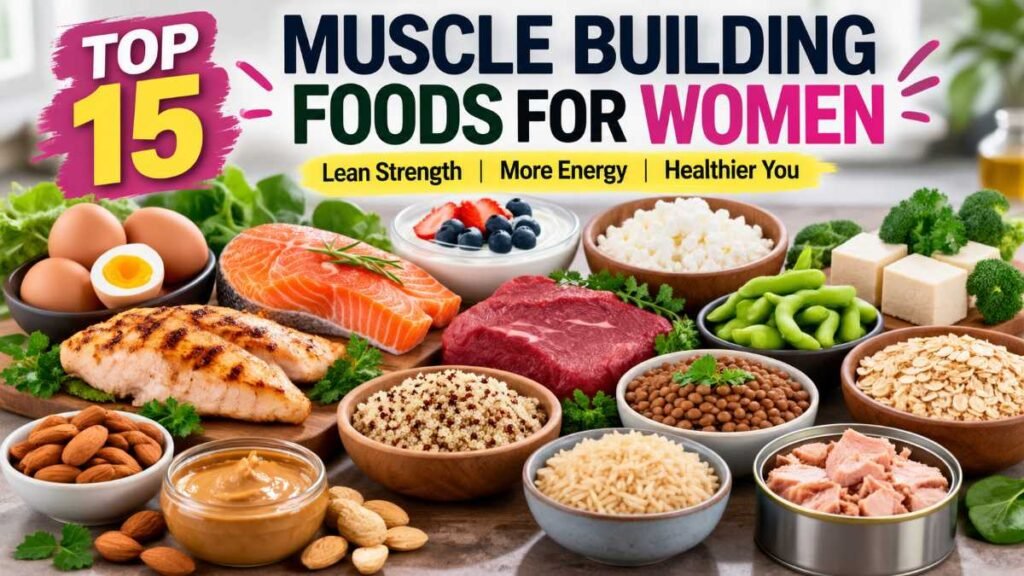
Top 15 Nutrient-Dense Picks for Female Muscle Growth
Building muscle generally benefits from adequate nutrition, progressive resistance training, and recovery. Below are 15 premier whole-food options designed to elevate your daily nutrition plan.
- Whole Eggs: Whole eggs supply a complete profile of all nine essential amino acids, alongside naturally occurring leucine to support muscle repair.
- Chicken Breast: A staple lean protein source providing high amino acid density with minimal dietary fat, accompanied by B vitamins like niacin. For creative meal prep inspiration, you can browse these Healthy Chicken Recipes.
- Wild Salmon: Packed with clean protein and essential omega-3 fatty acids. (Note: If you are pregnant, nursing, or planning to become pregnant, review the FDA/EPA Advice About Eating Fish regarding low-mercury seafood choices).
- Greek Yogurt: Features a blend of fast-acting whey protein and slow-digesting casein protein, making it a convenient recovery option.
- Lean Beef and Bison: Rich in bioavailable iron, zinc, and natural creatine, red meat provides micronutrients that support cellular energy production during training blocks.
- Edamame: A plant-based complete protein that supplies young green soy protein along with dietary fiber for steady digestion.
- Tofu: Highly adaptable and rich in calcium and plant protein, tofu acts as a versatile structural food for plant-powered lifters.
- Cottage Cheese: Cottage cheese is rich in casein protein, which is digested more slowly than whey and can be a convenient way to add protein to an evening meal.
- Lentils: Packed into every serving of lentils is a reliable blend of plant-based protein, complex carbs, iron, and magnesium to support performance and recovery.
- Quinoa: Quinoa provides carbohydrates, fiber, and all nine essential amino acids, making it a useful addition to a balanced meal.
- Oats: Oats provide carbohydrates, fiber, and some protein; their effect on energy depends on the meal and individual.
- Almonds: Dense in plant protein, healthy fats, and vitamin E, almonds supply valuable micronutrients for overall daily wellness.
- Peanuts and Natural Peanut Butter: Packed with steady calories and natural plant protein, these make an excellent addition for active women navigating a clean bulking phase.
- Ahi Tuna: Exceptionally lean and high in protein, selenium, and B-complex vitamins. (Note: According to official FDA/EPA Advice About Eating Fish, yellowfin (ahi) tuna is classified as a “Good Choice,” whereas larger species like bigeye tuna fall under “Choices to Avoid” for pregnant or breastfeeding individuals).
- Brown Rice: A dependable complex carbohydrate source that pairs seamlessly with lean proteins to support post-exercise glycogen restoration.
Realistic Pre-Workout and Post-Workout Nutrition Strategies
Timing your intake of muscle building foods for women can support your gym performance and physical recovery, but absolute perfection is not required.
- Pre-Workout Window (1 to 2 Hours Prior): Focus on easily digestible complex carbohydrates paired with a minor protein source—such as oatmeal with sliced banana or a rice cake with natural peanut butter—to top off energy stores without digestive sluggishness. For more ideas on pre-exercise fueling, check out our Best Foods Before Workout guide.
- Post-Workout Window (Flexible Refueling): While rigid meal-timing windows have softened in modern sports science, consuming a balanced meal containing protein and carbs within a reasonable timeframe post-training helps efficiently repair tissue and restore energy.
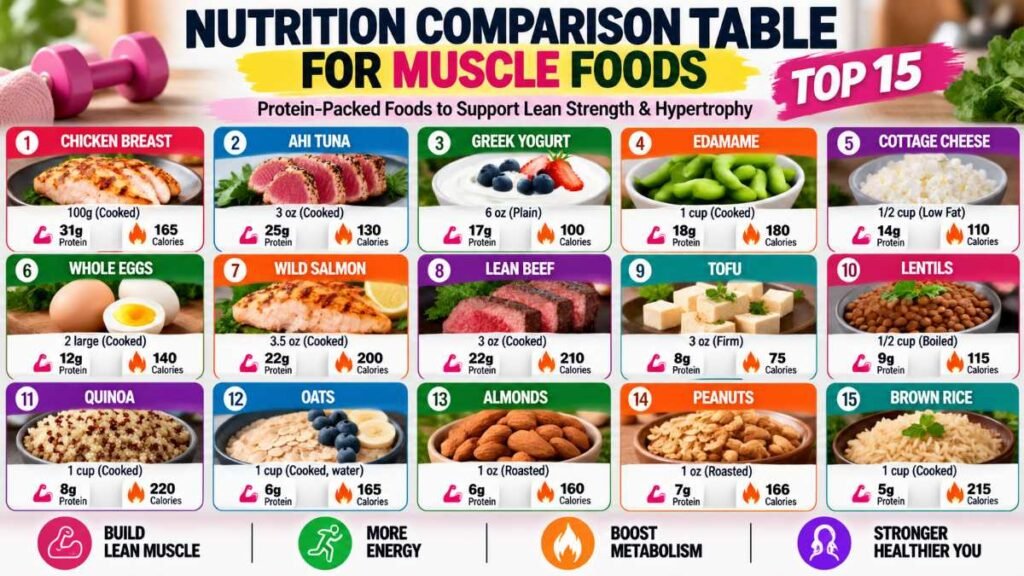
Nutritional Comparison Table: The 15 Best Muscle Foods
Food Item | Serving Size (Prepared) | Protein (g) | Calories | Best Timing |
Chicken Breast | 100g (Cooked) | ~31g | ~165 | Post-Workout / Lunch |
Ahi Tuna | 3 oz (Cooked) | ~25g | ~130 | Dinner / Lunch |
Greek Yogurt | 6 oz (Plain) | ~17g | ~100 | Post-Workout / Snack |
Edamame | 1 cup (Cooked) | ~18g | ~180 | Snack / Pre-Workout |
Cottage Cheese | 1/2 cup (Low Fat) | ~14g | ~110 | Bedtime Snack |
Whole Eggs | 2 large (Cooked) | ~12g | ~140 | Breakfast |
Wild Salmon | 3.5 oz (Cooked) | ~22g | ~200 | Dinner |
Lean Beef | 3 oz (Cooked) | ~22g | ~210 | Lunch / Dinner |
Tofu | 3 oz (Firm) | ~8g | ~75 | Lunch / Dinner |
Lentils | 1/2 cup (Boiled) | ~9g | ~115 | Lunch |
Quinoa | 1 cup (Cooked) | ~8g | ~220 | Pre-Workout |
Oats | 1 cup (Cooked, prepared with water) | ~6g | ~165 | Breakfast |
Almonds | 1 oz (Roasted) | ~6g | ~160 | Daily Snack |
Peanuts | 1 oz (Roasted) | ~7g | ~166 | Daily Snack |
Brown Rice | 1 cup (Cooked) | ~5g | ~215 | Post-Workout |
Note: Nutrition metrics reflect standard baseline averages and may vary slightly depending on specific brands (especially items like Greek yogurt where protein concentrations differ), preparation methods, and exact serving measurements.
Sample Daily Meal Plan & Flexible Substitutions
Consistency is built on structure. Here is a practical example of a balanced day of eating (note that individual requirements vary, and this serves as a structural sample rather than a rigid prescription):
- Breakfast: Scrambled whole eggs (2 large) with fresh baby spinach alongside a warm bowl of steel-cut oats topped with blueberries and chia seeds.
- Mid-Morning Snack: Plain Greek yogurt (6 oz) mixed with a small handful of raw almonds.
- Lunch: Grilled chicken breast (100g) served over a bed of quinoa, roasted bell peppers, and steamed broccoli drizzled with olive oil.
- Pre-Workout Fuel: A slice of whole-grain toast layered with natural peanut butter and banana slices.
- Post-Workout Dinner: Baked wild salmon (3.5 oz) paired with brown rice and roasted asparagus spears.
- Before Bed: A small bowl of low-fat cottage cheese (1/2 cup) to add protein to your evening meal.
(Note: Eating every 3 hours is optional; focus primarily on hitting your total daily protein target and maintaining sustainable meal patterns).
Common Pitfalls That Stall Female Muscle Growth
Even with a consistent training schedule, avoiding these frequent mistakes will support your long-term success:
- Inadequate Protein Intake: Failing to meet your daily protein requirements can slow down muscle tissue recovery. Always establish your personal baseline first.
- Carbohydrate Restriction: Eliminating carbs entirely can deplete glycogen stores, leading to lower training intensity and sluggish recovery.
- Neglecting Micronutrient & Gut Health: Overlooking digestive wellness and essential dietary minerals can rapidly drain your physical stamina and stall overall recovery. Focus on whole-food variety to support your nutrient absorption and daily wellness by checking out resources like our Gut Healthy Foods guide.
Frequently Asked Questions
What should women eat to gain lean muscle?
Focus on high-quality proteins like eggs, chicken, and wild salmon paired with slow-burning complex carbs. Incorporating nutrient-dense muscle building foods for women accelerates tissue repair.
How can females accelerate muscle hypertrophy?
Combine progressive resistance training with a sustainable energy surplus and adequate daily protein (1.4–2.0 g/kg). Utilizing targeted muscle building foods for women ensures safe physical transformation.
Is meal frequency critical for muscle growth?
No. Your total daily protein intake and consistent training volume matter far more than eating every few hours.
Which foods provide sustained energy during training?
Carbohydrate sources like oats, quinoa, and brown rice help replenish glycogen and fuel athletic performance effectively.
What primary mistake stalls female muscle gains?
Chronic under-eating and inadequate protein intake stunt progress. Avoiding extreme macro restrictions and prioritizing high-quality muscle building foods for women prevents plateaus.
Expert Conclusion & Actionable Next Steps
Building a strong, athletic physique requires patience, consistent resistance training, and intelligent nutrition. Move away from restrictive crash diets and focus on nourishing your body with single-ingredient whole foods that fuel your recovery. Take charge of your fitness journey today—audit your grocery cart, calculate your personal protein target, and build a strong, resilient foundation for your health!
Authoritative External Sources:
International Society of Sports Nutrition (ISSN) Position Stand — Protein timing aur active individuals ke liye daily protein range (1.4–2.0 g/kg) ka authoritative sports science reference.
FDA/EPA Advice About Eating Fish — Pregnant ya breastfeeding women ke liye seafood choices aur mercury safety guidance ka official U.S. government source.
USDA FoodData Central — Whole foods (jaise chicken breast, quinoa, aur eggs) ke nutritional profiles aur macro-nutrient data verify karne ke liye reliable federal database.
Editorial & Food Safety Disclaimer:
The nutritional guidelines provided in this guide are strictly for educational and informational purposes. Individual dietary requirements vary based on baseline health, age, and training intensity. Always consult a qualified physician or registered dietitian before launching any new fitness or nutritional regimen.
About the Author:
Dambar C.P.Rajbanshi is the founder of FitLifePeak and an evidence-based health and wellness content creator. He specializes in translating complex nutritional science into actionable, practical blueprints that empower individuals to transform their lives.