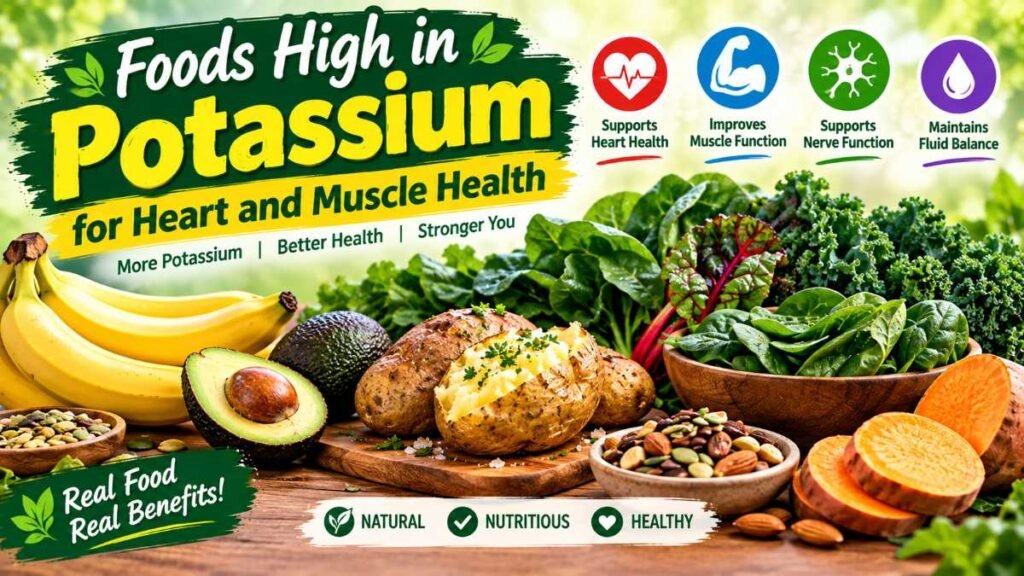
When feeling sluggish or dealing with stubborn muscle cramps, bananas are usually the first fix people suggest. While bananas are great, relying solely on them leaves a massive nutritional gap on your plate. Integrating a variety of foods high in potassium into your weekly routine supports steady nerve signaling, balanced fluid regulation, and healthy muscle function. Here is a practical, evidence-informed guide to fuel your body with top potassium sources beyond the basic yellow fruit.
What Is Potassium and Why Does Your Body Need It?
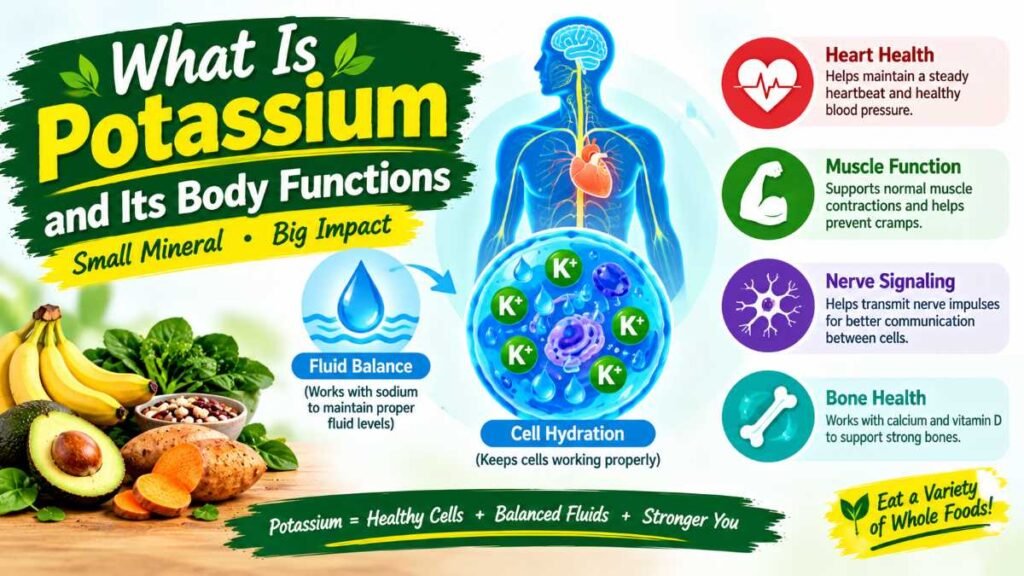
Because potassium is an essential mineral, your body needs a regular dietary supply to maintain normal physiological functions. Since the body cannot synthesize it internally, daily food choices are your sole source for keeping electrolyte levels balanced.
Within human physiology, potassium plays a critical structural and functional role in keeping your systems operating smoothly:
- Fluid Regulation & Hydration: Positioned mostly within body cells, potassium balances extracellular sodium to maintain optimal fluid levels and continuous cellular function across your entire system. Together, these electrolytes help maintain fluid balance and electrical gradients across cell membranes.
- Nerve Impulse Conduction: Nerve signals and muscle contractions depend on carefully regulated changes in electrical gradients across cell membranes, involving sodium, potassium, and other ions.
- Muscle Function & Cramp Prevention: Essential for healthy muscle responsiveness, potassium helps prevent sudden fatigue. However, persistent spasms usually result from a blend of fluid loss, intense exercise, or broader electrolyte gaps.
Daily Recommended Intake & Electrolyte Balance
For average, healthy American adults, the National Academies of Sciences, Engineering, and Medicine suggests an Adequate Intake (AI) of roughly 2,600 mg per day for adult women and 3,400 mg per day for adult men.
[ Women’s Daily Target ]
—> ~2,600 mg daily
|
Men’s Reference Target
—> ~3,400 mg Potassium / Day
Note: These figures serve as general daily reference targets for healthy individuals. Athletes and people who sweat heavily may have different electrolyte needs depending on exercise duration, intensity, climate, overall diet, and individual sweat losses.
The Sodium-Potassium Relationship
In the modern American diet, excess sodium from processed foods often overshadows natural potassium intake. Research summaries published by the NIH Office of Dietary Supplements show that eating more potassium-rich foods while keeping sodium intake within recommended limits can support healthy blood pressure as part of an overall balanced diet.
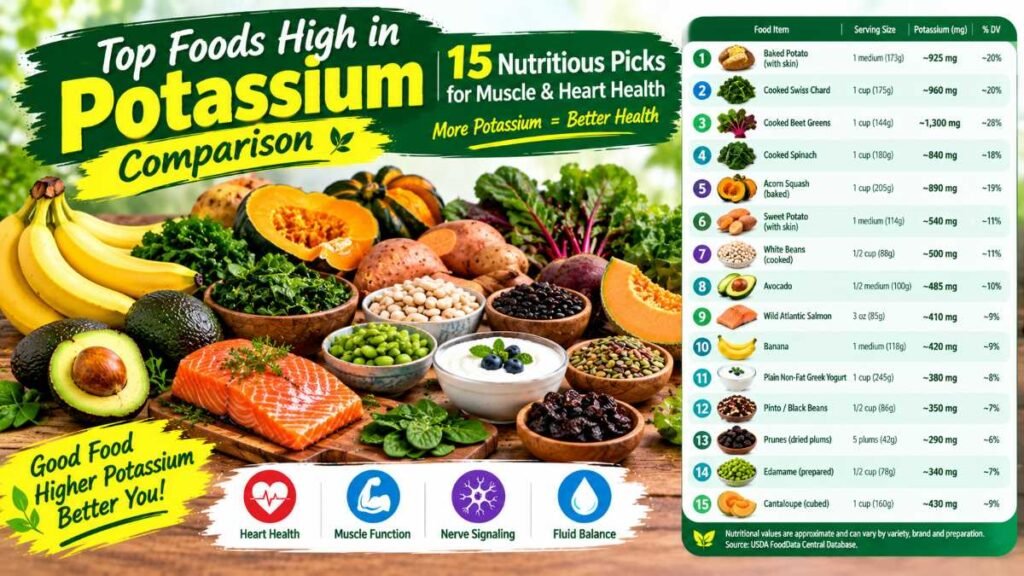
Top Foods High in Potassium: The 15-Food Comparison Table
Nutrient values are approximate and can vary by food variety, brand, serving size, and preparation method. Always check the Nutrition Facts label on packaged whole foods.
Food Item | Typical Serving Size | Approx. Potassium (mg) | Daily Value (% DV) | Notable Nutrients / Key Features |
Baked Potato (with skin) | 1 Medium (173g) | ~925 mg | ~20% | Potassium, complex carbohydrates, fiber (when eaten with skin) |
Cooked Swiss Chard | 1 Cup cooked (175g) | ~960 mg | ~20% | Potassium, magnesium, vitamin K, dietary fiber |
Cooked Beet Greens | 1 Cup cooked (144g) | ~1,300 mg | ~28% | Potassium, vitamin A, iron, antioxidants |
Cooked Spinach | 1 Cup cooked (180g) | ~840 mg | ~18% | Potassium, folate, iron, vitamin K |
Acorn Squash (baked) | 1 Cup cubed (205g) | ~890 mg | ~19% | Potassium, vitamin C, dietary fiber, beta-carotene |
Sweet Potato (baked with skin) | 1 Medium (114g) | ~540 mg | ~11% | Potassium, fiber, beta-carotene, complex carbohydrates |
White Beans (cooked) | 1/2 Cup (88g) | ~500 mg | ~11% | Potassium, plant protein, soluble fiber, iron |
Avocado | 1/2 Medium (100g) | ~485 mg | ~10% | Potassium, fiber, monounsaturated healthy fats |
Wild Atlantic Salmon | 3 oz cooked (85g) | ~410 mg | ~9% | Potassium, high-quality protein, Omega-3 fatty acids |
Medium Banana | 1 Medium (118g) | ~420 mg | ~9% | Potassium, vitamin B6, fiber, easily digestible carbs |
Plain Non-Fat Greek Yogurt | 1 Cup (245g) | ~380 mg | ~8% | Potassium, calcium, dense protein, live cultures |
Pinto / Black Beans | 1/2 Cup cooked (86g) | ~350 mg | ~7% | Potassium, plant-based protein, dietary fiber |
Prunes (Pitted Dried Plums) | 5 Plums (42g) | ~290 mg | ~6% | Potassium, vitamin K, fiber, natural sorbitol |
Edamame (prepared) | 1/2 Cup (78g) | ~340 mg | ~7% | Potassium, complete plant protein, fiber, folate |
Cantaloupe (cubed) | 1 Cup (160g) | ~430 mg | ~9% | Potassium, high water content, vitamin C, vitamin A |
Nutritional values referenced from the USDA FoodData Central Database.
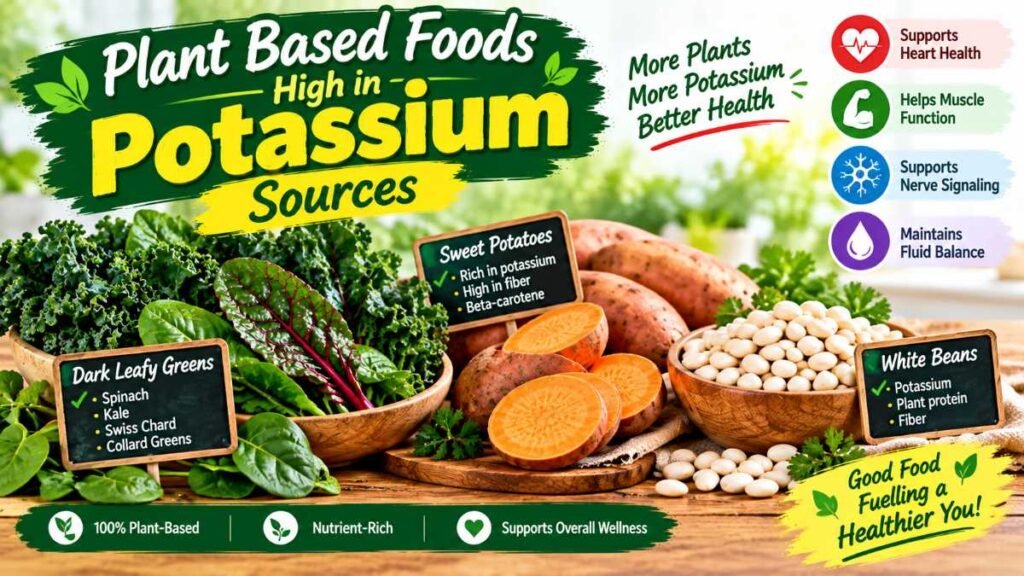
Plant-Based & Whole Food Potassium Powerhouses
Incorporating foods high in potassium does not require exotic powders or expensive supplements. Unprocessed plant foods naturally concentrate potassium alongside dietary fiber and protective micronutrients.
Leafy Dark Greens
Cooked beet greens, Swiss chard, and spinach top the charts. Steaming or lightly sautéing greens reduces their volume, allowing you to consume a higher concentration of minerals per plate compared to raw salad leaves. Pair these leafy greens with our favorite selections of best iron-rich foods to build a mineral-dense meal.
Tubers & Winter Squash
Russet potatoes, sweet potatoes, and acorn squash store impressive amounts of potassium. Eating potatoes with the skin can provide additional fiber and nutrients, while baking or roasting with minimal added water can reduce potassium losses compared with boiling and discarding the cooking water.
Legumes & Beans
White beans, pinto beans, lentils, and edamame serve a dual purpose. They deliver substantial potassium while providing plant protein and soluble fiber. If you cook with canned beans, rinse them under cold water to lower excess sodium content while preserving core minerals.
Nutrient-Dense Fruits
Beyond bananas, options like avocados, cantaloupe, dried prunes, and coconut water provide clean, refreshing ways to reach your daily targets—especially during warm weather or after daily activities.
Animal Proteins, Dairy & Seafood Options
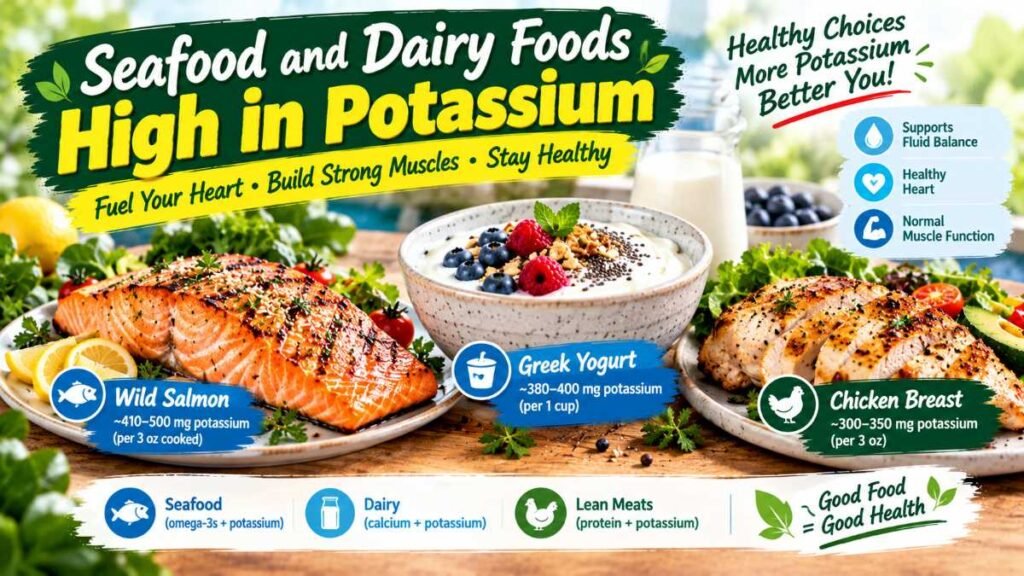
If you follow an omnivorous diet, high-quality animal proteins and dairy products contribute meaningful amounts of potassium to your daily intake alongside amino acids.
[ Wild Salmon / Halibut ]
—> ~400mg – 500mg per 3 oz
|
[ Lean Poultry Breast ]
—> ~300mg – 350mg per 3 oz
|
[ Greek Yogurt / Fluid Milk ]
—> ~350mg – 400mg per 1 Cup
- Seafood Choices: Wild salmon, halibut, flounder, and tuna provide roughly 350 mg to 500 mg of potassium per cooked 3 oz portion. Pair them with our top healthy salmon dinner recipes for a light, balanced dinner.
- Poultry & Lean Meats: Boneless chicken breast and turkey breast deliver approximately 300 mg to 350 mg per serving.
- Dairy & Cultured Options: Non-fat Greek yogurt, traditional milk, and kefir supply easily absorbable potassium alongside calcium and protein. Combine dairy options with our list of gut healthy foods to support overall digestive wellness.
How Cooking Methods Affect Potassium Retention
Potassium is a water-soluble mineral. This means cooking techniques using high volumes of liquid can leach potassium out of produce if that liquid is discarded.
Understanding Nutrient Leaching
Boiling can cause some potassium to move into the cooking water, particularly when vegetables are cut into small pieces and boiled for extended periods.
Best Preparation Methods to Retain Minerals
- Roasting & Baking: Baking potatoes or squash whole with their skin intact keeps minerals contained within the food.
- Steaming: Using a steamer basket reduces direct contact with hot water, preserving water-soluble nutrients.
- Soups, Stews & Broths: When you simmer vegetables directly in a soup or broth, any leached potassium remains in the liquid you consume.
- Microwaving: Quick microwave cooking uses minimal moisture, keeping mineral loss low.
Budget-Friendly Grocery Strategies for High Potassium
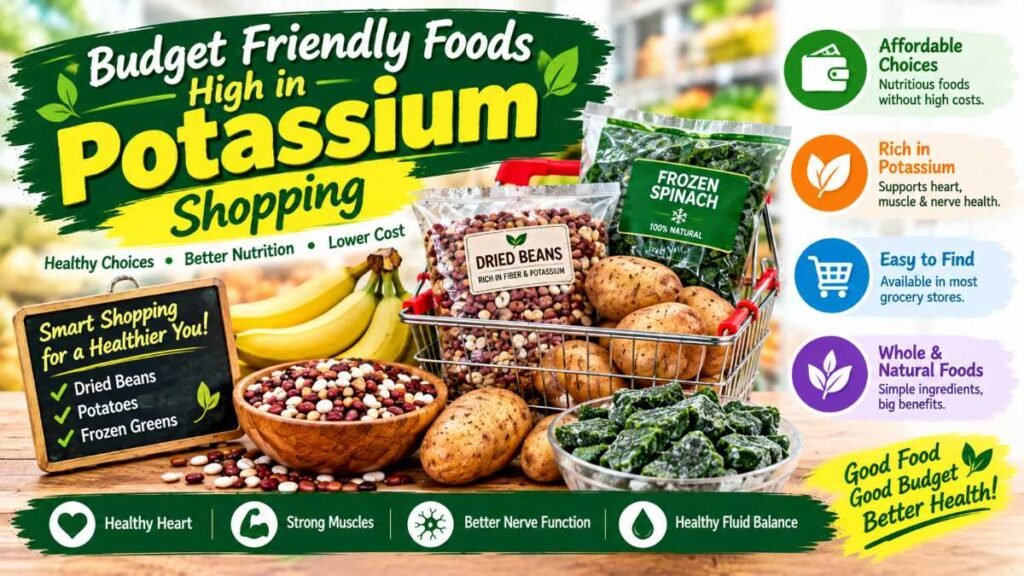
Eating a mineral-rich diet does not require spending heavily on high-priced specialty items. Simple shopping adjustments help you source potassium economically.
- Choose Economical Dried Beans: Buying dry lentils, pinto beans, or white beans instead of canned ones gives you maximum nutrition for a fraction of the cost—plus they keep fresh in your pantry for months.
- Stock Up on Frozen Vegetables: Frozen spinach, broccoli, and winter squash are flash-frozen at peak quality, providing consistent nutrition at budget-conscious prices.
- Opt for Pantry Staples: Russet potatoes, sweet potatoes, and bananas remain among the most affordable whole-food choices per pound in American grocery stores.
For additional wallet-friendly grocery tips, review our complete breakdown of healthy foods on a budget.
Potassium Intake for Active Individuals & Busy Schedules
During prolonged or intense exercise, replacing fluids and electrolytes can be important, especially in hot conditions or when sweat losses are substantial. Individual needs vary based on workout type, duration, and personal physiology.
Practical Meal & Snack Ideas
- Pre-Workout Option: Enjoy a banana or a slice of sprouted-grain toast with nut butter before active sessions. Explore more options in our guide on the best foods before workout.
- Post-Workout Refreshment: Blend Greek yogurt with berries and a splash of coconut water or milk. The exact potassium amount will vary by ingredient and serving size, so check nutrition labels when precise intake matters.
- Workplace Snacks: Keep dry-roasted pistachios, pumpkin seeds, or dried prunes at your desk for convenient daily snacking.
Important Medical Considerations & Health Safety
While consuming foods high in potassium from whole food sources is safe for most healthy people, specific medical conditions require careful dietary oversight.
Kidney Function & Medical Risks
In healthy people with normally functioning kidneys, potassium from food is generally handled effectively by the body. However, individuals with Chronic Kidney Disease (CKD), reduced renal function, or those taking medications such as ACE inhibitors or potassium-sparing diuretics may need individualized potassium limits to prevent hyperkalemia (high blood potassium levels).
Guidance on High-Dose Supplements
High-dose potassium supplements should not be started without guidance from a qualified healthcare professional, particularly if you have kidney disease or take medications that affect potassium levels. For a deeper, evidence-backed dive into electrolyte nutrition, check out the comprehensive resources curated by the Harvard T.H. Chan School of Public Health.
A Simple 3-Day High-Potassium Meal Blueprint
Here is a practical 3-day framework demonstrating how to naturally incorporate a variety of foods high in potassium across regular daily meals:
Day 1
- Breakfast: 1 cup plain Greek yogurt topped with sliced banana, chia seeds, and walnuts.
- Lunch: A bowl of lentil and vegetable soup served with a side salad.
- Dinner: Baked wild salmon served with a medium baked sweet potato and steamed broccoli.
Day 2
- Breakfast: 3-egg scramble loaded with cooked spinach, diced tomatoes, and avocado slices.
- Lunch: Turkey wrap filled with dark leafy greens, black beans, and salsa. Check out easy prep options in our healthy wrap recipes guide.
- Dinner: Grilled chicken breast paired with roasted potato wedges and sautéed Swiss chard.
Day 3
- Breakfast: High-protein overnight oats prepared with soy milk, chia seeds, and fruit.
- Lunch: Quinoa salad bowl tossed with edamame, cucumber, and pumpkin seeds.
- Dinner: Hearty white bean and vegetable stew served with toasted whole-grain bread.
Frequently Asked Questions
Q1. What drink is very high in potassium?
Coconut water, prune juice, and low-fat milk are exceptional options alongside nutrient-dense fruit smoothies.
Q2. How to raise potassium quickly?
Eating fast-absorbing foods high in potassium like bananas, baked potatoes, and avocado helps restore normal balance rapidly.
Q3. Does potassium lower BP?
Yes, it helps ease tension in blood vessel walls and flushes excess sodium out of your body.
Q4. What foods bring potassium levels down?
Low-potassium choices like white rice, apples, berries, and cucumber help manage high blood levels effectively.
Q5. Which food is highest in potassium?
Cooked beet greens, Swiss chard, and baked russet potatoes top the list of natural foods high in potassium.
Summary & Actionable Next Step
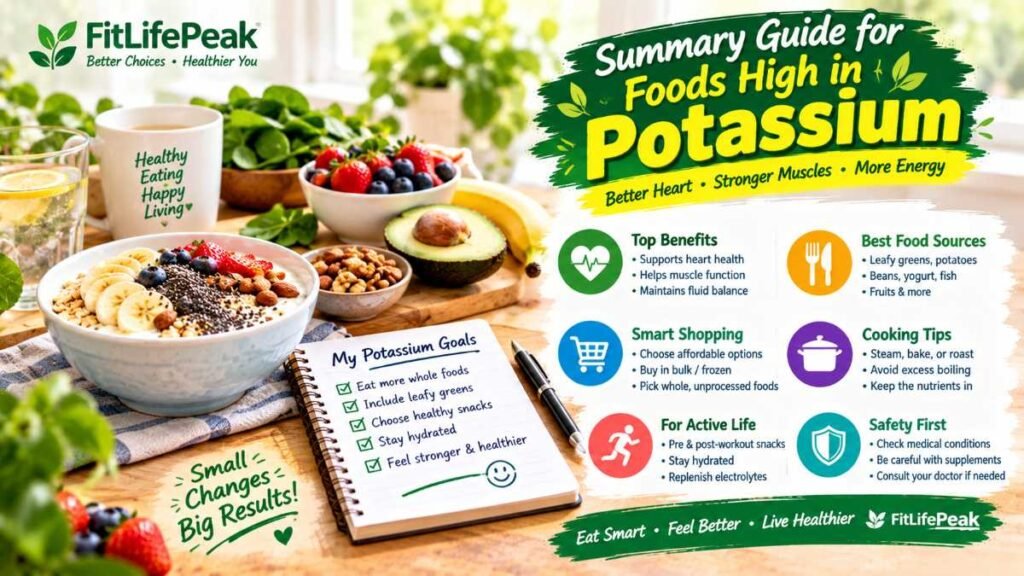
Boosting your daily potassium doesn’t mean reinventing your entire diet. Simple, purposeful swaps—like replacing fries with a baked sweet potato or mixing leafy greens into your scrambled eggs—make hitting your nutrient targets effortless. Pick just one whole-food swap from this list for your upcoming grocery run, and take charge of your electrolyte balance starting today!
Authoritative External Sources
For evidence-backed nutrition guidance and detailed mineral profile data, consult these trusted public health institutions:
NIH Office of Dietary Supplements: Potassium Fact Sheet for Health Professionals
USDA FoodData Central: Nutrient Data & Food Sources of Potassium
Harvard T.H. Chan School of Public Health: The Nutrition Source: Potassium & Health
Editorial & Safety Disclaimer
The nutritional guidance provided in this article is intended strictly for educational purposes and should not replace professional medical advice, diagnosis, or treatment. Individual mineral requirements vary based on medical history, kidney health, and medication use. Always consult a qualified healthcare professional or registered dietitian before making substantial adjustments to your daily diet.
About the Author
Dambar C.P.Rajbanshi is the founder of FitLifePeak and a health content creator focused on making evidence-based nutrition clear, accessible, and practical for everyday living.