
Ever wonder why that sudden afternoon energy crash hits you around 2 PM, even when you’ve barely left your desk? Most people blame stress or lack of sleep, but the real culprit is often silent water loss. When your body runs low on fluids, your brain slows down, your heart works harder, and your stamina plummets. Learning to spot the 10 signs of dehydration before they drain your focus can completely transform your daily energy and physical performance
The Physiological Role of Water in Human Health
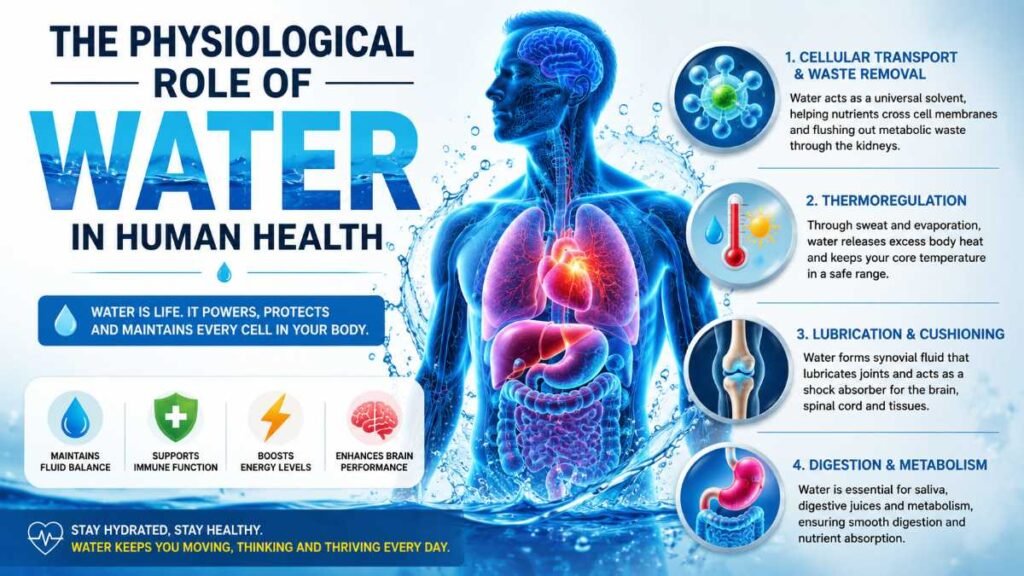
Water is far more than a way to quench thirst; it is an active biological component required for fundamental biochemical processes.
- Cellular Transport and Waste Removal: Water functions as the primary universal solvent in human biology. It enables essential nutrients to pass through cell membranes while assisting the kidneys in filtering out metabolic byproducts and waste.
- Core Thermoregulation: Sweating and subsequent evaporation allow the sweat glands to dissipate internal thermal energy during physical exertion or high heat exposure, stabilizing core body temperature.
- Joint Cushioning and Lubrication: Water forms the structural foundation of synovial fluid, which lubricates joints and provides mechanical shock absorption for the spine and central nervous system.
Digestive Function: Saliva and digestive secretions rely heavily on fluid availability to break down food efficiently, maintaining smooth transit through the gastrointestinal tract and preventing blockages.
Common Causes and Environmental Risk Factors
Fluid imbalance occurs when fluid output exceeds fluid intake. Common triggers include daily routines, environmental conditions, and underlying physiology:
- Inadequate Daily Intake: Busy schedules often lead people to ignore early thirst cues or delay drinking fluid throughout the day.
- Excessive Perspiration: High ambient temperatures, intense athletic activity, or physical labor accelerate moisture loss through the skin.
- Gastrointestinal Distress: Illnesses involving acute vomiting, diarrhea, or high fevers deplete internal fluid stores rapidly.
- Diuretic Substances: Habitual consumption of alcohol, highly caffeinated beverages, or specific prescription diuretics increases urine output and renal fluid excretion.
- High-Risk Demographics: Older adults often experience a decreased thirst sensation and lower baseline body water, while infants and young children rely entirely on caregivers for hydration during illness.
Recognizing the 10 Signs of Dehydration Before They Progress
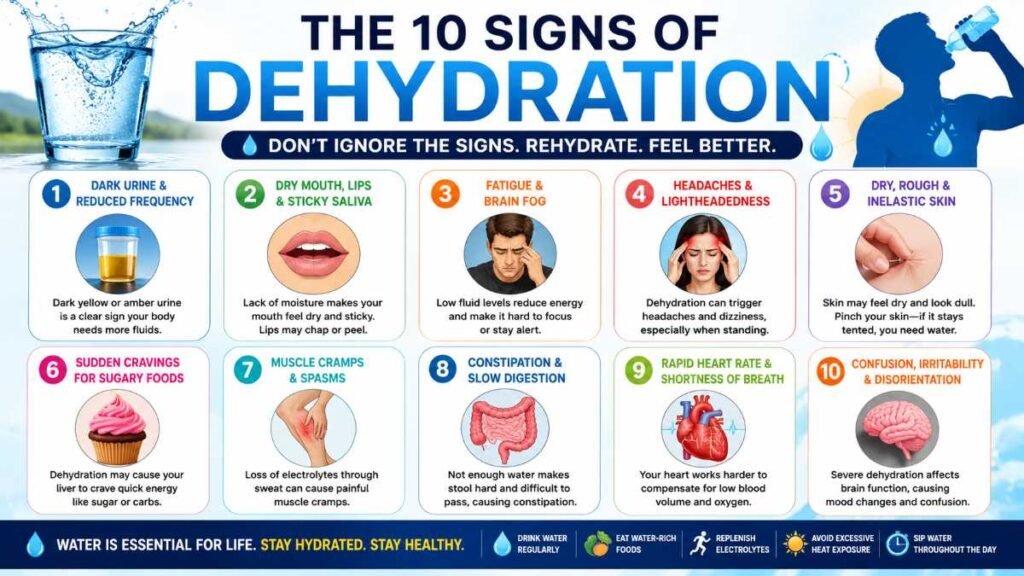
Identifying the early physical indicators of fluid loss helps prevent mild hydration issues from developing into medical complications. Pay attention to these 10 signs of dehydration:
Dark-Colored Urine and Reduced Frequency
Your kidneys continuously control body hydration levels by fine-tuning how concentrated or diluted your urine is. Adequate hydration produces pale, straw-colored urine. Deep yellow, amber, or dark brown urine indicates that the kidneys are conserving water, signaling a need to increase fluid intake.
Dry Mouth, Lips, and Sticky Saliva
When systemic fluid levels fall, salivary glands decrease output. It leaves your mouth feeling parched, saliva sticky, and lips chapped, turning simple talking and swallowing uncomfortable.
Persistent Daytime Fatigue and Brain Fog
Fluid loss leads to a reduction in plasma volume. Lower blood volume forces the cardiovascular system to work harder to deliver oxygen and nutrients throughout the body, leading to physical sluggishness and reduced mental clarity.
Frequent Headaches and Lightheadedness
The brain rests within cerebrospinal fluid. When fluid balance drops, subtle volume changes can exert tension on the cranial lining, triggering dull headaches or brief dizziness upon standing.
Dry, Inelastic Skin
Skin elasticity, or skin turgor, depends on adequate hydration in dermal tissues. Dehydrated skin may appear dull or dry. If pinched skin on the back of the hand takes extra time to snap back into place, fluid stores are low.
Sudden Cravings for Sugary Foods
Water is required for the liver to breakdown glycogen stores and release glucose into the bloodstream. When fluid levels are depleted, the body may struggle with glycogen processing, sometimes triggering cravings for quick carbohydrates or sweets.
Painful Muscle Spasms and Cramps
Sweating depletes both water and essential electrolytes like sodium and potassium. An imbalance in these minerals increases neuromuscular irritability, leading to involuntary muscle cramping, particularly in the calves and feet.
Constipation and Sluggish Digestion
Your colon pulls water from digested waste to form stool. When you are dehydrated, it absorbs extra fluid, leading to dry, hard stools and constipation.
Elevated Heart Rate and Rapid Breathing
To maintain stable blood pressure despite reduced blood volume, the heart compensates by beating faster (tachycardia). You might feel your heart racing or get unusually out of breath doing basic daily chores.
Confusion, Irritability, and Disorientation
Significant fluid and electrolyte loss directly impacts brain function. Severe dehydration can lead to mood shifts, irritability, difficulty concentrating, and, in severe cases, confusion or delirium.
Spotting these 10 signs of dehydration early makes it easier to restore fluid balance quickly.
Levels of Dehydration and Clinical Indicators
Dehydration Level | Primary Symptoms | Recommended Action |
Mild | Thirst, mild dry mouth, light fatigue, pale-yellow to amber urine. | Sip fresh water or electrolyte drinks, and relax in a cool, comfortable spot. |
Moderate | Significant thirst, dark urine, noticeable dizziness, elevated pulse, low urine output. | Consume oral rehydration solutions (ORS), rest in a cool area, and monitor symptoms. |
Severe | Confusion, lethargy, fainting, weak racing pulse, lack of sweat, high fever. | Seek immediate emergency medical care for intravenous (IV) fluid administration. |
Advanced Strategies for Effective Hydration and Prevention
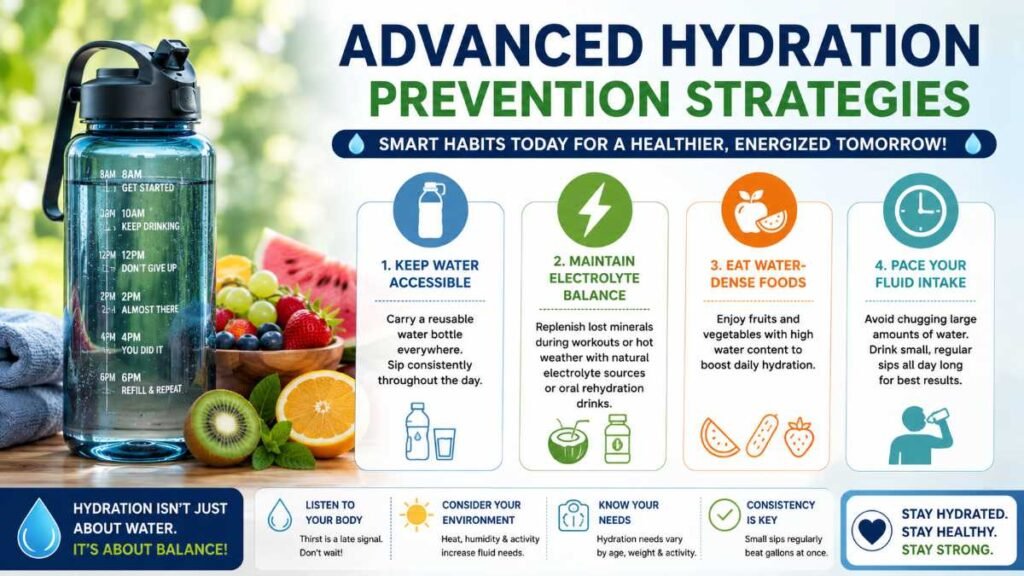
Maintaining hydration requires steady, consistent habits throughout the day rather than drinking large volumes all at once:
- Keep Water Accessible: Carry a reusable water bottle during daily activities. Supporting your broader nutritional needs—such as identifying vitamin b12 deficiency symptoms or eating foods high in potassium—complements hydration in maintaining daily energy levels. Starting your morning with a nutritious high-protein breakfast also helps set a balanced routine for the day.
- Maintain Electrolyte Balance: During prolonged exercise or extreme heat, plain water may not replenish lost minerals. Utilize oral rehydration salts or food sources rich in electrolytes.
- Include Water-Dense Foods: Incorporate fruits and vegetables with high water content into your meals, such as cucumbers, watermelon, oranges, and leafy greens. Following an anti-inflammatory diet rich in whole foods naturally supports fluid balance.
- Pace Your Fluid Intake: Sip water continuously in small amounts throughout the day so your body absorbs it efficiently.
People also ask
What are the 12 warning signs of dehydration?
Beyond the common 10 signs of dehydration, additional warnings include dry eyes, sunken eyes, muscle weakness, extreme thirst, cold hands or feet, and confusion.
What are 5 symptoms of severe dehydration?
Severe fluid loss triggers extreme thirst, dizziness or fainting, rapid breathing, confusion, and little to no urination. This requires immediate emergency medical care.
Where do you usually feel pain when you’re dehydrated?
Dehydration often causes dull headaches, neck stiffness, stomach cramps, and sudden muscle spasms—especially in your calves, feet, and lower back.
What condition can be mistaken for dehydration?
Conditions like heat exhaustion, anemia, low blood sugar (hypoglycemia), thyroid disorders, and viral infections often mimic the fatigue, dizziness, and dry mouth seen in the 10 signs of dehydration.
How quickly can you reverse mild dehydration?
Sipping plain water or electrolyte solutions can restore fluid balance and ease mild fatigue or headaches within 30 to 45 minutes.
When to Seek Immediate Medical Attention
While mild fluid deficits resolve with increased fluid intake, severe dehydration is a serious medical state that can lead to heat exhaustion, kidney complications, or hypovolemic shock. Seek emergency medical attention if any of the following symptoms occur:
- Fever exceeding 103°F (39.4°C)
- Inability to urinate for 8 hours or longer
- Persistent vomiting that prevents keeping fluids down
- Severe confusion, disorientation, or fainting
- Rapid, shallow breathing accompanied by a weak, fast pulse
Everyday Habits That Secretly Drain Fluid Reserves
Fluid loss is not limited to intense workouts or hot summer days. Everyday indoor environments and routines can gradually affect fluid balance:
- Air-Conditioned Environments: Low humidity levels in climate-controlled offices increase moisture evaporation from the skin and respiratory tract.
- Caffeine and Sodium Consumption: High sodium intake requires the body to draw water from tissues to maintain mineral balance, while excessive caffeine acts as a mild diuretic, increasing urine volume.
- Shallow Breathing and Stress: Rapid breathing during periods of high stress increases moisture loss through respiration compared to slow, deep breathing.
Recognizing these environmental factors makes it easier to identify the 10 signs of dehydration early and adjust daily fluid intake accordingly.
Conclusion: Maintaining Cellular Balance
Staying properly hydrated is one of the easiest yet most powerful ways to protect your overall health, mental focus, and everyday energy. Watching for the 10 signs of dehydration and establishing steady daily fluid habits makes it straightforward to prevent systemic water loss. Always consult a certified healthcare professional for personalized medical guidance tailored to your specific health conditions and physical requirements.

External References and Medical Resources
About the AuthorDambar CP.R. is the founder of FitLifePeak and a health and wellness content creator. He creates evidence-based articles on nutrition, fitness, and healthy living, making trusted health information simple, practical, and easy to understand.
Medical Disclaimer: The information provided in this article is for educational and informational purposes only and is not intended as medical advice. Always consult a qualified healthcare professional or doctor regarding any medical condition, diagnosis, or health goals. Never disregard professional medical advice or delay seeking it because of something you have read on this website.