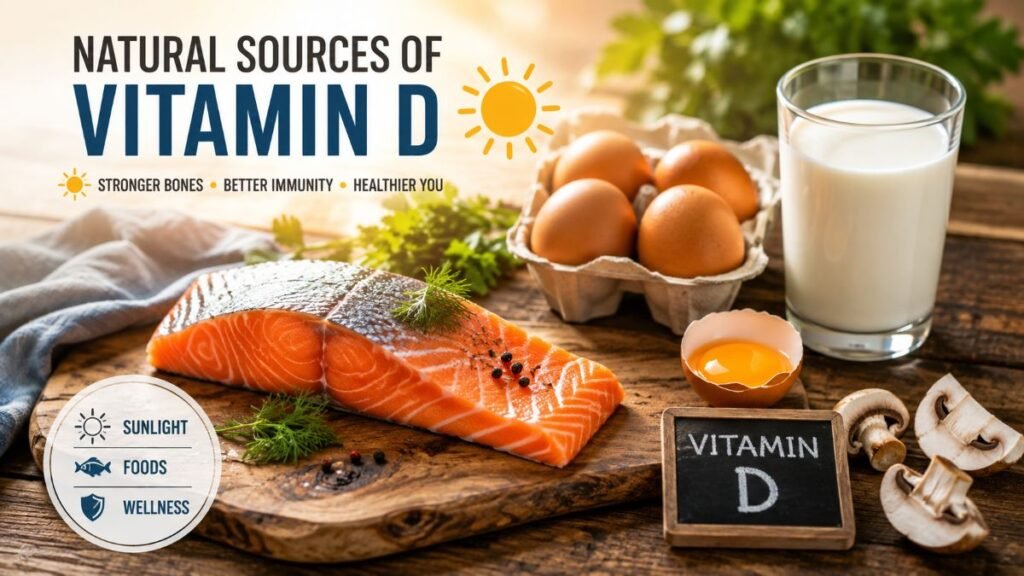
Often called the “sunshine vitamin,” Vitamin D operates as both a vital hormone and a cellular regulator, influencing everything from bone density to immune defense and neuromuscular performance. Because natural food sources are scarce and modern lifestyles limit sun exposure, deficiency remains remarkably common. This comprehensive, evidence-based guide breaks down the science of optimal intake, supplementation, and metabolic synergy. To explore broader nutritional concepts related to balanced eating and clinical guidelines, resources such as the NIH Office of Dietary Supplements provide exhaustive, evidence-based data for consumers and healthcare professionals alike.
What Is Vitamin D and How Does It Work in the Body?
Vitamin D is a fat-soluble compound found naturally in only a handful of foods, added to certain fortified items, and widely available in supplement form. When ultraviolet (UV) light from the sun hits bare skin, it triggers a natural chemical reaction that produces the compound inside the body.
However, whether your body makes it from sunlight or absorbs it from food and supplements, the initial compound is biologically inactive. It has to go through a careful, highly regulated two-step activation process within human tissues:
- First Step (Liver): The liver converts the compound into 25-hydroxyvitamin D , commonly known as calcidiol, which serves as the body’s main circulating reservoir and the standard clinical marker for measuring nutritional status.
- Second Step (Kidneys): The kidneys take calcidiol and transform it into 1,25-dihydroxyvitamin D , known as calcitriol, which is the physiologically active hormone form responsible for downstream physiological actions.
Once active, this hormone helps the gut absorb calcium, keeps blood calcium and phosphorus balanced for strong bones, and supports healthy muscle movement. Beyond physical strength, Vitamin D also plays a supporting role in cell growth, systemic inflammation management, and immune system balance across multiple organ systems. For a deeper medical exploration of how these endocrine pathways operate, you can review specialized clinical reviews published via resources like PubMed Central.
Assessing Vitamin D Status: Clinical Metrics and Guidelines
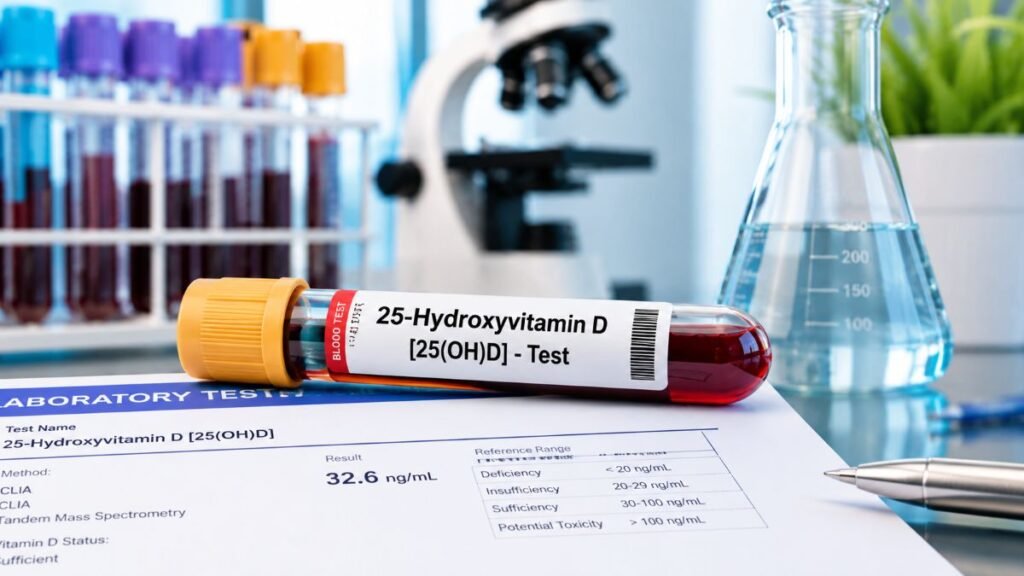
Vitamin D status, when testing is clinically indicated, is generally assessed by measuring serum 25-hydroxyvitamin D because this specific form stays in circulation for roughly two weeks, making it the most reliable clinical indicator for medical professionals.
Historically, organizations like the Food and Nutrition Board (FNB) set general reference ranges to help identify potential shortages. However, contemporary clinical guidelines—such as those from the Endocrine Society—emphasize that interpreting these numbers requires looking at the whole clinical picture rather than relying on rigid universal targets for every healthy adult without specific medical indications. Furthermore, routine screening in healthy, asymptomatic adults is generally not recommended unless specific risk factors or deficiency symptoms are present.
If you are managing other daily habits to support your overall wellness, keeping an eye on balanced meal choices like those found in an anti-inflammatory diet can help maintain your body’s natural equilibrium.
Recommended Daily Intakes Across Different Life Stages
Recommended Dietary Allowances (RDAs) for Vitamin D change across different stages of life to ensure proper calcium absorption and bone development without risking excess intake:
- Infants (0–12 months): 10 mcg (400 IU) – Adequate Intake (AI)
- Children and Adolescents (1–18 years): 15 mcg (600 IU)
- Adults (19–70 years): 15 mcg (600 IU)
- Adults (>70 years): 20 mcg (800 IU)
- Pregnancy and Lactation: 15 mcg (600 IU)
Getting enough of this nutrient through whole foods alone can sometimes be tricky, which is why incorporating nutrient-dense meals or fortified products makes it much easier to hit your daily targets. These recommended intakes are designed to support normal calcium metabolism and skeletal health across different stages of life.
Top Dietary Sources of Vitamin D: Natural and Fortified Options
Very few foods naturally contain meaningful amounts of the vitamin. Fatty fish, egg yolks, and certain specialized items are your best bet for natural dietary sources.
Natural Food Sources
- Cod Liver Oil: Up to 34 mcg (1,360 IU) per tablespoon
- Farmed Rainbow Trout: 16.2 mcg (645 IU) per 3 ounces
- Sockeye Salmon: 14.2 mcg (570 IU) per 3 ounces
- UV-Exposed White Mushrooms: 9.2 mcg (366 IU) per half-cup
- Large Egg Yolk: ~1.1 mcg (44 IU) per egg
Fortified Foods
Because natural options are limited, food fortification helps bridge the gap:
- Cow’s Milk: Commonly fortified with about 3 mcg (120 IU) per cup.
- Plant-Based Milks: Soy, almond, and oat milks are often fortified to match dairy levels (2.5–3.6 mcg per cup).
- Cereals and Juices: Many breakfast cereals and select orange juices have added nutrients.
For those planning balanced weekly meals, combining these options with other healthy choices—such as a high-protein breakfast or nutrient sources rich in essential minerals like those found in foods high in potassium—helps build a well-rounded nutritional routine.
Sunlight Exposure, UVB Synthesis, and Environmental Variables
Sunlight is perhaps the most famous natural source of Vitamin D. When UVB rays hit uncovered skin, they convert a natural cholesterol compound into previtamin D3, which is subsequently converted into usable vitamin D in the body.
However, natural synthesis depends heavily on a few everyday factors:
- Geography and Season: Living further away from the equator or experiencing winter months drastically reduces the strength of UVB rays.
- Skin Pigmentation: Higher melanin levels act as a natural filter, meaning people with darker skin tones need more time in the sun to produce equivalent amounts.
- Sunscreen and Glass: Sunscreens with higher SPFs block the vast majority of synthesizing rays, and glass windows block UVB rays entirely indoors.
While spending time outdoors is enjoyable, dermatologists generally advise against relying solely on intentional sunbathing for your daily nutrient needs due to the risks associated with excessive UV exposure and skin cancer risk.

Supplementation Comparison: Vitamin D2 vs. Vitamin D3
When food and safe sun exposure aren’t enough, supplements offer a reliable way to maintain healthy levels. They typically come in two primary forms:
- Vitamin D2 (Ergocalciferol): Derived primarily from yeast exposed to UV light.
- Vitamin D3 (Choleciferol): Usually sourced from lanolin in sheep’s wool, though plant-based lichen options are also available for vegans.
Clinical studies generally show that while both forms can help improve nutritional status, Vitamin D3 tends to be more potent and effective at raising and sustaining blood levels of over extended periods.
Metabolic Synergy: How Vitamin D Interacts with Other Micronutrients
Vitamin D doesn’t work completely on its own; it relies on a supporting cast of other micronutrients—most notably calcium, magnesium, and vitamin K—to function properly.
When Vitamin D helps your gut absorb calcium, magnesium steps in as an essential cofactor required by the enzymes that process it. Without enough magnesium in your diet, the body struggles to activate Vitamin D efficiently, rendering supplementation less effective.
Additionally, vitamin K is involved in activating proteins that participate in bone and calcium metabolism, although the clinical benefits of vitamin K supplementation for preventing vascular calcification remain an area of ongoing research. Keeping your overall diet balanced ensures that all these interacting nutrients work together smoothly.
Lifestyle Factors Influencing Vitamin D Absorption and Status
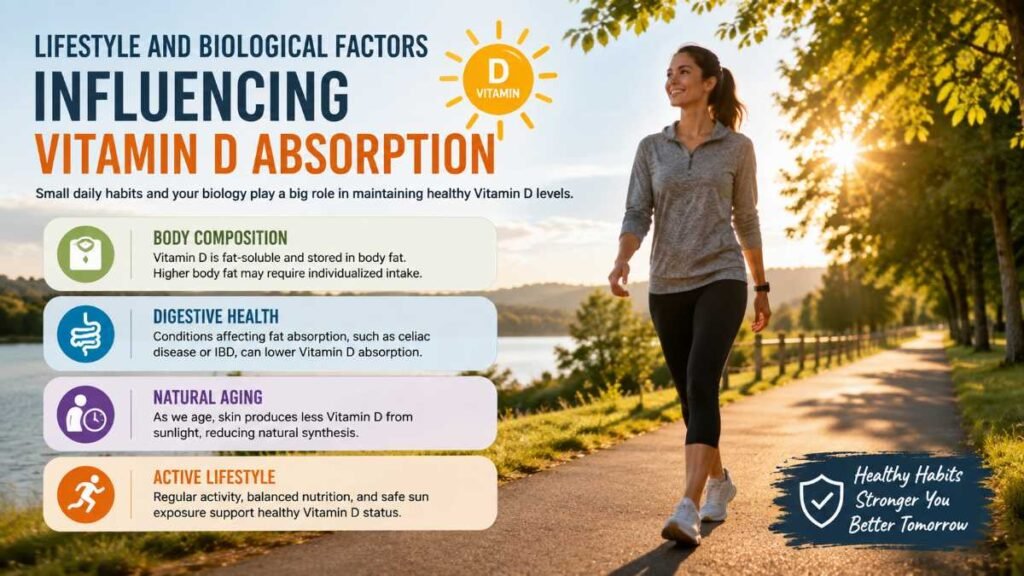
Beyond what you eat or how much time you spend outside, everyday lifestyle and biological factors affect how your body handles Vitamin D:
- Body Composition: Because the vitamin is fat-soluble, it can be stored in adipose tissue. People with obesity may have different vitamin D requirements in certain clinical situations, but supplementation should be individualized rather than based on BMI alone.
- Digestive Health: Conditions that affect fat absorption—such as celiac disease, inflammatory bowel disease, or bariatric surgery—can lower the efficiency with which your gut absorbs dietary nutrients.
- Natural Aging: As people get older, the skin naturally produces less of the precursor chemical needed for sunlight synthesis, making dietary sources and smart supplementation increasingly helpful.
Quick Reference Nutritional Chart and Summary Data
Nutrient Source / Metric | Category | Average Content / Target | Practical Note |
Cod Liver Oil | Natural Food | 34 mcg (1,360 IU) / tbsp | Very concentrated natural source |
Sockeye Salmon | Natural Food | 14.2 mcg (570 IU) / 3 oz | Excellent dietary source of healthy marine fats |
Fortified Milk | Fortified Food | 3 mcg (120 IU) / cup | Common dairy fortification option |
25(OH)D | Clinical Marker | No universal target for healthy adults | Interpretation depends on clinical context |
Upper Intake Level | Safety Guideline | 100 mcg (4,000 IU) / day for adults | Avoid exceeding without medical guidance |
Risks of Deficiency and Toxicity
Recognizing Deficiency
A prolonged shortage of Vitamin D can lead to weakened bone mineralization. In growing children, this can cause rickets, while in adults it may result in osteomalacia, which causes bone tenderness and muscle weakness. Individuals who get very little sunlight or experience digestive absorption issues are often at higher risk.
Avoiding Toxicity
Vitamin D toxicity is generally caused by excessive intake of high-dose supplements rather than food or normal sunlight exposure. Taking very high doses of supplements over long periods can lead to a condition called hypercalcemia (too much calcium in the blood), which causes symptoms like persistent nausea, fatigue, or kidney strain. The Tolerable Upper Intake Level (UL) for adults is set at 100 mcg (4,000 IU) per day, and exceeding this threshold without medical supervision should be avoided.
Final Verdict & Expert Conclusion
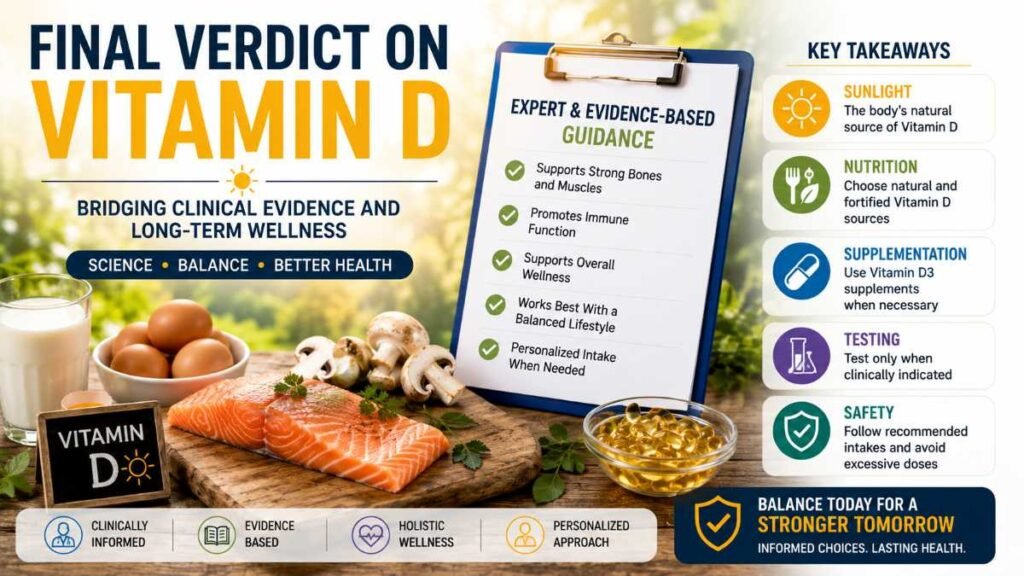
Final Thought: Vitamin D is far more than a simple vitamin—it functions as a powerful master regulator governing everything from skeletal integrity to immune function and cellular homeostasis. Because relying solely on sunlight or standard diet is rarely sufficient in modern lifestyles, achieving optimal status requires an intelligent, balanced approach combining strategic food choices, safe outdoor habits, and evidence-based supplementation when needed. By respecting clinical guidelines, monitoring intake against safe upper limits, and understanding your body’s unique metabolic needs, you can safely harness the full power of this essential micronutrient for lifelong vitality.
People also ask
Which foods are highest in Vitamin D?
Fatty fish like sockeye salmon and rainbow trout are the best natural sources, followed by cod liver oil and egg yolks. Fortified milk, plant-based milks, and cereals also offer an easy daily boost.
What are the common symptoms of low Vitamin D?
Low levels often show up as persistent bone tenderness, muscle weakness, frequent joint aches, constant fatigue, and a weakened immune system that leaves you vulnerable to seasonal illnesses.
How can you get 100% of your Vitamin D daily?
Combine 10–15 minutes of midday sunlight with nutrient-rich foods like salmon or fortified milk. If these natural options fall behind, incorporating a quality daily D3 supplement will easily help you hit your daily mark.
Medical References
Institute of Medicine, Food and Nutrition Board. Dietary Reference Intakes for Calcium and Vitamin D. Washington, DC: National Academy Press, 2010.
Holick MF. Vitamin D deficiency. N Engl J Med, 2007;357(3):266-281.
Demay MB, et al. Vitamin D for the Prevention of Disease: An Endocrine Society Clinical Practice Guideline. J Clin Endocrinol Metab, 2024;109(8):1907-1947.
Tripkovic L, et al. Comparison of vitamin D2 and vitamin D3 supplementation in raising serum 25-hydroxyvitamin D status: A systematic review and meta-analysis. Am J Clin Nutr, 2012;95(6):1357-1364.
Taylor CL, et al. Including food 25-hydroxyvitamin D in intake estimates may reduce the discrepancy between dietary and serum measures of vitamin D status. J Nutr, 2014;144(5):654-659.
About the AuthorDambar CP.R. is the founder of FitLifePeak and a health and wellness content creator. He creates evidence-based articles on nutrition, fitness, and healthy living, making trusted health information simple, practical, and easy to understand.
Medical Disclaimer:
The information in this article is for educational purposes only and should not replace professional medical advice. Always consult a qualified healthcare provider before making dietary changes or starting supplements. Never delay seeking medical advice based on content read on this website.