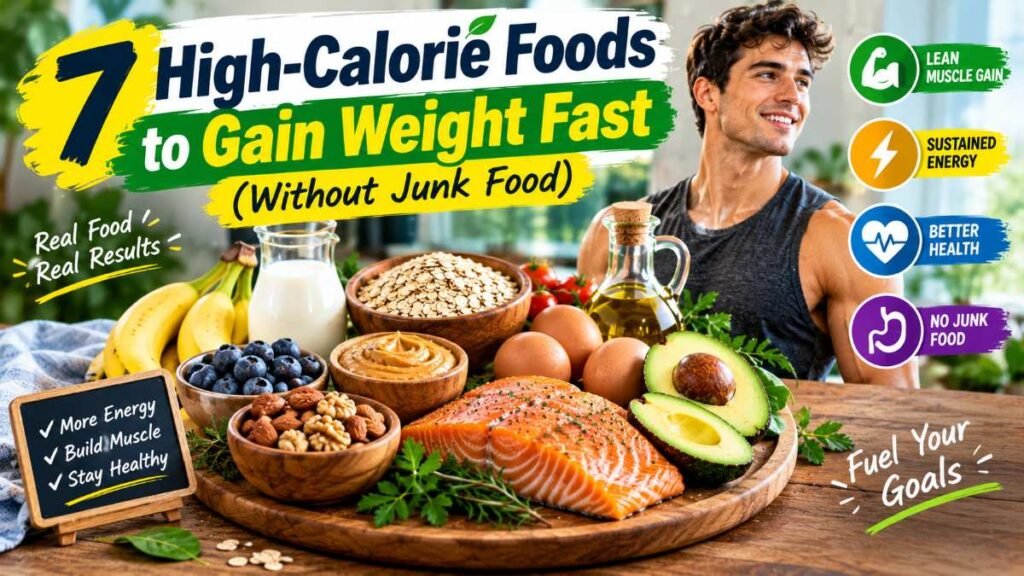
Struggling to scale up your weight without resorting to greasy fast food? Packing on weight without adding unwanted body fat often feels like an uphill battle, but building a structured nutrition plan changes everything. By incorporating nutrient-dense, high-calorie foods into your daily routine thoughtfully, you can establish a manageable caloric surplus—supporting tissue growth while keeping your overall metabolic health in perspective.
What Is Structured Weight Gain?
In practical fitness terms, structured weight gain refers to the steady, controlled increase of body mass driven by a moderate caloric surplus from nutrient-dense high-calorie foods, adequate daily protein, and progressive resistance training. Unlike “dirty bulking”—which relies heavily on highly processed items and added sugars that can lead to rapid fat accumulation and digestive sluggishness—a structured approach prioritizes micronutrient sufficiency, consistent athletic performance, and long-term wellness.
The 7 Best High-Calorie Foods for Structured Weight Gain
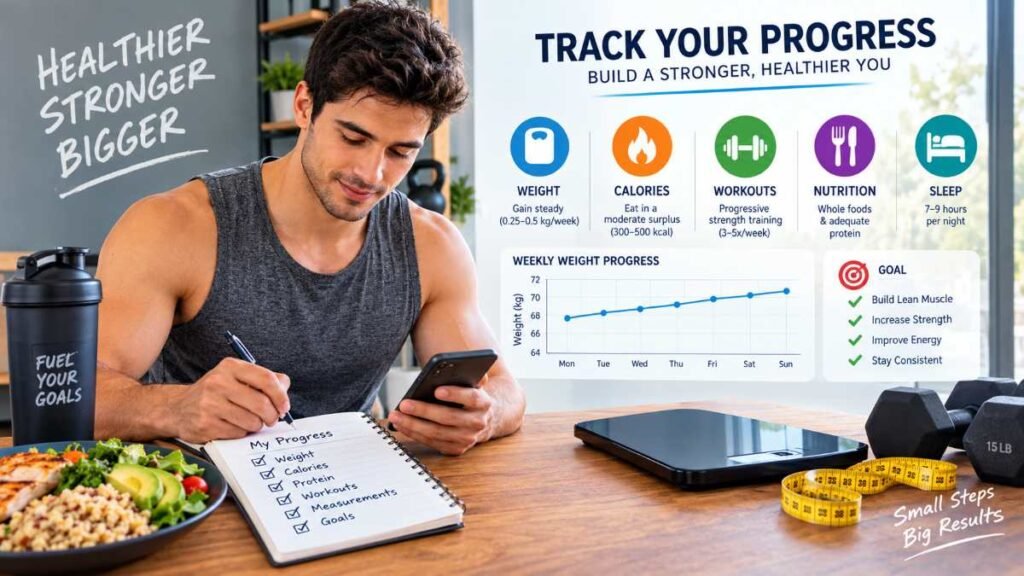
To help you reach your goals without second-guessing, here are seven foundational, nutrient-dense whole foods that form the core of an effective mass-building diet:
Natural Peanut Butter & Nut Butters
Providing roughly 190 calories per 2-tablespoon serving (), nut butters deliver an exceptional blend of healthy monounsaturated fats and plant-based protein. They can be stirred effortlessly into morning oats or blended into high-energy shakes.
Avocados
A single medium avocado ( edible portion) delivers around 240 calories, alongside rich heart-healthy fats, dietary fiber, and essential potassium. Slicing them onto whole-grain toast or salads is an easy way to boost meal energy density.
Rolled Oats
Providing approximately 389 calories per 100g dry weight (as documented in USDA FoodData Central records), rolled oats serve as an ideal complex carbohydrate base. They contain soluble beta-glucan fiber, which supports sustained energy release.
Whole Milk & Full-Fat Dairy
Offering roughly 61 calories per 100ml, whole milk supplies a balanced matrix of high-biological-value protein, carbohydrates, and fats. While highly nutritious, individuals with lactose sensitivity can substitute lactose-free alternatives or plant-based milks based on personal digestive tolerance.
Fatty Fish (Salmon & Mackerel)
Providing upwards of 200–250 calories per standard fillet alongside rich concentrations of omega-3 fatty acids, fatty fish support cardiovascular wellness while supplying dense, high-quality protein for tissue repair.
Extra Virgin Olive Oil
As a concentrated source of dietary fat, a single tablespoon () delivers around 119 calories. Drizzling it over roasted vegetables or cooked grains increases calories instantly without adding uncomfortable physical volume to your plate.
Whole Eggs
Whole eggs deliver complete essential amino acids and vital micronutrients packed densely inside the yolk, supporting hormone production, cellular repair, and overall recovery.
Daily Calorie & Surplus Formula
To build a reliable weight-gain plan, you must first estimate your Total Daily Energy Expenditure (TDEE). Below is a step-by-step example using the scientifically validated Mifflin–St Jeor equation for men. Please note: TDEE formulas provide an educated baseline estimate; individual maintenance needs vary based on metabolic adaptation, age, body composition, and daily NEAT (Non-Exercise Activity Thermogenesis).
Step 1: Calculate Basal Metabolic Rate (BMR)
- Formula:
- Worked Example: Let us take an active 28-year-old male weighing 70 kg and standing 175 cm tall.
- Calculation: (BMR).
Step 2: Factor in Daily Activity Level
- Multiply your BMR by your physical activity multiplier (e.g., 1.55 for moderate exercise 3–5 days per week).
- Calculation: (Maintenance TDEE).
Step 3: Establish a Moderate Surplus
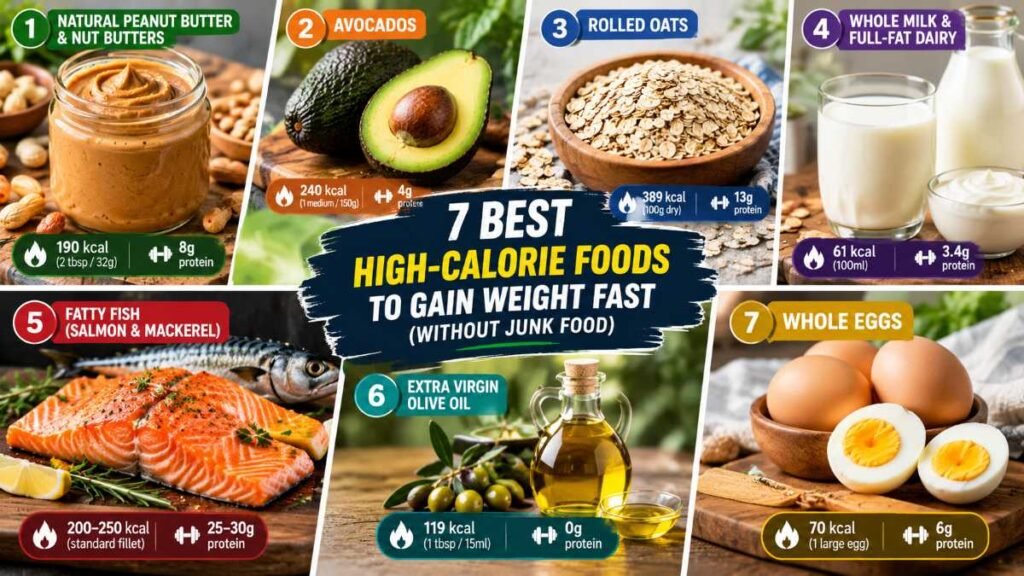
- To support steady weight gain without excessive fat accumulation, add a modest 300 to 500 calories to your maintenance level.
- Target Intake: Approximately 2,900 to 3,000 calories daily (adjusted based on weekly scale trends).
Disclaimer: This calculation provides an estimate for educational purposes and is not a substitute for professional medical or nutritional advice.
7-Day Weight-Gain Meal Plan
“This practical 7-day meal plan completely takes the guesswork out of hitting your macro targets. Packed with budget-friendly ingredients you can easily grab on your next grocery run at Walmart or Aldi, every meal is precisely balanced for energy and protein. Backed by strict USDA FoodData Central calculations, this structured approach helps you comfortably crush your 2,900 to 3,000 calorie clean-bulking goals without stressing over the math.”
Day | Breakfast | Lunch | Dinner | Snack / Shake | Daily Calorie & Protein Total |
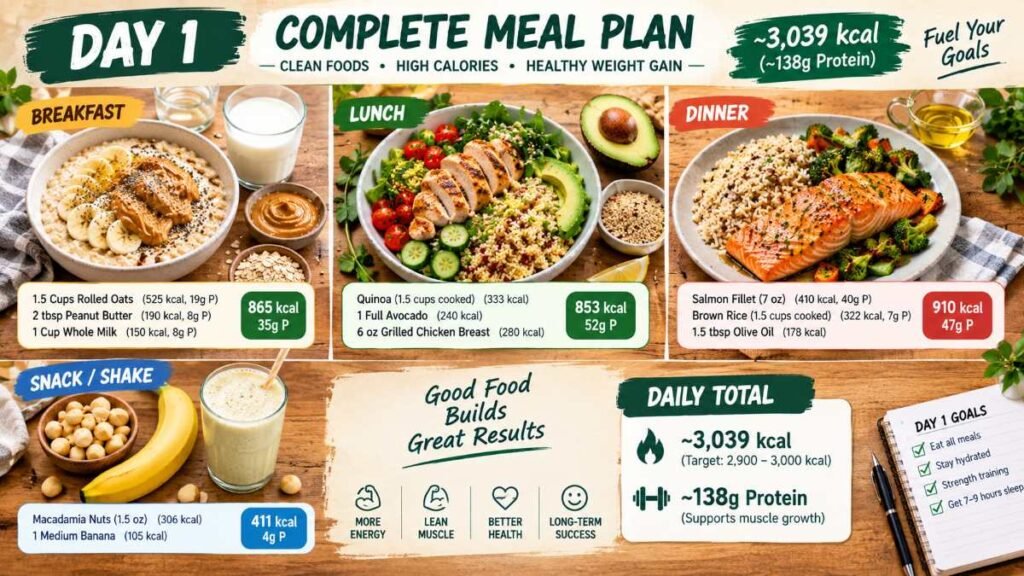
Day 1 | 1.5 Cups Rolled Oats (525 kcal, 19g P) + 2 tbsp Peanut Butter (190 kcal, 8g P) + 1 Cup Whole Milk (150 kcal, 8g P) 865 kcal, 35g P | Quinoa bowl: 1.5 cups cooked quinoa (333 kcal) + 1 full Avocado (240 kcal) + 6 oz Grilled Chicken Breast (280 kcal, 52g P) 853 kcal, 52g P | Salmon fillet (7 oz, 410 kcal, 40g P) + 1.5 cups cooked brown rice (322 kcal, 7g P) + 1.5 tbsp Olive Oil (178 kcal) 910 kcal, 47g P | Macadamia nuts (1.5 oz, 306 kcal) + 1 medium banana (105 kcal) 411 kcal, 4g P | ~3,039 kcal (~138g P) |
Day 2 | 3 Whole eggs (210 kcal, 18g P) + Avocado toast: 3 slices whole-grain bread (525 kcal, 15g P) + 1/2 avocado (120 kcal) 855 kcal, 33g P | Turkey wrap: Whole wheat tortilla + 6 oz turkey breast (216 kcal, 42g P) + 2 slices Swiss cheese (220 kcal, 14g P) + veggies (50 kcal) 486 kcal, 56g P | Lean ground beef (85/15, 7 oz, 490 kcal, 44g P) + 1.5 cups wild rice (249 kcal, 9g P) + 1 tbsp olive oil (119 kcal) 858 kcal, 53g P | Greek yogurt (1.5 cups plain, 225 kcal, 30g P) + honey (60 kcal) + chia seeds (140 kcal) 425 kcal, 30g P | ~2,624 kcal (~172g P) (+ add 1 cup whole milk or handful of nuts to hit 3k) |
Day 3 | Overnight oats recipe: 1 cup oats (350 kcal) + 3 tbsp almond butter (294 kcal) + 1.5 cups whole milk (225 kcal) 869 kcal, 33g P | Turkey pasta: 2.5 cups cooked penne pasta (550 kcal, 18g P) + 6 oz healthy ground turkey recipes cooked (250 kcal, 38g P) + 2 oz parmesan cheese (220 kcal, 20g P) 1,020 kcal, 76g P | Baked mackerel fillet (7 oz, 440 kcal, 42g P) + 1.5 cups cooked quinoa (333 kcal, 12g P) + 1 tbsp olive oil (119 kcal) 892 kcal, 54g P | Peanut butter (2 tbsp, 190 kcal) on 3 rice cakes (105 kcal) 295 kcal, 9g P | ~3,076 kcal (~172g P) |
Day 4 | High-Calorie Smoothie: 2 cups whole milk (300 kcal) + 1.5 cups oats (525 kcal) + 2 tbsp peanut butter (190 kcal) 1,015 kcal, 32g P | Quinoa salad recipe: 1.5 cups quinoa (333 kcal) + 1 cup feta cheese (400 kcal, 21g P) + 1 avocado (240 kcal) + olive oil dressing (119 kcal) 1,092 kcal, 35g P | Beef steak strips (7 oz, 410 kcal, 45g P) + 2.5 medium sweet potatoes (300 kcal, 6g P) + butter (100 kcal) 810 kcal, 51g P | Mixed walnuts (1.5 oz, 278 kcal) + dried cranberries (150 kcal) 428 kcal, 4g P | ~3,345 kcal (~122g P) |
Day 5 | Scrambled eggs: 4 whole eggs (280 kcal, 24g P) + cheddar cheese (150 kcal, 9g P) + 3 slices whole-grain toast (525 kcal, 15g P) 955 kcal, 48g P | Grilled Salmon & Rice Meal: 6 oz fresh wild salmon (350 kcal, 34g protein) paired with 2 cups steamed white rice (430 kcal, 8g protein) finished with a light avocado oil drizzle (120 kcal) — Total: 900 kcal, 42g P | Chicken thighs (skin-on, 8 oz, 520 kcal, 46g P) + roasted root vegetables with 2 tbsp olive oil (370 kcal) 890 kcal, 48g P | Full-fat cottage cheese (1.5 cups, 330 kcal, 42g P) + fresh berries (80 kcal) 410 kcal, 42g P | ~3,155 kcal (~180g P) |
Day 6 | Greek yogurt bowl: 2 cups full-fat Greek yogurt (300 kcal, 40g P) + 1 cup granola (450 kcal, 10g P) + honey (60 kcal) + 1 oz sliced almonds (164 kcal, 6g P) 974 kcal, 56g P | Turkey sandwich: Sourdough bread (320 kcal) + 6 oz deli turkey (180 kcal, 35g P) + Swiss cheese (110 kcal) + extra virgin olive oil spread (119 kcal) 729 kcal, 48g P | Shrimp stir-fry: 8 oz shrimp (200 kcal, 38g P) + 2 cups brown rice (430 kcal, 10g P) + sesame oil & veggies (200 kcal) 830 kcal, 50g P | Macadamia nuts (1.5 oz, 306 kcal) + dark chocolate squares (1.5 oz, 240 kcal) 546 kcal, 5g P | ~3,079 kcal (~159g P) |
Day 7 | Oat Pancakes: 1.5 cups ground oats (350 kcal) + 2 eggs (140 kcal) + 0.5 cup whole milk (75 kcal) + maple syrup (100 kcal) 665 kcal, 24g P | Leftover chicken thighs (7 oz, 455 kcal, 40g P) + 1.5 cups wild rice (249 kcal) + 1.5 tbsp olive oil (178 kcal) 882 kcal, 49g P | Grass-fed beef burger patties (no bun, 8 oz, 560 kcal, 50g P) + 1 avocado (240 kcal) + cheddar cheese slice (110 kcal) 910 kcal, 63g P | High-calorie smoothie: Whole milk (300 kcal) + peanut butter (190 kcal) + banana (105 kcal) 595 kcal, 25g P | ~3,052 kcal (~161g P) |
Budget-Friendly US Grocery List & Indicative Sourcing
Stocking your kitchen efficiently at major U.S. retailers like Walmart, Aldi, or Costco helps make bulk meal preparation sustainable. Note: Price ranges below reflect indicative retail estimates gathered from U.S. market checks and vary by region and seasonal inflation.
Food Item | Store Category | Indicative US Price Range | Calorie Density (Verified via USDA FoodData Central) |
Rolled Oats | Pantry / Grains | $2.30 – $3.00 per 42 oz container (Walmart / Aldi) | ~389 kcal per 100g dry weight |
Peanut Butter | Spreads & Oils | $2.50 – $3.50 per 28 oz jar (Store Brands / Jif) | ~588 kcal per 100g |
Whole Milk | Dairy | $3.20 – $3.80 per gallon (Regional Dairy) | ~61 kcal per 100ml |
Brown Rice | Grains | $1.80 – $2.50 per 3 lb bag (Aldi / Walmart) | ~362 kcal per 100g dry weight |
Avocados (Bag) | Produce | $3.50 – $5.00 per 4-pack (Costco / Walmart) | ~160 kcal per 100g edible portion |
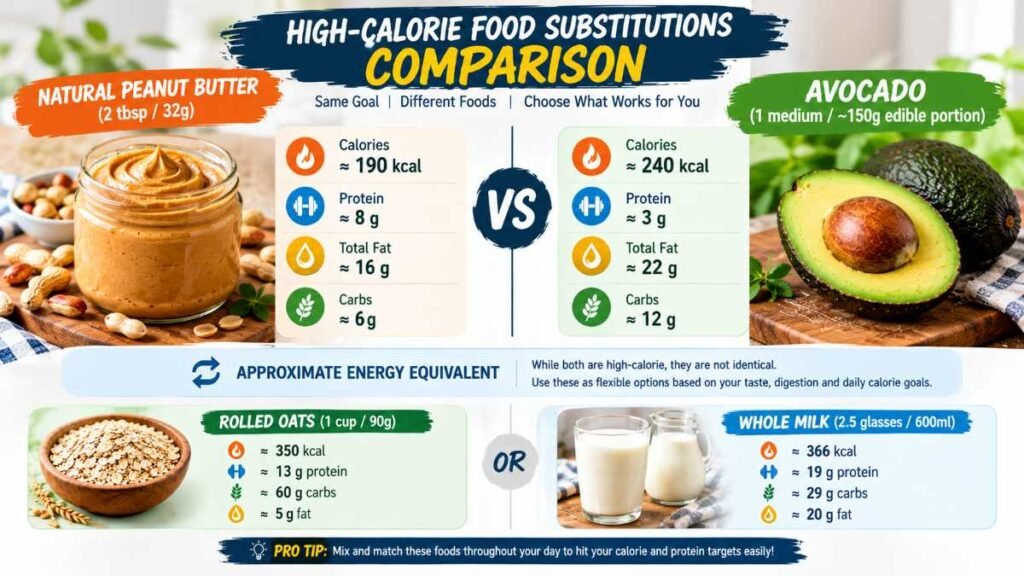
High-Calorie Food Substitutions & Approximate Energy Equivalents
To manage appetite and dietary preferences, you can substitute foods using approximate energy equivalents based on verified USDA FoodData Central records:
- Fat & Energy Substitution Example:
- Option A: 2 Tablespoons of Natural Peanut Butter () provides and of protein.
- Option B (Approximate Alternative): Approximately 1 medium avocado ( edible portion) yields , offering a rich source of heart-healthy monounsaturated fats.
- Carbohydrate & Energy Substitution Example:
- Option A: 1 Cup of Dry Rolled Oats () yields and of protein.
- Option B (Approximate Alternative): A liquid pairing combining roughly 2.5 glasses of whole milk (, yielding ) provides an easily digestible alternative for individuals with low morning appetite.
600-Calorie Homemade Smoothie Recipe
When solid food fatigue sets in, liquid nutrition provides an effortless solution to ingest calories without heavy chewing. Toss these exact ingredients into your blender for a powerhouse, calorie-packed shake:
- 2 cups whole milk (, protein)
- 2 tablespoons natural peanut butter (, protein)
- 1 medium ripe banana (, protein)
- Total Estimated Energy: with balanced macronutrients and potassium.
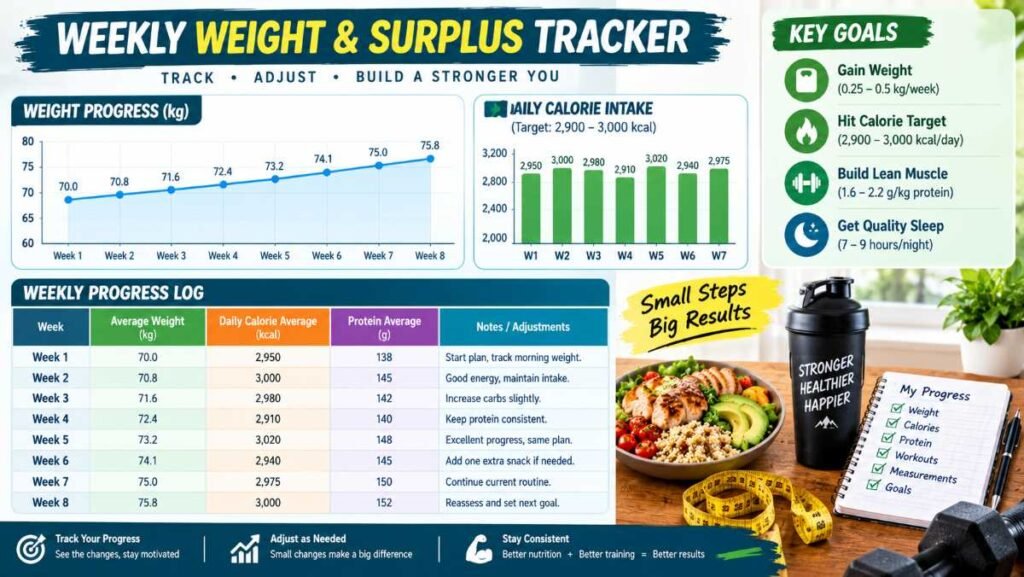
Weekly Progress Tracker
Monitoring your trajectory ensures your surplus is supporting lean tissue growth rather than rapid body fat accumulation.
Week | Average Body Weight | Daily Calorie Average | Actionable Adjustments |
Week 1 | Target: Baseline | Target: Maintenance + 300 | Establish consistent daily morning weigh-ins under identical conditions. |
Week 2 | Record scale weight | Maintain or adjust | Monitor strength performance in the gym, sleep quality, and digestion. |
Week 3 | Assess weekly trend | Adjust surplus if scale stalls | If weight is static for 10+ days, increase daily intake by 150–200 calories. |
Muscle Gain vs. Fat Gain Guide
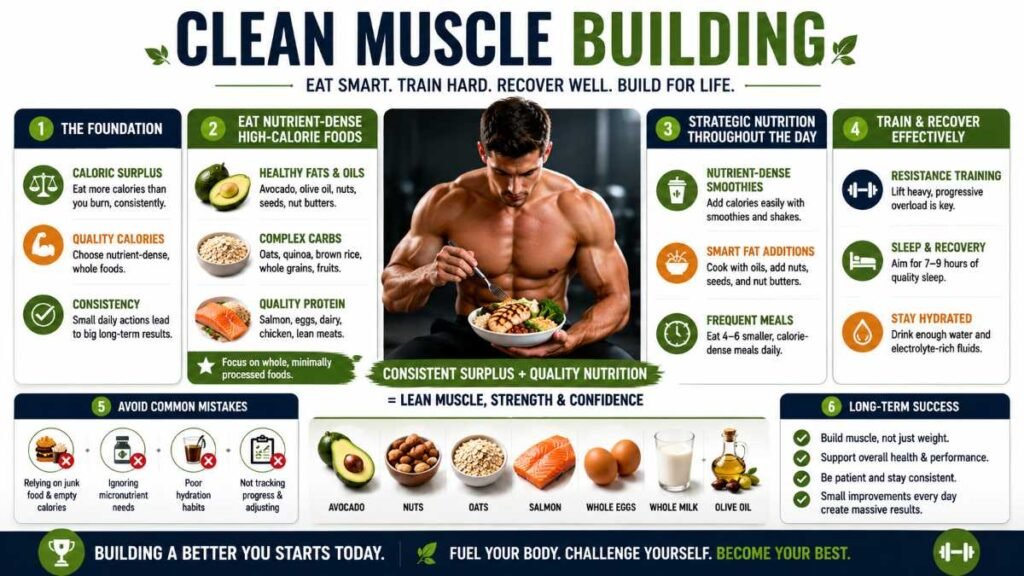
A caloric surplus alone does not guarantee lean muscle hypertrophy. Meaningful muscle growth requires mechanical tension from progressive resistance training, adequate daily protein intake (typically 1.6 to 2.2g per kg of body weight, as outlined in clinical sports nutrition guidelines archived on PubMed Central), and 7 to 9 hours of nightly recovery. To optimize this process, pair your menu with structured muscle building foods for women or general science-backed strength protocols. Neglecting training intensity, sleep, or protein distribution can turn a surplus into unwanted fat accumulation.
When Weight Gain Is Difficult
If low appetite, early satiety, or a fast metabolism stalls your progress, focus on liquid meals, smoothies, and frequent energy-dense snacking between primary meals. However, if you experience unexplained, rapid weight loss, chronic fatigue, or persistent digestive distress, consult a qualified healthcare provider immediately to rule out underlying medical issues.
Expert Conclusion & Next Steps
Building real strength requires disciplined energy partitioning rather than mindless overeating. By swapping empty calories for clean, nutrient-dense high-calorie foods, you support your overall wellness while working steadily toward your fitness milestones. Take action today by mapping out your weekly meal prep using our best way to plan meals for the week guide!
Frequently Asked Questions
Q1. What is the easiest way to hit a 3,000-calorie daily intake?
Incorporate calorie-dense liquid smoothies, snack on nutrient-dense nuts throughout the day, and use high-calorie foods like extra virgin olive oil over your cooked grains and vegetables.
Q2. How to gain weight effectively without resorting to junk food?
Combine heavy progressive resistance training with a consistent, moderate daily surplus derived from wholesome high-calorie foods and balanced macronutrients.
Q3. What are the top foods for a clean bulk?
Avocados, peanut butter, rolled oats, macadamia nuts, whole milk, wild-caught salmon, and whole eggs rank among the very best high-calorie foods for sustainable growth.
Q4. Can you gain weight with a fast metabolism?
Yes, by intentionally increasing your caloric intake through these high-calorie foods and liquid meals to comfortably offset a high baseline energy expenditure.
Q5. How much protein is needed daily for clean bulking?
Consistently aim for 1.6 to 2.2 grams of protein per kilogram of body weight to support muscle protein synthesis alongside your caloric surplus.
Q6. How do you hit a 3,000-calorie daily intake cleanly?
Reaching a 3,000-calorie target without dirty bulking relies entirely on nutrient-dense high-calorie foods. Simply blend a morning shake with whole milk and peanut butter, and add avocados or olive oil to your meals for effortless caloric density.
Sources / External References
1. Nutritional Data Standards: Nutritional breakdowns for nuts, seeds, and healthy oils are verified via the official database at USDA FoodData Central.
2. Macronutrient Research: Insights on caloric density and muscle hypertrophy strategies are based on research archives published on PubMed Central.
Editorial & Food Safety Disclaimer
The information provided in this article is for educational and informational purposes only and is not intended as medical or professional health advice. Always consult a qualified healthcare provider or registered dietitian before altering your diet or fitness regimen.
About the Author
Dambar C.P. Rajbanshi is the founder of FitLifePeak and a health and wellness content creator dedicated to making evidence-based nutrition simple, practical, and accessible.