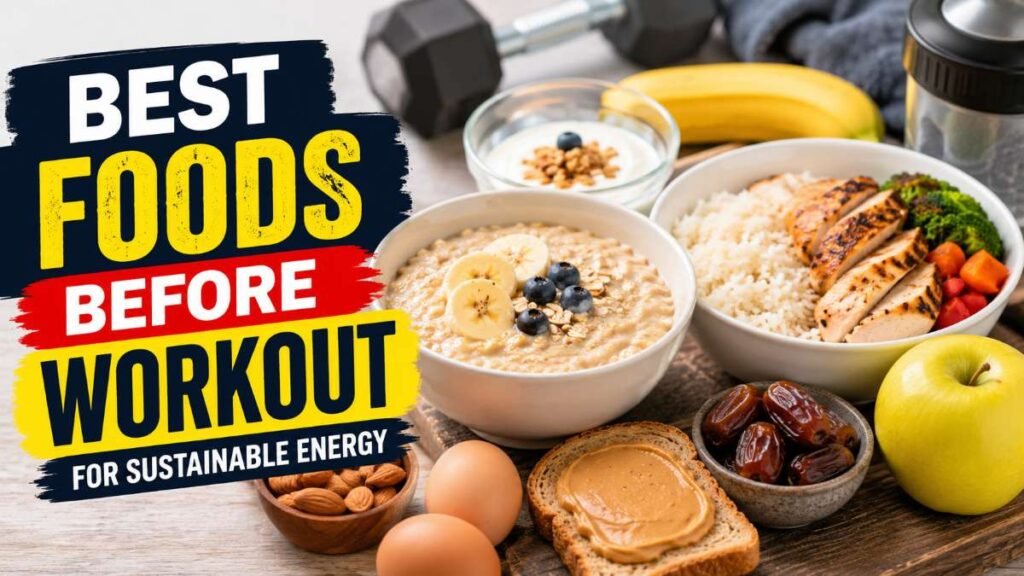
Ever reached the middle of a workout and wondered where your energy went? You started strong, but suddenly your legs feel heavy, your focus drops, and every set feels harder than it should. Sometimes, the problem isn’t your training—it’s what happened in the hours before it. The right food and timing can make a noticeable difference. Whether you’re lifting, running, or training for endurance, choosing the best foods before workout can help you start your session feeling ready instead of running on empty.
The Science Of Pre-Training Nutrition: Why Timing Matters
What you eat before exercise matters, but the timing of that food matters too.
Think about the difference between eating a proper meal three hours before training and eating a large dinner 15 minutes before picking up a barbell. Both meals might be nutritious, but your body may respond to them very differently during exercise. Knowing how to choose the best foods before workout and time them correctly can completely change your energy levels.
A meal eaten too close to training can leave some people feeling heavy or uncomfortable. On the other hand, going into a demanding session after many hours without eating may leave you hungry and feeling low on energy.
The right approach depends on your workout, portion size, personal digestion, and how much time you have.
Timing Window | Primary Goal | Recommended Focus |
2–3 Hours Before | Build energy availability while allowing time for digestion | Carbohydrates + moderate lean protein + moderate fat |
1–2 Hours Before | Add useful fuel without feeling overly full | Easily digested carbohydrates + light protein |
30–60 Minutes Before | Keep the stomach comfortable while adding convenient fuel | Small, easily digested carbohydrate source |
There isn’t one perfect pre-workout schedule for everybody.
Some people feel great after eating a normal meal two hours before training. Others prefer something smaller because they don’t like exercising with much food in their stomach.
As the workout gets closer, keeping the portion smaller and the food easier to digest is often a sensible approach.
The ACSM position stands on nutrition and athletic performance provide evidence-based guidance on exercise and sports nutrition.
Macro Breakdown: Structuring Your Pre-Gym Plate
You don’t need to calculate every gram of food before walking into the gym.A better starting point for choosing the best foods before workout is understanding what carbohydrates, protein, and fat are doing in your meal.
Macronutrient | Main Role | Practical Approach Before Training |
Carbohydrates | Provide usable exercise fuel and contribute to glycogen stores | Give them more attention before moderate- or high-intensity sessions |
Protein | Supplies amino acids and contributes to daily protein needs | Include a moderate portion when eating well before training |
Dietary Fat | Provides energy and supports overall dietary balance | Keep portions modest when eating close to exercise |
Carbohydrates
Carbohydrates are particularly useful when your workout involves repeated or sustained effort.
Oats, rice, potatoes, bread, bananas, dates, and other fruits can all fit into a pre-workout meal or snack.
You don’t need to avoid carbohydrates simply because you’re trying to lose body fat. What matters more is your overall calorie intake and eating pattern.
If you want more everyday carbohydrate options, see these healthy carbohydrate foods.
For longer or harder training sessions, carbohydrate availability can become even more important. Sports nutrition guidance commonly adjusts carbohydrate intake according to the demands of the exercise rather than treating every workout the same.
Protein
Protein has an important place in your overall diet, especially if you’re trying to maintain or build muscle.
But more isn’t automatically better before every workout.
If you’ve eaten a balanced meal a couple of hours earlier, you may already have enough protein on board. If your last meal was several hours ago, adding Greek yogurt, eggs, milk, lean chicken, or another protein-rich food can be a practical choice.
The key is to look at your total daily protein intake, not just the food you eat immediately before exercise.
Fats
Healthy fats are valuable in a balanced diet, but timing can make a difference.
A large, high-fat meal immediately before exercise may feel uncomfortable because it can take longer to digest. If you have several hours before training, however, a moderate amount of fat can fit perfectly well into your meal.
For practical food choices, explore these healthy fat foods.
The goal isn’t to remove one macronutrient. It’s to create a meal that gives you useful fuel without making your workout feel like a battle against your stomach.
Timing Mastery: What To Eat 2–3 Hours Before Training
Got two or three hours before the gym?
That’s your easiest window for a proper meal.
You have enough time to eat something satisfying, let it digest, and arrive at your workout without feeling rushed.
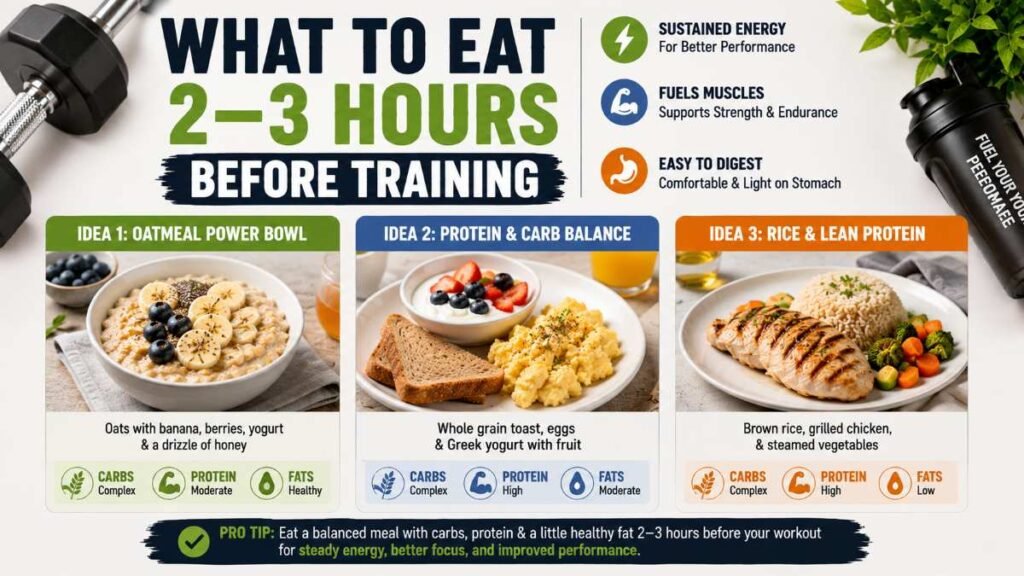
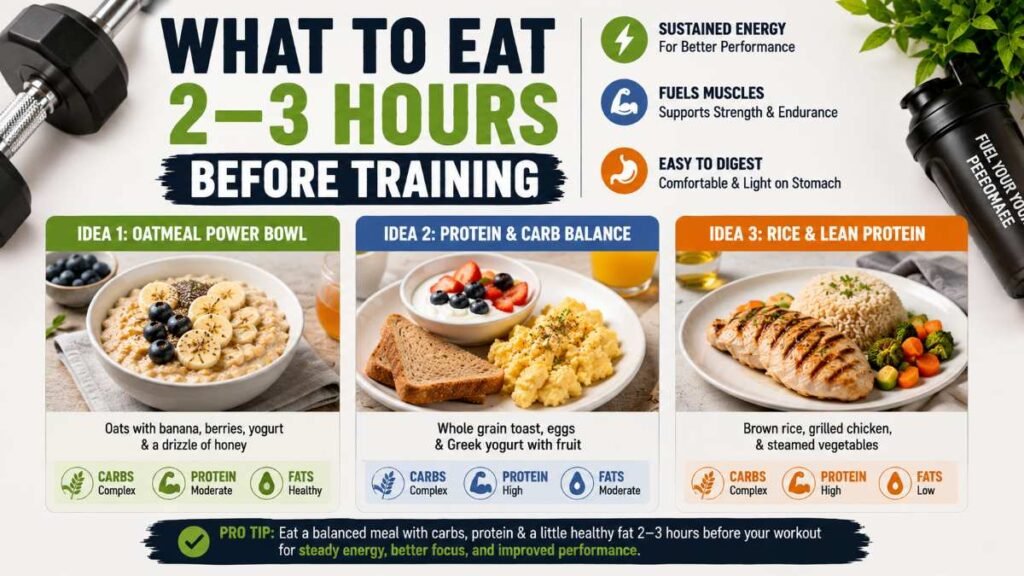
Oatmeal Bowl
Oats with banana and Greek yogurt or milk make a simple combination of carbohydrates and protein.
You can keep the portion modest for an ordinary workout or increase it when you’re preparing for a longer, more demanding session.
Whole-Wheat Toast With Eggs
Toast gives you carbohydrates, while eggs provide protein and other nutrients.
Add a piece of fruit if you want more carbohydrate, especially before a harder training session.
Brown Rice And Grilled Chicken
Prefer savory food?
Brown rice with grilled chicken is a straightforward option that works well when you have plenty of time before training. Add cooked vegetables if you know they sit comfortably with you.
You don’t need an elaborate fitness-meal-prep creation.
A familiar meal that tastes good and leaves you comfortable is often a better choice than something that looks perfect on social media but doesn’t agree with you.
And don’t forget fluids. Starting a workout already thirsty isn’t ideal. You can also learn to recognize the 10 signs of dehydration that may signal you’re not keeping up with your fluid needs.
The 1–2 Hour Window: Intermediate Snacks For Balanced Energy
When you have only an hour or two, think lighter rather than larger. You want enough of the best foods before workout to feel fueled, but not so much that your stomach becomes the main thing you notice during your session.
Snack Selection | Main Nutrition | Why It Can Work |
Greek Yogurt With Honey | Protein + carbohydrates | Convenient and relatively light for many people |
Protein Smoothie With Berries | Protein + fruit carbohydrates | Useful when solid food feels too heavy |
Toast With Fruit Jam | Easily digested carbohydrates | Simple option when you need convenient fuel |
Greek Yogurt With Honey
Greek yogurt provides protein, while honey adds carbohydrates in a small serving.
Add banana or berries if you want a little more carbohydrate without turning the snack into a full meal.
Protein Smoothie
A smoothie made with milk or water, protein, and fruit can be useful when you don’t feel like eating solid food before training.
It’s also easy to adjust. More fruit means more carbohydrate; a smaller serving keeps the snack lighter.
Toast With Fruit Jam
Sometimes the simplest option wins.
Toast with a small amount of fruit jam gives you carbohydrates without requiring much preparation.
Your ideal amount may change from workout to workout. A demanding leg session may leave you happier with a little more food than an easy 30-minute workout.
The 30–60 Minute Window: Fast-Acting Simple Carbohydrates
Only have 30–60 minutes before training?
Don’t panic.
You don’t need to force down a full meal just because you’re going to the gym.
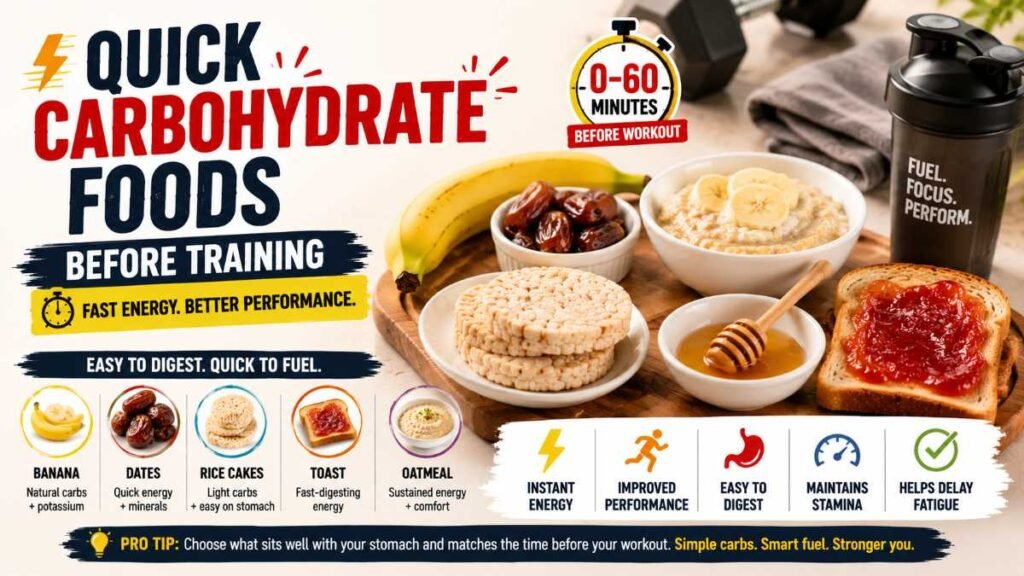
At this point, small portions of familiar, easy-to-digest carbohydrate-rich foods may be more comfortable.
Ripe Bananas
Bananas are inexpensive, portable, and require almost no preparation.
They’re an easy option when you need something small before heading out the door.
Medjool Dates
Dates provide concentrated carbohydrates in a small serving.
They’re particularly convenient when you don’t want a large amount of food sitting in your stomach.
Rice Cakes
Rice cakes are light and can be paired with a little honey or fruit spread if you want additional carbohydrate.
The closer you get to training, the more your individual tolerance matters.
Some people can eat fruit shortly before exercise without a problem. Others prefer to finish eating much earlier.
Sports nutrition research also shows why pre-exercise nutrition should be considered in the context of the type and intensity of training rather than treated as a universal formula.
Tailoring Your Nutrition: Strength Vs. Endurance Training
Your pre-workout routine doesn’t need to look identical every day.
A short strength workout and a two-hour endurance session place very different demands on your body.
For Resistance Training & Muscle Building
When you’re lifting weights, you want enough energy to get through your working sets without feeling completely drained.
A meal containing carbohydrates and a moderate amount of protein a few hours before training can be a practical choice.
But don’t fall into the trap of believing that one particular pre-workout food will build muscle by itself.
Your total calorie intake, daily protein intake, resistance-training program, sleep, and recovery all matter.
For more food ideas that fit a muscle-focused eating pattern, see these muscle-building foods for women.
For Endurance Training
Longer workouts can place greater demands on carbohydrate availability.
If you’re preparing for a long run, cycling session, hike, or endurance event, your overall carbohydrate strategy becomes more important than it would be for a short, easy workout.
For endurance athletes, the Olympic athlete nutrition resources provide practical information on pre-event food, carbohydrate intake, and hydration.
What If You’re Trying To Lose Fat?
This is where many people make things unnecessarily complicated.
Trying to lose body fat doesn’t automatically mean you should eliminate carbohydrates before training.
If a banana, a small bowl of oats, or a slice of toast helps you train better, it can still fit into a calorie-controlled diet.
Fat loss is driven by the bigger picture—your overall energy intake, activity, recovery, and consistency—not by whether you ate one carbohydrate-rich food before the gym.
Common Pre-Workout Nutrition Mistakes To Avoid
Even a nutritious food can become a poor pre-workout choice when the portion or timing doesn’t suit you.
Eating Too Much Fiber Right Before Exercise
Beans, large salads, bran cereals, and other high-fiber foods can be excellent choices for everyday health.
But eating a very large amount immediately before training may cause bloating, gas, or digestive discomfort for some people.
That doesn’t mean you should avoid fiber.
Simply give high-fiber meals more breathing room around demanding workouts. For everyday choices, explore this high-fiber foods list.
Forgetting About Fluids
Food gets most of the attention, but hydration deserves a place in your routine too.
Instead of trying to drink a huge amount immediately before exercise, make regular fluid intake part of your day and adjust it based on your workout, environment, and sweat losses.
For longer or hotter training sessions, hydration planning becomes even more important. The ACSM includes exercise and fluid replacement among its evidence-based sports medicine guidance.
Cutting Carbohydrates Too Aggressively
Some people prefer lower-carbohydrate eating, and dietary approaches can vary.
But dramatically cutting carbohydrates can make certain moderate- or high-intensity workouts feel harder for some people.
If your training suddenly feels flat, don’t immediately assume you need a stronger supplement. Look at your overall food intake, hydration, sleep, and recovery first.
Trying Something Completely New
A race, long run, or important training session is not the best time to experiment with an unfamiliar meal.
Try new foods during ordinary training first.
If your stomach handles the food well and your energy feels good, you’ve found another option you can keep in rotation.
Conclusion: Establishing A Consistent Pre-Workout Routine
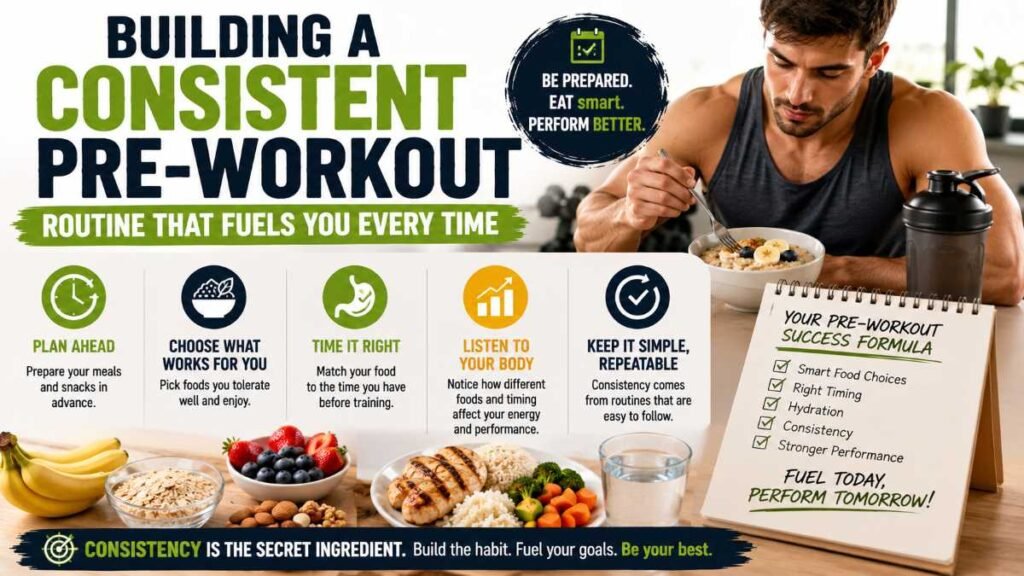
Choosing the best foods before workout is about finding what fuels you without feeling heavy. Match your food to your timing, training, and appetite. Keep it simple, consistent, and comfortable—and let your own body guide what works best.
Final Takeaway
The right food should support your workout—not become another thing you have to stress about.
Start with familiar foods. Give yourself enough time to digest. Adjust the portion to the workout. Drink fluids regularly. And most importantly, pay attention to what consistently makes you feel good during training.
Consistency will always beat complexity.
Frequently Asked Questions
1. What to eat before the gym for best performance? Combine simple carbs with light protein. Bananas, oats, or Greek yogurt are the best foods before workout to keep energy high.
2. What is the 3-3-3 rule gym? It’s a simple routine: 3 workout days weekly, 3 core exercises per session, and eating 3 hours prior to fuel up.
3. Can I gym 7 days a week? No, muscles grow during rest. Training 4 to 5 days weekly delivers better long-term gains than skipping rest.
4. Should I eat 30 minutes before the gym? Yes, but keep it small. Picking fast-digesting options like dates as your best foods before workout gives quick energy without cramps. Eating the best foods before workout right before training keeps you light and powered up.
Medical Disclaimer
This article provides general nutrition and fitness information for educational purposes only. It does not replace professional medical advice, diagnosis, or treatment. If you have a health condition or specific dietary needs, consult a qualified healthcare professional before making major diet or exercise changes.
Medical Source:
About the AuthorDambar CP.R. is the founder of FitLifePeak and a health and wellness content creator. He creates evidence-based articles on nutrition, fitness, and healthy living, making trusted health information simple, practical, and easy to understand.