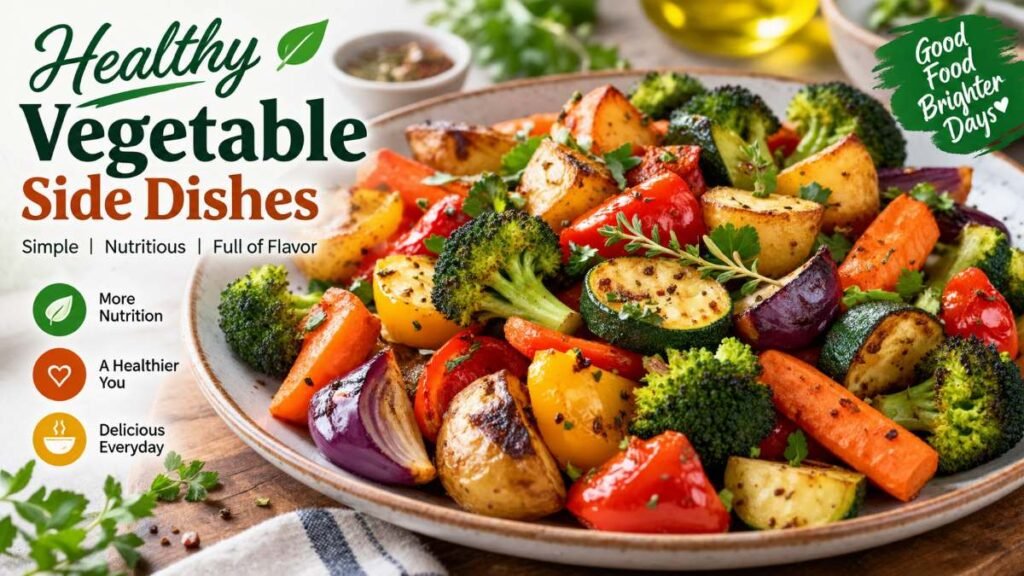
Most weeknight dinners fall flat for one simple reason: plain, soggy veggies that feel like a chore to eat. Elevating your plate with flavorful, nutrient-dense healthy vegetable side dishes does not require culinary school or hours spent standing over a hot stove. In this comprehensive guide, you will discover chef-approved roasting techniques, protein-packed plant combinations, budget-smart prep strategies, and food-safety rules to transform humble produce into the absolute highlight of your dinner table.
The Culinary Science of Irresistible Vegetable Sides
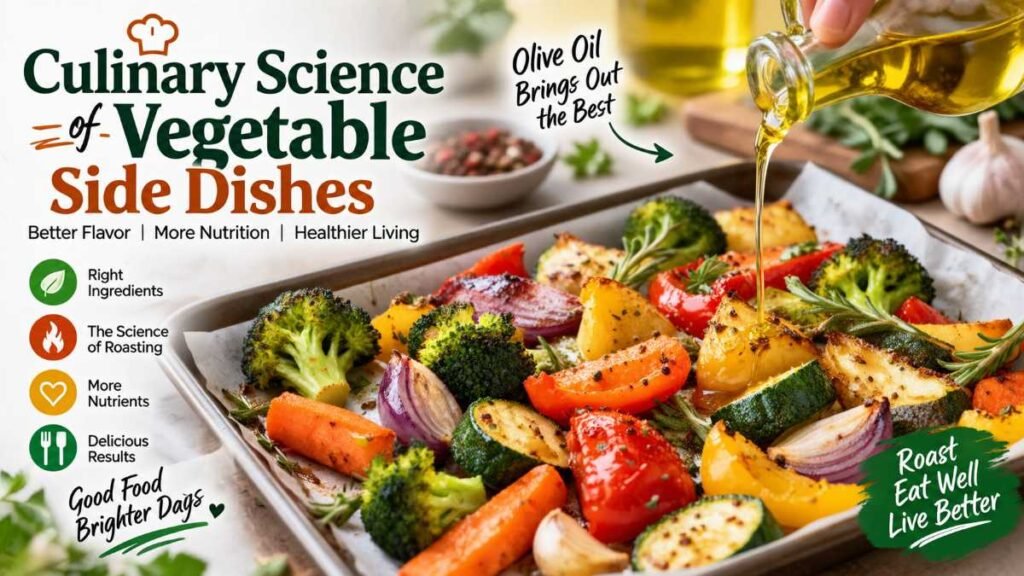
The biggest obstacle to enjoying vegetables daily is poor preparation. Boiling or over-steaming leaches water-soluble vitamins into the sink and results in a mushy texture. The Maillard reaction becomes more pronounced during high-heat cooking, helping create the browned, savory flavors associated with roasting and searing.
Roasting, searing, and air-frying caramelize natural plant sugars, creating crispy edges and rich undertones. Pairing vegetables with a source of dietary fat can help the body absorb fat-soluble vitamins such as A, D, E, and K. For example, tossing carrots or broccoli in extra virgin olive oil before roasting significantly increases carotenoid bioavailability while delivering satisfying crunch.
Flavor balance relies on a simple culinary framework:
- Fat: Olive oil, avocado oil, grass-fed butter, or tahini to carry flavor and boost nutrient absorption.
- Acid: Fresh lemon juice, apple cider vinegar, or balsamic glaze to cut through richness and brighten earthly flavors.
- Heat & Seasoning: Smoked paprika, cracked black pepper, garlic powder, or red pepper flakes to create depth.
- Texture: Toasted pumpkin seeds, slivered almonds, or grated Parmesan for contrast.
Understanding these basic principles lays the groundwork for building nourishing, long-term habits. You can explore more foundational advice in our guide on the importance of healthy eating habits.
High-Protein Vegetable Combinations for Lasting Satiety
Vegetables are rarely celebrated for protein, but pairing specific non-starchy produce with legumes, seeds, and ancient grains yields hearty sides that can provide protein, fiber, and greater satiety. When building main-dish complements, lean into healthy vegetable side dishes that offer a robust macronutrient profile.
Edamame, green peas, Brussels sprouts, and sweet corn lead the category in plant-based protein. Combining these with savory toppers elevates both nutritional density and flavor profile.
Top High-Protein Side Pairings
- Charred Brussels Sprouts with Roasted Chickpeas: Toss halved Brussels sprouts and rinsed chickpeas with olive oil, sea salt, and garlic. Roast at 400°F until crispy.
- Sesame Edamame & Red Pepper Skillet: Flash-sauté edamame and sweet pepper strips with coconut aminos and sesame oil for a fast, flavorful bite.
- Garlic Parm Green Peas & Hemp Hearts: Warm sweet peas in olive oil, then fold in freshly grated Parmesan cheese and two tablespoons of hemp seed hearts for an added protein boost.
Integrating these side options into your weekly routine supports lean muscle maintenance and clean energy. For further guidance on designing balanced plates, check out these healthy meal prep ideas for lunch.
Nutrient-Dense Vegetable Options & Cooking Techniques
Vegetable Base | Key Micronutrients | Best Cooking Technique | Flavor Enhancers |
Brussels Sprouts | Vitamin C, Vitamin K, Fiber | High-Heat Roasting (425°F) | Balsamic glaze, pecans, turkey bacon bits |
Crisp Broccoli Florets | Vitamin C, Folate, & Glucosinolates | High-Heat Air-Frying or Pan-Searing | Garlic butter, fresh lemon zest, & chili flakes |
Sweet Potatoes | Beta-Carotene, Potassium, Complex Carbs | Cube Roasting or Steam-Baking | Cinnamon, rosemary, extra virgin olive oil |
Zucchini & Squash | Manganese, Vitamin C, Antioxidants | Grilling or Pan-Searing | Fresh basil, thyme, grated Parmesan |
Kale & Swiss Chard | Iron, Calcium, Vitamin A | Massage with Oil / Quick Sauté | Toasted pine nuts, lemon juice, garlic |
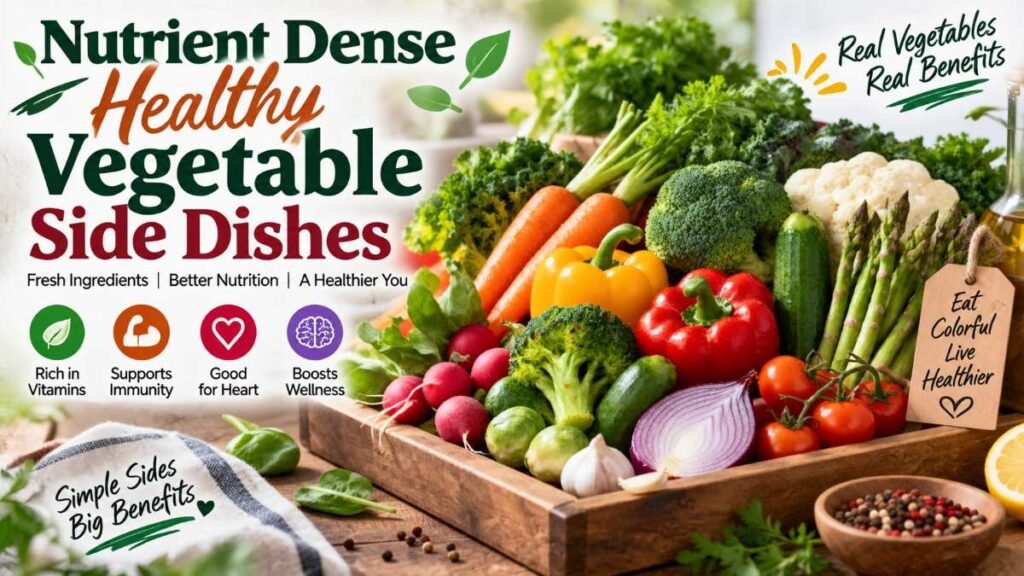
Maximizing nutritional value requires varied preparation techniques. Raw greens contain heat-sensitive antioxidants, whereas cooking tomatoes and carrots releases higher levels of lycopene and beta-carotene. To keep gut microflora thriving, incorporate a wide range of colorful plants into your weekly rotation of healthy vegetable side dishes. Learn more about feeding your microbiome with this list of gut healthy foods.
Quick 15-Minute Sides for Busy Weeknights
When time is limited, elaborate multi-step recipes are out of the question. You can prepare fresh healthy vegetable side dishes in under 15 minutes without relying on pre-packaged sodium traps.
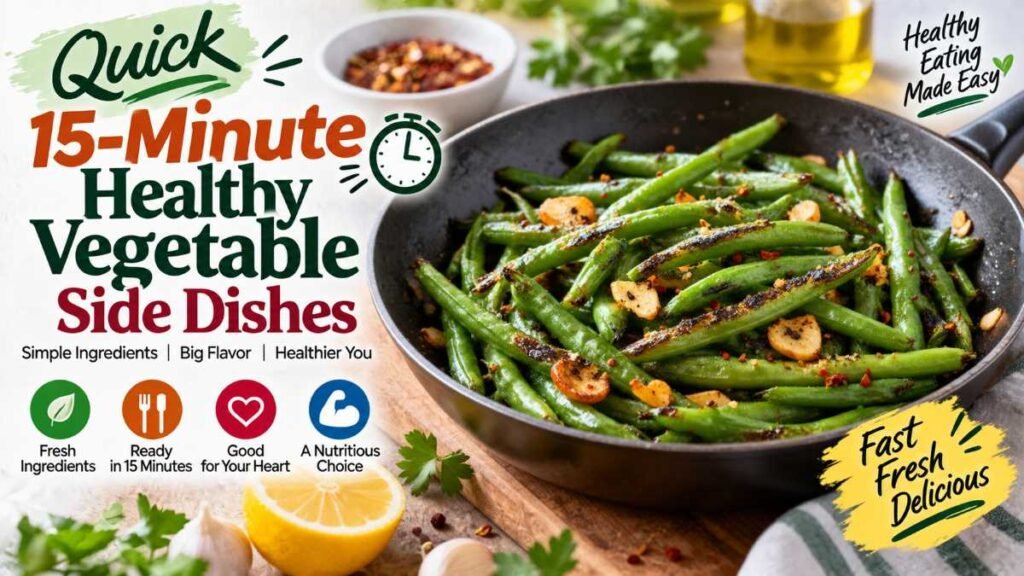
Lemon-Garlic Blistered Green Beans
Trim fresh green beans. Heat avocado oil in a heavy cast-iron skillet over medium-high heat. Add beans in a single layer and let sit untouched for 3 minutes to char. Toss, add 2 minced garlic cloves, cook for 60 seconds, and finish with fresh lemon juice and sea salt.
Warm Shaved Cabbage & Carrots
Shred red cabbage and carrots. Heat a tablespoon of olive oil in a wide pan, add shredded vegetables with a pinch of cumin and sea salt, and sauté for 5 minutes until tender-crisp. Brighten with apple cider vinegar before serving.
Air-Fryer Zucchini Fries
Slice zucchini into spears, lightly brush with oil, and dredge in almond flour, garlic powder, and grated Parmesan. Air-fry at 390°F for 10–12 minutes until golden brown.
Fast cooking methods ensure you can maintain consistent nutrition even during stressful workdays. For simple morning routines that complement easy evenings, explore these easy breakfast recipes.
Portable & Work-Friendly Vegetable Sides
Bringing vegetable sides to the office presents two distinct challenges: sogginess and unpleasant odors upon reheating. Brassicas like broccoli or cauliflower can produce strong sulfur compounds when microwaved in enclosed spaces. Selecting the right ingredients ensures office-friendly lunches that stay fresh.
Cold & Room-Temperature Friendly Options
- Mediterranean Cucumber & Tomato Salad: Diced English cucumbers, cherry tomatoes, Kalamata olives, and red onion tossed in oregano-lemon vinaigrette. Pack dressing separately to preserve crunch.
- Sesame-Ginger Crisp Slaw: Shredded Napa cabbage, sugar snap peas, and julienned red pepper with a tahini-ginger dressing. Cabbage holds its texture for hours without wilting.
- Roasted Sweet Potato & Black Bean Bowl Base: Cube-roasted sweet potatoes mixed with black beans and cilantro. Tastes delicious chilled or warm.
According to dietary recommendations from the USDA Dietary Guidelines for Americans, adults should target 2.5 to 3 cup-equivalents of vegetables daily. Packing portable sides makes reaching this threshold significantly easier during busy work hours. Pair these with options from our round-up of healthy lunch ideas for work.
Budget-Smart Prep: Eating Fresh on a Low Spend
Eating well does not require spending heavily on specialty organic produce. Strategic shopping and prep minimize food waste while maximizing nutritional value per dollar when preparing healthy vegetable side dishes.
Smart Purchasing Rules
- Embrace Frozen Vegetables: Frozen vegetables can offer comparable nutritional value to fresh produce in many cases and are often a budget-friendly option.
- Buy Whole, Not Pre-Cut: Whole carrots, bagged cabbage, and full heads of broccoli cost up to 60% less per pound than pre-chopped containers.
- Follow the Seasons: In-season produce is abundant, tastes better, and is priced significantly lower. Root vegetables in winter, squash in fall, and zucchini in summer offer optimal value.
Combining economical vegetables with simple pantry staples allows you to maintain clean eating habits without breaking the bank. Discover additional money-saving tips in our guide to healthy foods on a budget.
Food Safety & Storage Guidelines for Meal Prep
Preparing healthy vegetable side dishes in advance saves time, but improper handling can cause foodborne illness or texture degradation. Storing cooked produce correctly preserves nutrients, crispness, and flavor.
Follow official safety parameters established by the U.S. Food and Drug Administration (FDA) for refrigerating perishable items:
- The Two-Hour Rule: Cool cooked vegetable sides to room temperature and place them in sealed containers within 2 hours of cooking (or 1 hour if ambient temperatures exceed 90°F).
- Optimal Storage Containers: Use airtight glass containers over soft plastic. Glass prevents moisture buildup, eliminates chemical leaching risks, and retains crisp textures longer.
- Refrigeration Shelf Life: Most cooked vegetable sides stay fresh and safe to consume for 3 to 4 days at or below 40°F (4°C).
- Freezing & Crisp Reheating: Hearty vegetables freeze for up to 3 months. Reheat at 350°F in an air fryer or conventional oven for the best crunch.
A Practical 7-Day Vegetable Side Dish Plan
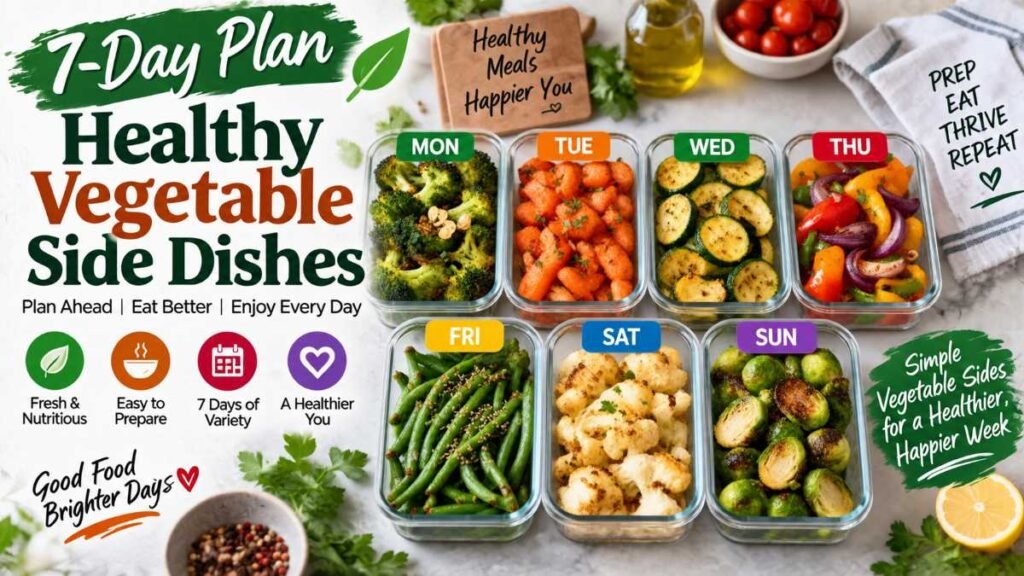
Integrating colorful healthy vegetable side dishes into your routine requires minimal effort when you follow a structured weekly plan. This template pairs simple sides with lean protein bases for balanced weeknight dinners.
Day | Featured Vegetable Side | Key Prep Method | Recommended Main Pairing |
Monday | Charred Lemon-Garlic Broccoli | High-Heat Oven Roast | Grilled Chicken Breast |
Tuesday | Sautéed Cumin Carrots & Chickpeas | Cast-Iron Skillet Sauté | Baked Wild Salmon |
Wednesday | Roasted Balsamic Brussels Sprouts | Sheet-Pan Roast (400°F) | Lean Turkey Patties |
Thursday | Sesame Snap Pea & Cabbage Slaw | Cold Chilled Toss | Tofu or Seared Shrimp |
Friday | Air-Fryer Zucchini & Herb Fries | Air-Fry at 390°F | Grass-Fed Beef Burger (No Bun) |
Saturday | Cinnamon-Roasted Sweet Potato Cubes | Oven Bake (425°F) | Herb-Roasted Pork Tenderloin |
Sunday | Warm Garlic Kale & Toasted Almonds | Quick Pan Wilt | Baked Cod or Halibut |
To streamline weeknight cooking further, plan your complete dinner structure in advance using our detailed guide on the best way to plan meals for the week.
. Frequently Asked Questions
Q1. What are easy healthy vegetable side dishes for weight loss?
High-fiber options like charred Brussels sprouts, roasted broccoli, and seasoned zucchini make incredible healthy vegetable side dishes that keep you full without adding extra calories.
Q2. What simple healthy vegetable side dishes pair best with chicken?
Garlic green beans, cinnamon-roasted sweet potatoes, and warm cabbage slaws are classic healthy vegetable side dishes that complement baked or grilled chicken breast perfectly.
Q3. How do you make simple vegetable side dishes taste rich without heavy butter?
Elevate everyday healthy vegetable side dishes using high-heat roasting, fresh lemon juice, garlic, and a light drizzle of extra virgin olive oil.
Q4. Can I prep healthy vegetable dishes ahead of time for meal prep?
Yes! Roasted root veggies and cabbage slaws hold texture for 3 to 4 days in airtight glass containers.
Elevating Your Table: The Art of Nutrient-Dense Plate Building
Transforming weeknight dinners doesn’t require complex recipes. By applying high-heat roasting, strategic seasonings, and smart prep to healthy vegetable side dishes, you easily turn simple produce into flavor-packed, restaurant-quality meals. Master these practical techniques to make healthy, balanced eating second nature every single day.
External Sources & References
- USDA Dietary Guidelines for Americans: Official U.S. nutritional framework detailing daily recommended vegetable intake and dietary patterns.
- S. Food and Drug Administration (FDA) Safe Food Handling: Safety guidelines for proper food storage, refrigeration, and prevention of foodborne illness.
- Centers for Disease Control and Prevention (CDC) Nutrition: Public health data and research supporting the nutritional benefits of frozen and fresh produce.
Disclaimer: This article is for informational and educational purposes only and does not constitute medical or nutritional advice. Always consult a qualified healthcare professional or registered dietitian before making significant changes to your diet or addressing individual health conditions
About the Author
Dambar C.P.R. is the founder and lead editor at FitLifePeak. A hands-on home cook and practical nutrition enthusiast, he skips the fluff to share simple, budget-friendly meal ideas that actually fit into a busy schedule. Dambar believes eating well should feel effortless, tasty, and zero-stress.