
There are evenings when dinner feels like one more decision nobody has energy for. Homework is unfinished, practice is running late, and the familiar question—What are we eating?—lands at exactly the wrong time.
The good news? Healthy meal ideas for busy families don’t have to mean complicated recipes or hours in the kitchen. The most useful meals are simple, flexible, and realistic enough to work on an ordinary busy night. The goal isn’t perfection; it’s creating meals your family will actually enjoy and that make balanced eating easier to repeat.
What Makes a Family Meal Truly Healthy?
A healthy family dinner doesn’t need to contain every nutrient in perfect proportions.
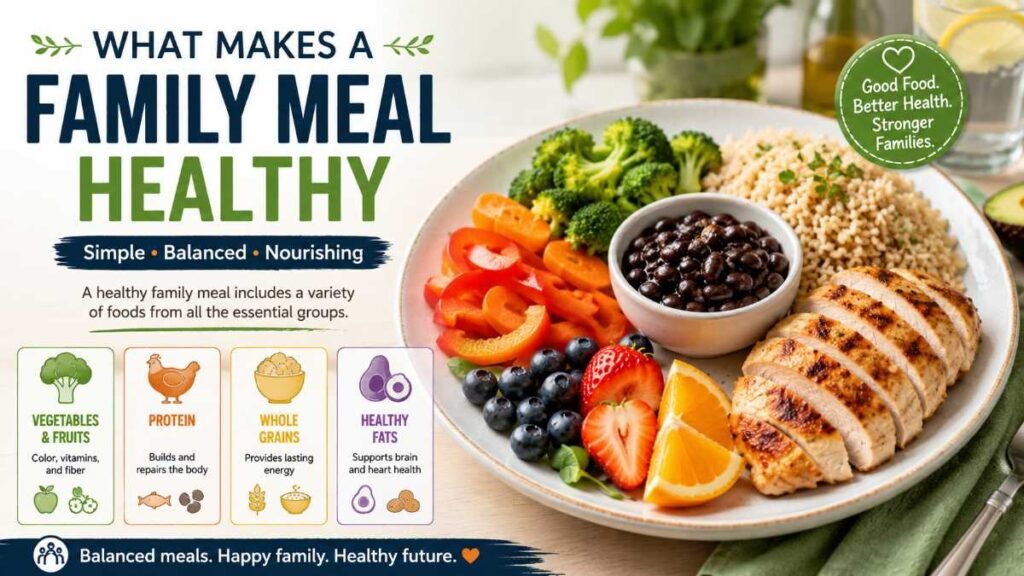
A practical starting point is to combine vegetables or fruit, a protein source, a satisfying carbohydrate, and a source of healthy fat. Harvard’s Healthy Eating Plate follows a similar overall approach, emphasizing vegetables and fruit, whole grains, healthy protein, and healthy plant oils.
Think of this as a flexible framework rather than a rigid rule.
Build Your Meal Around | Easy Options |
Protein | Chicken, eggs, beans, lentils, fish, tofu |
Vegetables or fruit | Broccoli, peppers, spinach, carrots, berries, apples |
Carbohydrate | Potatoes, oats, brown rice, whole-grain pasta |
Healthy fat | Avocado, nuts, seeds, olive oil |
The exact combination can change depending on what your family enjoys, what is available, and how much time you have.
This simple approach also removes some of the pressure from weeknight cooking. Instead of searching for an entirely new recipe every evening, you can rotate familiar ingredients into different combinations.
For a broader foundation, see our guide to healthy eating habits.
8 Healthy Meal Ideas for Busy Families
The best healthy meal ideas for busy families are the ones that still work when the fridge is half-empty and dinner needs to happen fast.
Think flexible rather than perfect. Swap vegetables, change the protein, and reuse leftovers whenever possible. A simple meal that everyone will actually eat is more useful than an elaborate recipe that takes an hour to prepare.
1. Chicken & Vegetable Grain Bowls
Combine brown rice, cooked chicken, and roasted vegetables with a simple sauce. Broccoli, carrots, peppers, zucchini, or spinach all work well.
Cook extra chicken and rice so tomorrow’s leftovers can become wraps, salads, or another quick bowl.
Shortcut: Frozen vegetables can save chopping time on especially busy evenings.
2. Build-Your-Own Taco Bowls
Set out rice, black beans or lean ground turkey, lettuce, tomatoes, corn, avocado, salsa, and a little shredded cheese.
Let everyone build their own bowl. Keeping ingredients separate can also make the meal easier for younger children.
The best part? Leftover rice, beans, and protein can become tomorrow’s lunch.
3. Whole-Grain Pasta With Vegetables & Protein
Whole-grain pasta can become an easy family dinner when paired with tomato sauce, chicken, lean ground turkey, lentils, spinach, mushrooms, or peppers.
Have leftover roasted vegetables? Toss them in.
If your family is new to whole-grain pasta, mixing it with regular pasta can make the transition easier. The goal is a meal people enjoy, not a dinner-table argument.
For more options, explore our healthy carbohydrate foods.
4. Sheet-Pan Chicken & Vegetables
When cleanup is the last thing you want, a sheet-pan dinner keeps things simple.
Roast seasoned chicken with vegetables such as:
- Chicken, broccoli & sweet potato
- Chicken, peppers & onions
- Chicken, carrots & Brussels sprouts
Add rice, quinoa, or potatoes if you want a more filling meal.
For food safety, USDA guidance recommends cooking poultry to 165°F (74°C), measured with a food thermometer.
USDA Food Safety — Safe Internal Temperatures
5. Eggs, Whole-Grain Toast & Fruit
Dinner doesn’t always have to look like dinner.
Scrambled eggs with spinach, tomatoes, or peppers, paired with whole-grain toast and fruit, can make a quick fallback meal when the original dinner plan falls apart.
Keeping eggs, bread, fruit, and a few vegetables on hand gives you an easy backup without reaching for takeout.
For another protein-focused idea, see our high-protein breakfast guide.
6. Bean & Vegetable Quesadillas
Fill whole-grain tortillas with black beans, vegetables, and a moderate amount of cheese. Cook until crisp and serve with salsa, avocado, or fruit.
They’re inexpensive, flexible, and easy to adjust.
Use vegetables your family already enjoys rather than forcing unfamiliar ingredients into the meal. Simple and familiar often wins on busy nights.
7. Salmon, Potatoes & Green Vegetables
Baked salmon with roasted potatoes and broccoli, green beans, peas, or asparagus makes a straightforward dinner with little hands-on preparation.
Fresh salmon isn’t the only option. Canned salmon can also work in sandwiches, salads, or simple patties.
The bigger goal is variety across the week, not eating one particular food every time.
8. Leftover Remix Night
This may be the biggest time-saver of all.
Turn Monday’s roasted chicken into Tuesday’s grain bowl. Use leftover vegetables in an omelet. Transform extra beans into quesadillas.
Instead of treating leftovers as yesterday’s dinner, treat them as ingredients for the next meal.
USDA MyPlate also encourages planning ahead and using quick meals or leftovers during busy days.
USDA MyPlate — Healthy Eating for Familie
That small change can take a surprising amount of pressure out of a busy week.
How to Make Healthy Family Meals Faster
Cooking faster isn’t always about finding faster recipes.
Often, the bigger time-saver is doing a little preparation before you’re hungry and tired.
Keep Flexible Staples at Home
A practical kitchen might include:
- Eggs
- Canned beans
- Oats
- Brown rice
- Whole-grain pasta
- Frozen vegetables
- Fresh fruit
- Greek yogurt
- Chicken or fish
- Whole-grain tortillas
These ingredients can be combined in many different ways. One forgotten grocery trip doesn’t automatically have to become a takeout night.
Cook Once, Use Twice
If you’re making rice, cook extra.
If you’re roasting vegetables, make another tray.
If you’re cooking chicken, prepare enough for tomorrow.
This small habit can turn the next meal from a cooking project into a five-minute assembly job.
Use the Freezer
Frozen vegetables, cooked grains, soups, and appropriately stored leftovers can make busy evenings easier.
Convenience isn’t the enemy of healthy eating. Sometimes the most useful ingredient in a busy household is the one that requires almost no preparation.
The objective is to reduce friction—not to make every meal from scratch.

How to Deal With Picky Eaters
Family meals become much easier when dinner doesn’t turn into a nightly battle.
Instead of preparing a completely separate meal for every family member, serve the same basic meal with a few choices.
For example:
Family meal: Chicken + rice + roasted vegetables
A selective eater might choose:
Chicken + rice + cucumber
The child still gets a familiar food while remaining part of the family meal.
USDA family guidance also encourages involving children in age-appropriate food preparation and family meals.
A child can wash produce, stir ingredients, assemble a wrap, or choose between two vegetables.
And don’t underestimate presentation. Some children who reject mixed dishes may happily eat the exact same ingredients when they are served separately.
The goal isn’t to win a nightly food argument. It is to gradually make nutritious foods familiar and comfortable
A Simple 5-Day Dinner Framework
You don’t need five completely different recipes every week.
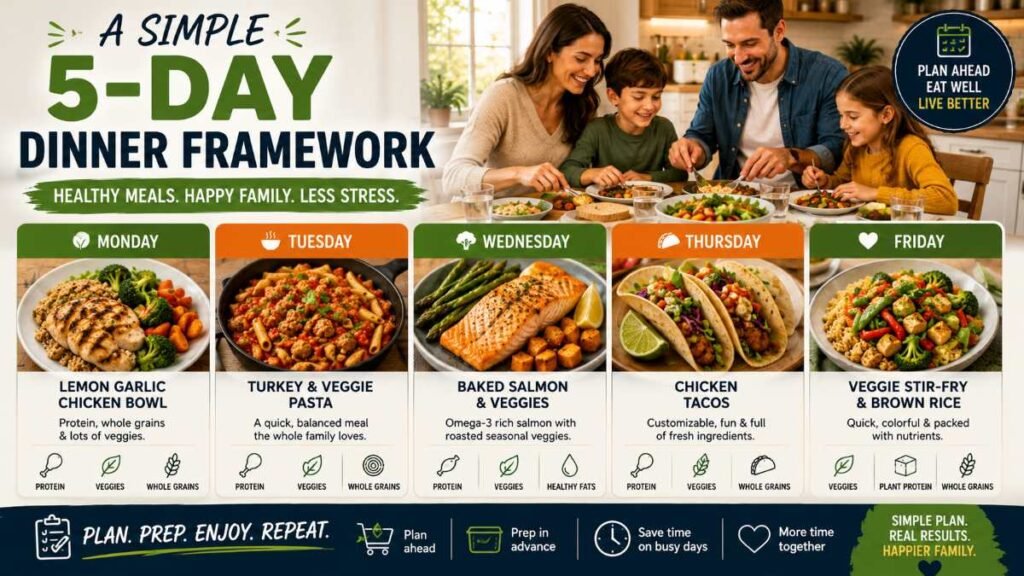
A repeating framework can reduce both shopping and decision fatigue.
Day | Dinner | Why It Works |
Monday | Chicken grain bowls | Easy to customize |
Tuesday | Taco bowls | Everyone chooses toppings |
Wednesday | Salmon + potatoes + vegetables | Simple protein and sides |
Thursday | Whole-grain pasta | Uses flexible ingredients |
Friday | Quesadillas or leftovers | Minimal preparation |
Change the ingredients from week to week while keeping the basic structure.
This is one of the simplest ways to make healthy meal ideas for busy families sustainable rather than something you try for two weeks and abandon.
For additional fiber-rich ingredients, explore our high-fiber foods list
Small Changes That Improve Everyday Family Meals
You don’t need to completely rebuild your family’s diet.
A few practical swaps can gradually improve the overall quality of everyday meals.
Instead of Always Using | Consider More Often |
Refined grains | Whole grains |
Sugary drinks | Water or unsweetened drinks |
Processed meat | Beans, eggs, fish, chicken, or lentils |
Chips every night | Fruit, vegetables, yogurt, or nuts |
Heavy sauces | Herb, tomato, yogurt, or olive-oil-based sauces |
These aren’t strict rules.
A balanced eating pattern has room for foods that are simply enjoyable. The goal is to make nutritious choices easier and more frequent, not make every meal feel restrictive.
Harvard’s nutrition guidance similarly emphasizes overall food quality, including vegetables, fruits, whole grains, healthy fats, and healthy protein sources, rather than reducing healthy eating to a single nutrient or rigid formula.
Families looking for additional fiber-rich choices can explore our high-fiber foods list.
For more practical carbohydrate options, see our guide to healthy carbohydrate foods.
The 60-Minute Weekend Reset
A little preparation can make the following week noticeably easier.
You don’t need to spend an entire afternoon cooking.
First 15 minutes: Choose three main dinners and two flexible meals.
Next 20 minutes: Wash fruit, chop a few vegetables, and prepare one protein.
Final 25 minutes: Cook a grain, portion ingredients, and place the foods you’ll use first where you can see them.
The goal is not meal-prep perfection.
It’s simply to make Wednesday dinner require less thought.
That distinction matters. A sustainable routine should make family life easier, not create another weekly obligation that eventually becomes difficult to maintain.

What If Every Family Member Eats Differently?
That’s normal.
Children, teenagers, adults, and older family members can have different appetites and nutritional needs. Activity levels can differ too.
A teenager involved in sports may need considerably more food than a younger child. Someone with a food allergy, diabetes, kidney disease, celiac disease, or another medical condition may need individualized dietary guidance.
For those situations, a registered dietitian or qualified healthcare professional can help tailor meals appropriately.
For generally healthy households, however, variety, flexibility, and consistency are more useful goals than trying to make every plate identical.
Final Takeaway
The best healthy meal ideas for busy families aren’t the meals that look perfect on a food blog. They’re the meals you can still make when homework is unfinished, schedules change, and everyone is hungry.
Keep a few reliable staples available. Build flexible meals around protein, produce, satisfying carbohydrates, and healthy fats. Cook extra when it helps, reuse leftovers, and let children participate.
Healthy family eating doesn’t require perfection. It requires a routine that works in real life.

FAQ
1. What are 10 good dinner foods for families?
Chicken grain bowls, taco bowls, sheet-pan veggies, whole-grain pasta, and egg options make great meals. Rotation-based staples help create sustainable healthy meal ideas for busy families without extra fuss.
2. What is the quickest healthiest dinner?
Sheet-pan chicken with veggies or bean quesadillas top the list. They deliver complete nutrition in 20 minutes, serving as quick healthy meal ideas for busy families on tight schedules.
3. What should I cook for 7 people?
Build-your-own taco or grain bowls work best. Serving ingredients family-style handles large groups easily while keeping your healthy meal ideas for busy families flexible for everyone.
4. What to eat for dinner when stressed?
Keep it simple with scrambled eggs on whole-grain toast with fruit. Skip complex recipes—stress-free assembly beats kitchen perfection every time.
Sources & Further Reading
- Harvard Healthy Eating Plate — Harvard T.H. Chan School of Public Health — practical framework for building balanced meals.
- USDA MyPlate — Healthy Eating for Families — family meal planning, variety, leftovers, and involving children.
- USDA Food Safety — Safe Internal Temperatures — poultry cooking safety guidance.
Medical Disclaimer: This content is for educational purposes only and not medical or nutritional advice. Dietary needs vary—always consult a healthcare professional or registered dietitian before making significant diet changes or if managing medical conditions.
About the AuthorDambar CP.R. is the founder of FitLifePeak and a health and wellness content creator. He creates evidence-based articles on nutrition, fitness, and healthy living, making trusted health information simple, practical, and easy to understand.