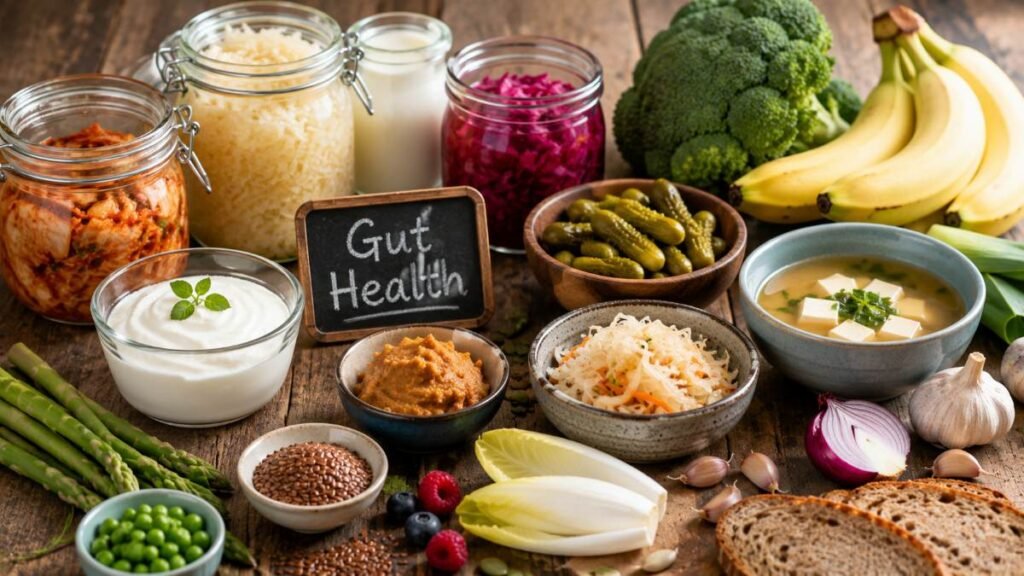
Ever wonder why a raw kale salad leaves you feeling bloated while your coworker seems to digest everything comfortably? Understanding digestive wellness doesn’t have to feel like guesswork. Incorporating gut healthy foods into your daily routine can be a practical way to support digestive health without chasing the latest wellness trends. Let’s explore what current research says about nourishing your gut microbiome and building eating habits that work for your everyday life.
Understanding the Gut Microbiome and Microbial Diversity
Scientific studies frequently highlight microbial diversity as a cornerstone of a balanced intestinal environment. A varied internal ecosystem relies on a broad spectrum of dietary inputs, because different bacterial species thrive on distinct types of plant fibers and nutrients.
When dietary variety drops, microbial shifts can occur. Emphasizing a wide array of plant foods, fibers, and fermented options helps ensure that your beneficial bacteria receive diverse nourishment. Current scientific evidence suggests dietary variety supports microbial adaptability, though individual responses vary significantly.
Microbial Group | Observed Role in Research | Potential Dietary Associations Studied |
Bifidobacteria | Associated with carbohydrate fermentation and short-chain fatty acid production. | Often studied alongside prebiotic fibers found in garlic, onions, and high-fiber foods list staples. |
Lactobacilli | Frequently studied for roles in dairy digestion and maintaining mucosal environments. | Observed in unpasteurized fermented vegetables and live-culture yogurt. |
Faecalibacterium | Known producers of butyrate, a compound studied for its effects on colon cells. | Associated with resistant starches, green bananas, and healthy carbohydrate foods. |
Note: These potential dietary associations do not mean that eating a particular food will reliably increase or alter a specific bacterial group in every individual, as human responses are highly personalized.
Prebiotics vs. Probiotics: Core Differences Explained
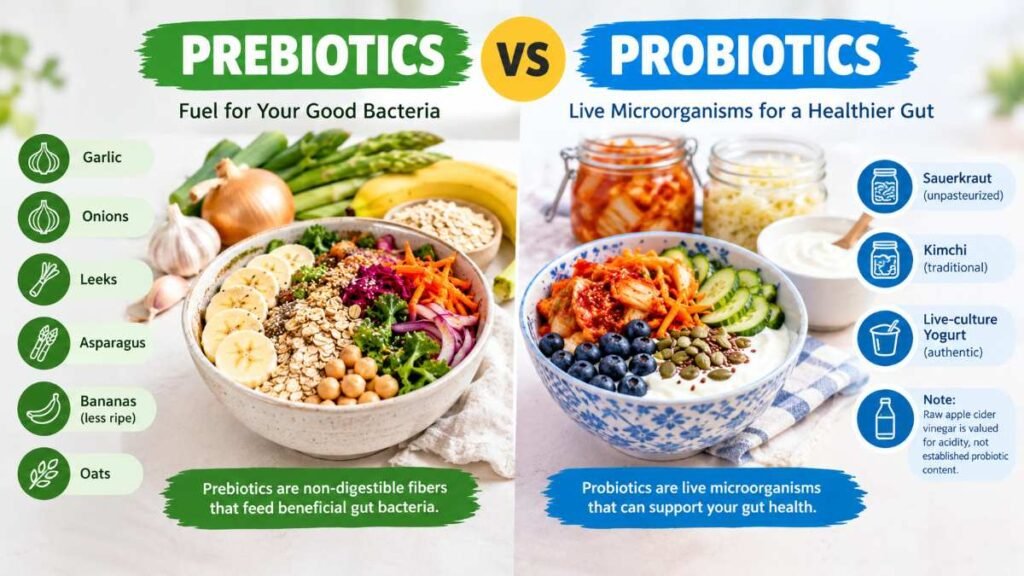
Navigating digestive wellness involves understanding the distinct roles of prebiotics and probiotics. Probiotics are live microorganisms found in certain fermented foods or supplements; however, as noted in the NIH Probiotics Fact Sheet for Health Professionals, having live cultures in a food does not automatically mean it contains clinically established probiotics, and physiological effects depend heavily on the specific strain and dosage.
Prebiotics, conversely, are non-digestible fibers that pass through the upper GI tract to reach the large intestine, where they are utilized by resident bacteria. To support this process, combining prebiotic fibers with fermented foods can be beneficial, drawing on principles from an anti-inflammatory diet approach.
- Prebiotic Sources: Garlic, onions, leeks, asparagus, slightly underripe bananas, and oats.
- Probiotic Considerations: Authentic live-culture yogurt, traditional unpasteurized kimchi, and raw sauerkraut. Note: As highlighted by clinical sources, having live cultures does not guarantee a clinically established probiotic effect. Note that raw apple cider vinegar is valued for culinary acidity rather than established probiotic content (see PMC Study on Fermented Foods and Microbiota).
- Balanced Pairing: Incorporating prebiotic root vegetables alongside traditional fermented sides in everyday meals.
Fermented Foods, Label Literacy, and Safety
Fermentation is a traditional culinary technique that transforms foods through microbial action, enhancing flavor and digestibility. However, commercial manufacturing processes vary widely. Many supermarket items undergo pasteurization, which inactivates live cultures.
When selecting fermented items, checking product labels for explicit mentions of “live and active cultures” is essential. Integrating these items into meals can be aligned with broader cooking habits found in healthy foods to make at home guides to ensure transparency in ingredients and preparation. Important Food Safety Note: Unpasteurized fermented products carry a potential risk of harmful microbial contamination. Individuals belonging to higher-risk groups—such as pregnant women, older adults, and immunocompromised persons—should exercise caution and choose pasteurized alternatives.
High-Fiber Staples and Verified Fiber Quantity Chart
Dietary fiber encompasses various plant compounds that resist human enzymatic digestion. Soluble and resistant fibers travel to the large intestine, where bacterial fermentation produces short-chain fatty acids (SCFAs) such as acetate, propionate, and butyrate. As reported in the Harvard T.H. Chan School of Public Health Fiber Overview, these SCFAs serve as an energy source for colon cells and contribute to normal intestinal function.
Including gut healthy foods rich in fiber ensures a steady supply of fermentable substrates. Below is a practical breakdown of approximate fiber content per standard serving, verified against database metrics such as USDA FoodData Central:
Food Item | Serving Size (Standard) | Approximate Fiber (grams) | Preparation Method & Budget Swap |
Lentils & Beans | USDA Lentils Entry (1/2 cup cooked) | ~7–8 grams | Rinse canned beans thoroughly; boil dry lentils after soaking. (Budget Swap: Canned beans) |
Rolled Oats | USDA Oats Entry (1 cup cooked) | ~4 grams | Simmer with water/milk or soak overnight. (Budget Swap: Store-brand bulk oats) |
Chia Seeds | USDA Chia Seeds Entry (2 tablespoons) | ~10 grams | Soak in liquid before eating to form a gel. (Budget Swap: Ground flaxseeds) |
Plain Greek Yogurt | USDA Greek Yogurt Entry (3/4 cup) | Usually 0g fiber (Protein varies) | Enjoy cold with berries; check label for live cultures. (Budget Swap: Whole-milk plain yogurt) |
Raspberries | USDA Raspberries Entry (1/2 cup) | ~4 grams | Wash gently and eat fresh. (Budget Swap: Frozen mixed berries) |
Practical Workday Example & 7-Day Meal Plan
Adopting an optimal eating pattern works best when integrated smoothly into a busy schedule.
- Real-World Workday Example: If you have a demanding office schedule, preparing breakfast takes under five minutes by mixing overnight rolled oats with chia seeds and frozen berries. For lunch at your desk, a quick bowl of pre-cooked brown rice combined with rinsed canned black beans, olive oil, and a side of plain yogurt creates a balanced meal without requiring mid-day cooking.
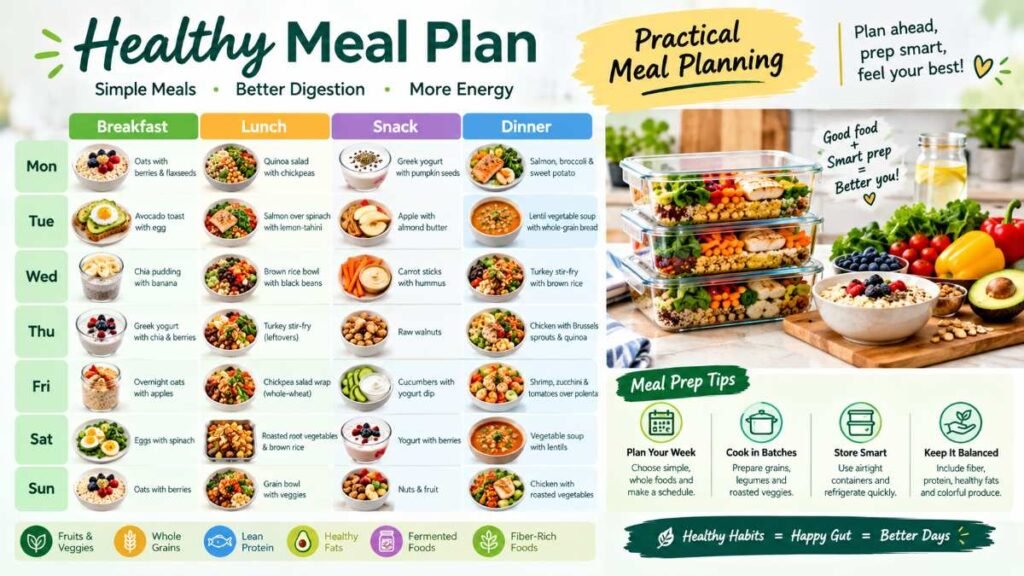
Below is a practical 7-day meal plan reflecting common US ingredients, designed to support varied nutrient intake, similar to concepts in best way to plan meals for the week:
Monday:
- Breakfast: Steel-cut oats (1 cup cooked) topped with ground flaxseeds and fresh raspberries.
- Lunch: Quinoa salad with roasted chickpeas and olive oil.
- Snack: Plain Greek yogurt with pumpkin seeds.
- Dinner: Oven-roasted salmon served alongside tender steamed broccoli and seasoned sweet potato wedges.
Tuesday:
- Breakfast: Whole-wheat toast with mashed avocado and a soft-boiled egg.
- Lunch: Leftover baked salmon over baby spinach with lemon-tahini dressing.
- Snack: Sliced apple with almond butter.
- Dinner: Lentil and vegetable soup with whole-grain crusty bread.
Wednesday:
- Breakfast: Chia seed pudding made with almond milk and sliced bananas.
- Lunch: Brown rice bowl with black beans, diced bell peppers, and salsa.
- Snack: Carrot sticks with hummus.
- Dinner: Lean ground turkey stir-fry with snap peas, carrots, and brown rice.
Thursday:
- Breakfast: Plain Greek yogurt mixed with chia seeds and blueberries.
- Lunch: Leftover turkey stir-fry from Wednesday dinner.
- Snack: A handful of raw walnuts.
- Dinner: Oven-baked chicken breast served with steamed Brussels sprouts and tender quinoa.
Friday:
- Breakfast: Overnight oats prepared with rolled oats, cinnamon, and diced apples.
- Lunch: Mediterranean chickpea salad wrap in a whole-wheat tortilla.
- Snack: Sliced cucumbers with a light yogurt-herb dip.
- Dinner: Sheet-pan meal featuring shrimp, zucchini, and cherry tomatoes over polenta.
Saturday & Sunday (Batch Prep Weekend):
- Weekend Focus: Roast a large tray of mixed root vegetables and prep a double batch of brown rice or lentils to streamline weekday lunches. Enjoy eggs with spinach on the side for weekend brunches.
Budget Substitutions and Smart Meal Preparation
Eating to support your microbiome does not require expensive specialty items. You can easily incorporate gut healthy foods on a budget using smart kitchen strategies:
- Rinse Canned Beans: Canned beans are economical and time-saving; rinse them thoroughly under cold water to reduce excess sodium and improve digestive tolerance.
- Utilize Frozen Produce: Frozen produce can provide comparable nutrition to fresh produce, depending on the food and how it is stored and prepared, often offering great year-round value.
- Batch Cooking: Cook grains like brown rice or quinoa in large batches on Sunday, storing them safely in airtight containers for quick weekday assembly.
Sensitive Digestion Tips and Gradual Integration
Introducing high-fiber items too quickly can overwhelm your digestive system, leading to temporary gas or bloating as your gut microbiota adapts.
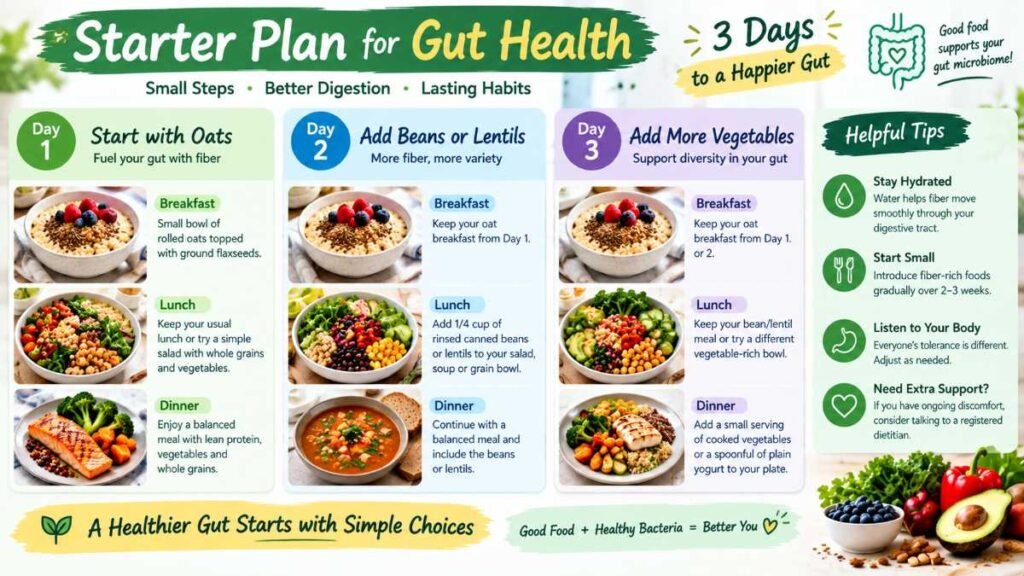
- Increase Gradually: Add fiber-rich foods in small portions over the course of 2 to 3 weeks rather than making a drastic overnight change.
- Hydrate Adequately: Drink plenty of water throughout the day to help soluble and insoluble fibers move smoothly through your digestive tract.
- Listen to Your Body: Individual tolerance varies greatly. If certain high-FODMAP foods cause persistent discomfort, consider consulting a registered dietitian for personalized guidance.
Start Here: Your First 3 Days
If you are wondering how to begin without overwhelming your system, follow this simple 3-day introductory step:
- Day 1: Begin your morning with a small bowl of rolled oats topped with a spoonful of ground flaxseeds, keeping the rest of your daily meals normal.
- Day 2: Maintain your oat breakfast and introduce 1/4 cup of rinsed canned beans or lentils into your lunch salad or soup.
- Day 3: Continue with your oats and beans, and gradually add a small serving of cooked vegetables or a spoonful of plain yogurt to your dinner plate, monitoring how your body feels.
What If Beans Cause Bloating?
Experiencing mild gas when first adding beans or lentils is common as your digestive tract adjusts to increased oligosaccharides. To minimize discomfort, start with very small portions (such as two tablespoons per meal), rinse canned beans thoroughly, ensure adequate daily hydration, and consult a registered dietitian if digestive symptoms persist.
Food Safety and Storage Guidelines
Proper handling and storage of fresh produce and prepared meals are vital for maintaining food safety. According to official storage guidelines outlined in the USDA Food Safety and Inspection Service (FSIS) Leftovers and Food Safety Guidance, perishable items—including cooked rice, grains, and proteins—should be cooled rapidly and refrigerated within two hours of preparation in shallow airtight containers to minimize bacterial proliferation.
Important Note on Cooked Rice: Cooked rice should not be left sitting at room temperature for extended periods due to the potential growth of spore-forming bacteria (Bacillus cereus). Refrigerate cooked rice promptly in shallow containers and consume leftovers within 3 to 4 days. Fresh fruits and vegetables should be washed thoroughly under running tap water just before preparation or consumption.
Frequently Asked Questions
Q1. What foods heal your gut? Natural healing begins by adding daily gut healthy foods like oats, lentils, and chia seeds to nourish your microbiome and restore smooth digestion effortlessly.
Q2. What is the 7 day gut reset? A 7-day gut reset involves swapping processed snacks for whole gut healthy foods over one week to rebalance internal flora and reduce bloating.
Q3. How to clean your gut naturally? Purifying your digestive tract naturally relies on fiber-rich options like raspberries, beans, and greens. Regularly consuming these gut healthy foods promotes smooth elimination.
Q4. What are the 7 signs of an unhealthy gut? An imbalanced microbiome triggers bloating, fatigue, and gas. You can reverse these issues by consistently adding healing gut healthy foods to your daily plate.
Q5. How to heal your gut quickly? While true repair takes consistency, you can kickstart recovery with warm items like soothing broths and probiotic yogurt to minimize daily bloating.
Conclusion: Take Charge of Your Digestive Vitality Today
Your microbiome isn’t a fixed trait; it is a dynamic ecosystem that responds directly to your daily choices. By swapping processed convenience for nutrient-dense, fiber-rich, and fermented staples, you lay the groundwork for lasting metabolic resilience. Start small, listen closely to your body, and build sustainable habits that fuel your energy from the inside out.
Ready to transform your digestive health? Explore our expert-backed high-fiber foods list today, pick one new staple to add to your grocery cart this week, and take the first decisive step toward vibrant, lifelong vitality!
Authoritative References & Clinical Sources
Editorial & Food Safety Disclaimer
This article is published for informational and educational purposes only and does not provide formal medical advice, diagnosis, or treatment. Readers should consult with a qualified healthcare provider or registered dietitian before making major changes to their dietary routine, particularly if managing pre-existing health conditions. Food storage protocols reference standard public health recommendations from U.S. federal agencies.
About the Author
Dambar C.P. Rajbanshi is the founder of FitLifePeak, focused on organizing practical nutritional information and evidence-informed wellness concepts for everyday readers based on transparent sourcing and public health guidelines.
Build Sustainable Wellness Habits Today
Incorporate wholesome, nutrient-dense meal strategies into your routine to support your everyday vitality and nutritional goals. Explore High-Fiber Foods Now