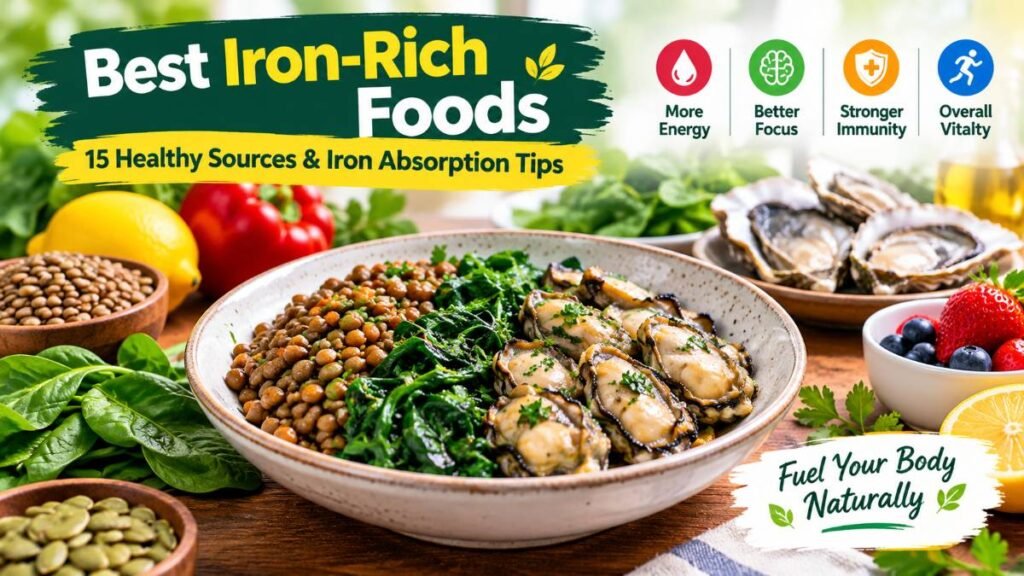
Including the best iron rich foods in a daily routine is a practical way to support healthy oxygen transport, cellular energy, and overall vitality. However, symptoms like ongoing fatigue or brain fog can stem from various physical and metabolic factors and should not automatically be attributed to low iron. Whether you follow a plant-based diet or include animal proteins, understanding how to select and properly pair high-iron ingredients ensures you get the most out of every meal.
The Science of Dietary Iron: Heme vs. Non-Heme
Iron is a crucial trace mineral required to produce hemoglobin—the specialized blood protein responsible for carrying oxygen from your lungs to tissues throughout your body. It also supports myoglobin production, which stores oxygen in muscle tissue for physical activity.
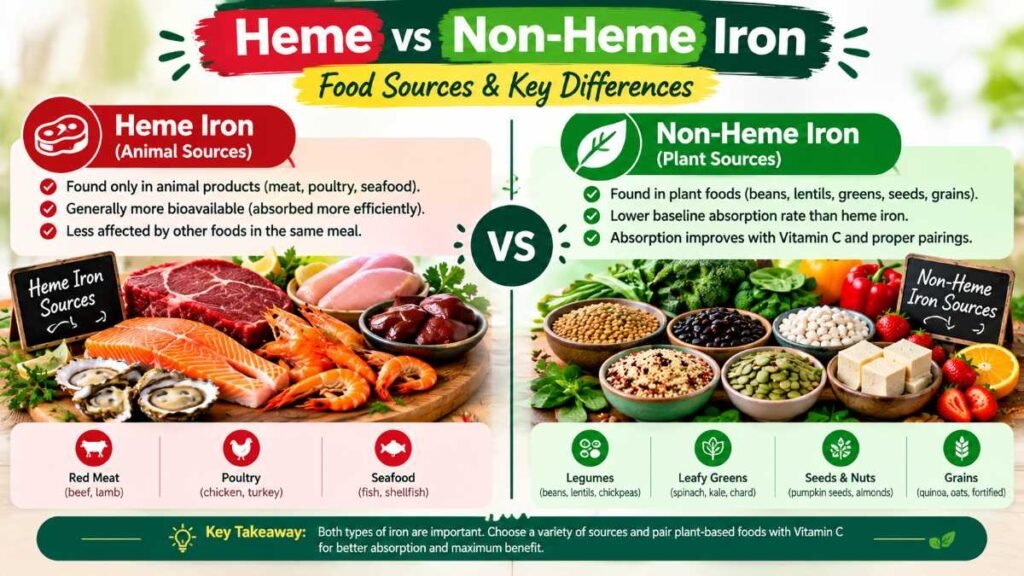
Before picking the best iron rich foods for your daily meals, grasping the key differences between the two forms of dietary iron can make a big difference:
- Heme Iron: Found in meat, poultry, and seafood, heme iron is generally absorbed more efficiently than non-heme iron. However, total iron absorption still varies depending on factors such as an individual’s current iron status and overall meal composition.
- Non-Heme Iron: Present in plant foods like beans, lentils, dark leafy greens, seeds, and fortified grains. Non-heme iron has a lower baseline absorption rate, but its uptake can be enhanced when combined with proper nutrient pairings.
Recommended Daily Targets & Absorption Factors
Daily dietary iron needs vary considerably depending on biological sex, age, and physiological demands. Official dietary reference values published by the NIH Office of Dietary Supplements establish these baseline daily targets:
Adult Men (Ages 19–50): ~8 mg daily
- Adult Women (Ages 19–50): ~18 mg daily
- Adults Aged 51+: ~8 mg daily for both men and women
- Pregnant Individuals: ~27 mg daily
Note on Plant-Based Diets: Because non-heme iron is less bioavailable than heme iron, dietary reference frameworks from the NIH Office of Dietary Supplements note that vegetarians and vegans relying solely on plant sources may consider estimated target intakes up to 1.8 times higher (~32 mg daily for adult women) to help account for lower average bioavailability. However, individual requirements differ, so this calculation serves as a broader nutritional reference rather than an absolute rule for every person.
Smart Meal-Pairing Strategies
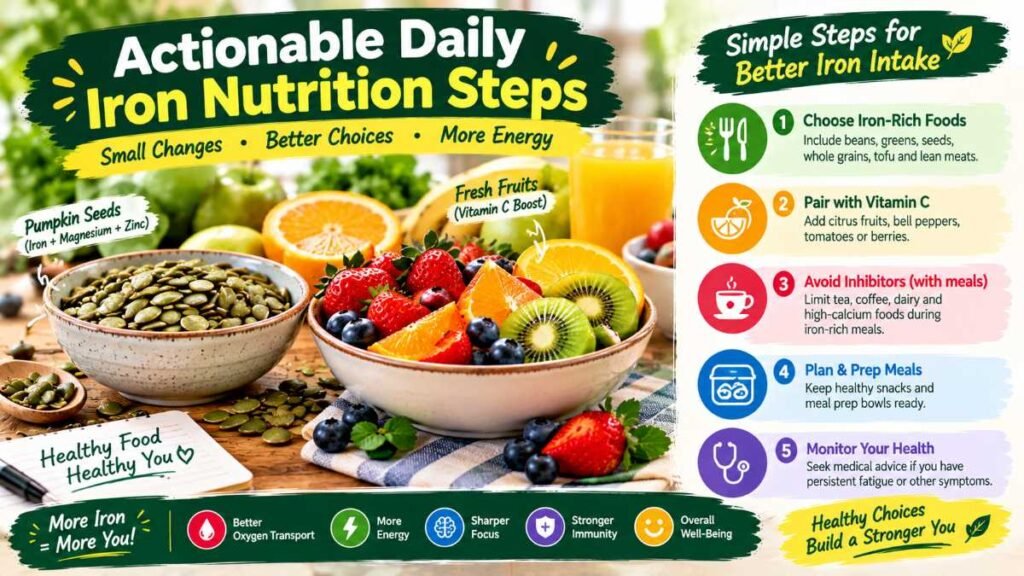
- Absorption Boosters: Vitamin C (ascorbic acid)—found abundantly in bell peppers, citrus fruits, tomatoes, and strawberries—chemically transforms non-heme iron in the gut into a form your body can absorb much more easily. Eating small portions of animal protein alongside plant sources also supports non-heme iron uptake.
- Absorption Inhibitors: Polyphenols in coffee and tea, calcium in dairy or fortified beverages, and phytates in unrefined grains can temporarily bind to non-heme iron and reduce its uptake. While strict timing is not necessary for everyone, individuals managing low iron levels may benefit from drinking tea or coffee between meals rather than directly with high-iron dishes.
Top 15 Iron-Rich Foods: Verified Reference Guide
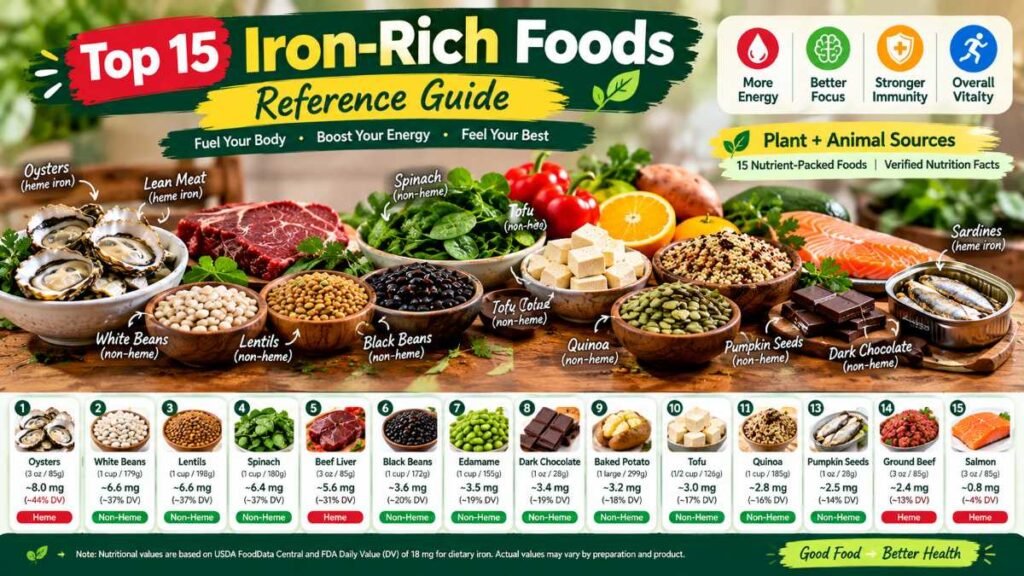
The following guide details 15 nutrient-dense food options using standardized serving sizes. Nutritional values align with entries from the USDA FoodData Central Database and reflect percentages calculated against the FDA Daily Value (DV) baseline of 18 mg for dietary iron.
Food Item | Standard Serving Size | Approx. Iron (mg) | Daily Value (% DV) | Iron Type | Primary Nutritional Benefit |
Cooked Oysters (Moist Heat) | 3 oz (85g) | ~8.0 mg | ~44% | Heme | Dense in zinc, B-vitamins, and high-quality protein |
Cooked White Beans | 1 Cup (179g) | ~6.6 mg | ~37% | Non-Heme | Packed with soluble fiber and plant-based protein |
Cooked Lentils | 1 Cup (198g) | ~6.6 mg | ~37% | Non-Heme | Rich in folate, potassium, and slow-digesting carbs |
Cooked Spinach (Boiled, Drained) | 1 Cup (180g) | ~6.4 mg | ~36% | Non-Heme | Delivers vitamins A, C, K, and essential minerals |
Beef Liver (Pan-Seared) | 3 oz (85g) | ~5.6 mg | ~31% | Heme | Exceptionally rich in Vitamin A, B12, and bioavailable iron |
Cooked Black Beans | 1 Cup (172g) | ~3.6 mg | ~20% | Non-Heme | Supports healthy gut digestion and sustained energy |
Steamed Edamame | 1 Cup (155g) | ~3.5 mg | ~19% | Non-Heme | Convenient plant protein option packed with fiber |
Dark Chocolate (70–85%) | 1 oz (28g) | ~3.4 mg | ~19% | Non-Heme | High in antioxidants and magnesium (best in moderation) |
Unpeeled Baked Potato | 1 Large (299g) | ~3.2 mg | ~18% | Non-Heme | Supplies essential potassium, immune-supporting Vitamin C, and fuel for activity |
Firm Tofu (Calcium-Set) | 1/2 Cup (126g) | ~3.0 mg | ~17% | Non-Heme | Versatile, complete plant protein staple |
Cooked Quinoa | 1 Cup (185g) | ~2.8 mg | ~16% | Non-Heme | Naturally gluten-free grain containing essential amino acids |
Pumpkin Seeds (Pepitas) | 1 oz (28g) | ~2.5 mg | ~14% | Non-Heme | Dense source of magnesium, zinc, and healthy fats |
Canned Sardines (in Oil) | 3 oz (85g) | ~2.5 mg | ~14% | Heme | Heart-healthy omega-3 fatty acids and calcium |
Lean Ground Beef (90/10) | 3 oz cooked (85g) | ~2.4 mg | ~13% | Heme | Highly bioavailable iron paired with complete protein |
Wild Salmon (Cooked) | 3 oz (85g) | ~0.8 mg | ~4% | Heme | Provides essential omega-3s and complements green vegetables |
Animal-Based Protein Options: Bioavailable Heme Sources
Adding lean animal proteins to your meals is one of the most effective ways to boost iron absorption. Because your body absorbs heme iron significantly faster than plant-based compounds, these whole-food choices deliver impressive nutritional density:
- Varieties of Fish & Shellfish: Bivalves—including fresh mussels, clams, and oysters—supply concentrated amounts of absorbable iron, immune-supporting zinc, and critical B-complex vitamins. Cooking simple healthy fish recipes like grilled sardines or roasted salmon provides these key nutrients alongside anti-inflammatory omega-3 fats.
- Red Meats, Poultry & Organs: Beef cuts, poultry, and nutrient-rich liver offer a direct source of readily usable iron. For seamless and cost-effective prep work, using healthy ground chicken recipes or lean ground turkey lets you build satisfying, high-protein lunch bowls and wraps effortlessly.Pairing these animal-derived proteins with fresh greens creates a complete daily plate featuring the best iron rich foods to keep your energy and stamina consistent.Pregnancy Precaution: While beef liver is exceptionally dense in nutrients, it holds dangerous levels of active Vitamin A (retinol). Expecting mothers should bypass organ meats entirely to prevent adverse effects on early fetal growth.
Plant-Based Champions: Beans, Greens, & Grains
If you follow a vegetarian or plant-forward lifestyle, building meals around plant sources provides abundant fiber, antioxidants, and essential trace minerals:
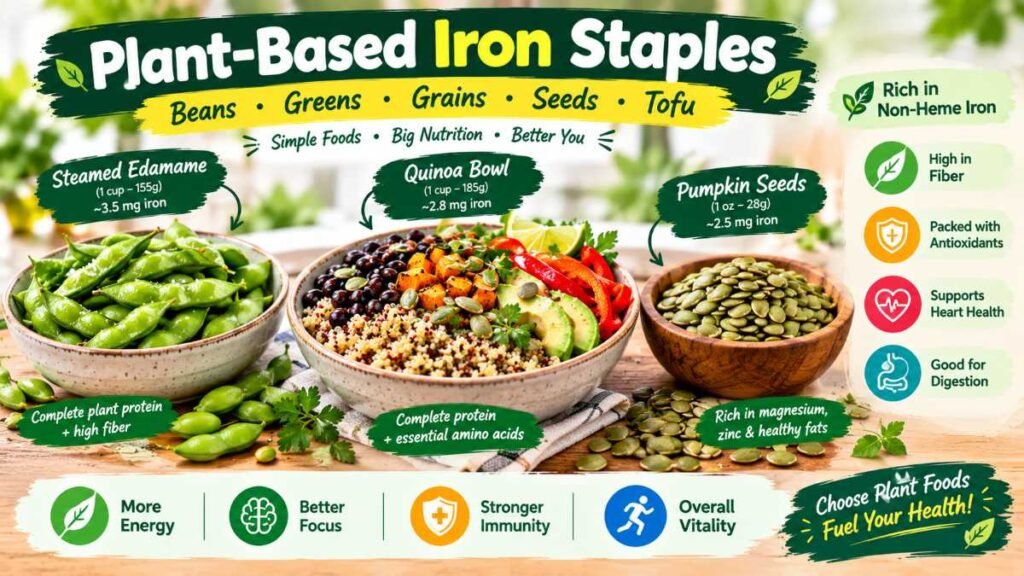
[ Plant-Based Iron Staples ]
├── Legumes: White Beans, Lentils, Black Beans
├── Leafy Greens: Cooked Spinach, Swiss Chard
└── Grains & Seeds: Quinoa, Pumpkin Seeds, Tofu
Legumes & Soy Products: White beans, lentils, chickpeas, and firm tofu form the backbone of a high-iron plant diet. Adding a splash of fresh lemon juice over cooked lentil salads provides ascorbic acid right at mealtime, helping your body absorb non-heme iron far more efficiently. Short on time during the week? Our lunch meal prep guide has practical ideas to help you put these ingredients to good use and make lunchtime easier.
Cooked Leafy Greens: Cooking or steaming greens like spinach and Swiss chard shrinks their volume, making it simple to eat a larger nutrient-dense portion in one sitting. While heat breaks down certain mineral-binding antinutrients, it won’t magically double your total mineral absorption; combining leafy greens with Vitamin C-rich items like fresh citrus or sliced bell peppers remains the most effective practical strategy. Potassium-rich foods can add more nutritional variety to your plate. Not sure which foods to choose? Our potassium guide highlights everyday options you can add to your shopping list and enjoy in different meals.
Seeds & Grains: Quinoa and pumpkin seeds pack a steady supply of non-heme iron into small, manageable servings. Tossing a handful of pepitas over warm oatmeal or fresh garden salads gives your bowl a pleasant texture alongside heart-healthy fats.
Smart Workday Strategies: Quick Snacks & Meal Planning
Fitting the best iron rich foods into a demanding work schedule does not require hours in the kitchen or an expensive grocery bill. Simple preparation strategies can help you maintain consistent nutrition throughout the busy week:
- Desk-Friendly Snacks: Keep roasted pumpkin seeds, high-cocoa dark chocolate enjoyed in modest 1 oz portions, or dried apricots in your desk drawer for quick nutrition during busy afternoons. Incorporating nutrient-dense healthy snack ideas for adults keeps your energy steady between meals.
- Balanced Prep Bowls: Build weekly lunch containers using a base of cooked quinoa, black beans, diced bell peppers for an absorption-boosting Vitamin C hit, and grilled chicken or tofu. Starting your morning with simple, wholesome easy breakfast recipes sets a solid foundation for the rest of the day.
- Budget-Smart Grocery Choices: Sourcing high-iron ingredients is naturally wallet-friendly. Staple foods like dried lentils and canned beans cost only pennies per serving, while frozen spinach provides flash-frozen nutrition at a fraction of the cost of fresh salad greens. Learning how to buy healthy foods on a budget makes long-term nutrition simple and affordable.
Food Safety & Proper Leftover Handling
Cooked meats, seafood, and legume batches require careful handling to preserve freshness and prevent foodborne illness, following established guidelines from the USDA Food Safety and Inspection Service:
- Refrigerate perishable food within 2 hours of cooking, or within 1 hour when the temperature is above 90°F (32°C). Keep the refrigerator at 40°F (4°C) or below.
- Reheating: Reheat meal-prep portions thoroughly until they reach an internal temperature of 165°F (74°C).
- Freezer Storage: Batches of bean soups, turkey chili, or lentil stews can be frozen in single-serve portions for up to 3 months. Always thaw meals overnight in the refrigerator rather than on the kitchen counter.
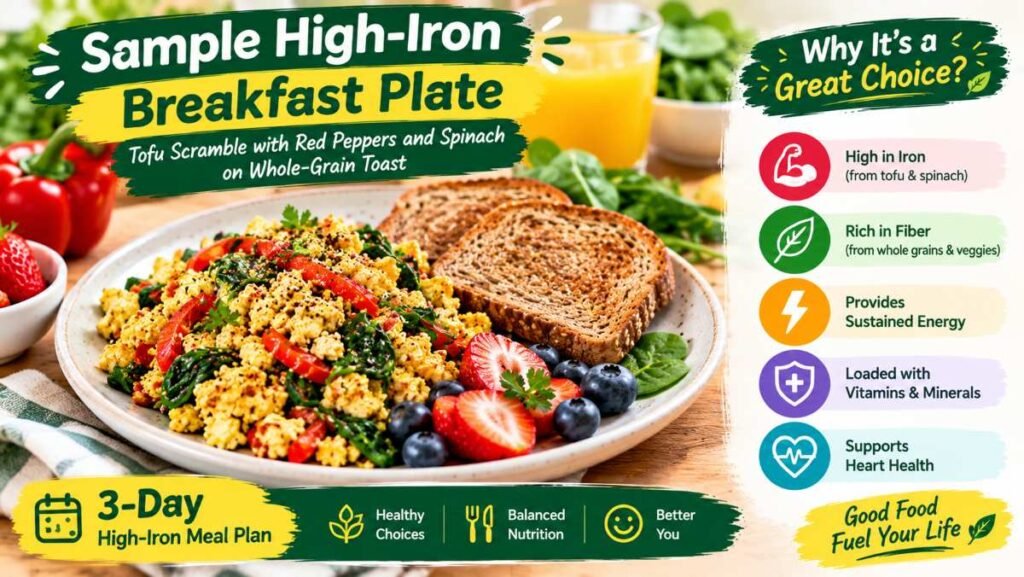
Sample 3-Day High-Iron Eating Pattern
This realistic 3-day meal framework illustrates how to pair non-heme and heme sources with Vitamin C rich foods throughout the day:
Day 1
- Breakfast: Tofu scramble prepared with baby spinach, diced red bell peppers, and whole-grain toast.
- Lunch: Warm lentil vegetable soup served alongside a fresh citrus-dressed green salad.
- Dinner: Freshly seared salmon fillet served over fluffy quinoa alongside lightly steamed broccoli.
Day 2
- Breakfast: A bowl of warm oatmeal dressed with pumpkin seeds, chia seeds, and fresh strawberry slices.
- Lunch: Whole-grain wrap packed with sliced turkey, spinach, bell peppers, and hummus.
- Dinner: Lean ground beef and kidney bean chili cooked down with crushed tomatoes and herbs.
Day 3
- Breakfast: Green smoothie blended with frozen spinach, pea protein, frozen mango, and hemp seeds.
- Lunch: Quinoa bowl topped with black beans, roasted sweet potato, diced peppers, and pumpkin seeds.
- Dinner: Grilled chicken breast served with a baked potato (skin on) and sautéed greens. If you prefer anti-inflammatory meal bases, explore our guide on the anti-inflammatory diet.
Medical Considerations & Health Safety
When to Seek Medical Evaluation
Iron deficiency develops when body stores drop significantly, eventually leading to iron-deficiency anemia if left unmanaged. Classic signs include persistent fatigue, general weakness, pale skin, cold hands and feet, dizziness, or brittle nails. Because these symptoms can stem from many unrelated health issues, self-diagnosis should be avoided. Healthcare providers evaluate iron levels using blood tests—such as a Complete Blood Count (CBC) and serum ferritin test—to measure storage levels accurately.
Risks of Unmonitored Supplementation
More is not better when it comes to dietary minerals. High-dose iron supplements taken without clinical oversight can cause gastrointestinal distress (including severe constipation, nausea, and stomach pain) and may lead to organ damage over time. Genetic conditions such as hereditary hemochromatosis cause the body to absorb excess iron, making unmonitored supplementation dangerous. Always consult a medical professional before starting iron supplements.
Summary & Actionable Step
Integrating the best iron rich foods into your routine is a practical step toward supporting energy levels and long-term health. Rather than overhauling your whole diet overnight, focus on simple meal adjustments—such as sprinkling pumpkin seeds over your salad or adding red bell peppers to a lentil dish. Pick one high-iron food from the table above, pair it with a Vitamin C source, and build it into your menu this week.
External References & Scientific Sources
To maintain editorial integrity and scientific accuracy, the data and guidelines in this article are referenced from authoritative health databases and medical registries:
Dietary Reference Intakes & Iron Guidelines: Official intake targets are sourced from the NIH Office of Dietary Supplements Iron Fact Sheet.
Nutritional Data: Standardized micronutrient values align with the USDA FoodData Central Database.
Food Safety Standards: Cooking and storage guidelines follow the USDA Food Safety and Inspection Service.
Absorption Research: Physiological mechanisms on heme vs. non-heme uptake are supported by clinical studies on PubMed Central (NIH).
Editorial & Health Disclaimer
The nutritional and health information provided in this article is for educational purposes only and should not replace professional medical advice, diagnosis, or clinical treatment. Always consult a qualified healthcare provider or registered dietitian before making significant dietary changes or starting high-dose mineral supplementation.
About the Author
Dambar C.P.Rajbanshi is the founder of FitLifePeak, where he shares practical, research-informed content on nutrition, fitness, and everyday wellness. His goal is to help readers understand health topics through clear explanations, reliable sources, and realistic tips that support informed lifestyle choices. FitLifePeak encourages readers to consult qualified healthcare professionals for personal medical advice.