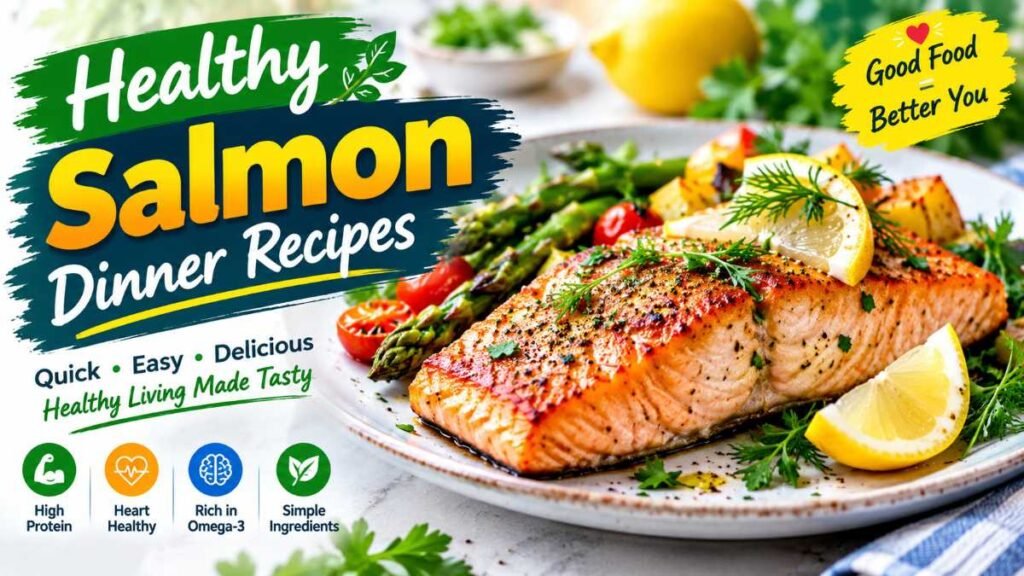
Ever bought a gorgeous piece of wild salmon, only to turn it into a dry, rubbery piece of fish 15 minutes later? You are not alone. Cooking fish at home intimidates most home cooks, but mastering healthy salmon dinner recipes is the single easiest upgrade you can make to your weekly meal routine. Packed with lean protein and heart-healthy omega-3 fatty acids, salmon cooks in under 20 minutes and delivers restaurant-quality flavor right in your kitchen.
Why Salmon Deserves a Permanent Spot in Your Dinner Rotation
Salmon isn’t just another dinner option—it’s a nutrient-dense whole food. High-quality marine protein provides essential amino acids that support normal muscle maintenance and helps make meals more satisfying.
Unlike many terrestrial protein sources, salmon is an exceptional natural source of long-chain omega-3 fatty acids, specifically eicosapentaenoic acid (EPA) and docosahexaenoic acid (DHA). Incorporating these fats into a balanced diet supports cardiovascular health, brain function, and joint mobility. When paired with vibrant vegetables and complex carbohydrates, salmon forms a solid foundation for an anti-inflammatory diet.
To construct a well-rounded plate, balance your fish with complex carbohydrates like quinoa or sweet potatoes, alongside quality fats like extra virgin olive oil and avocado. For a complete guide to macro balancing, check out our breakdowns on healthy carbohydrate foods and healthy fat foods. Adding healthy salmon dinner recipes to your rotation makes hits these targets effortless.
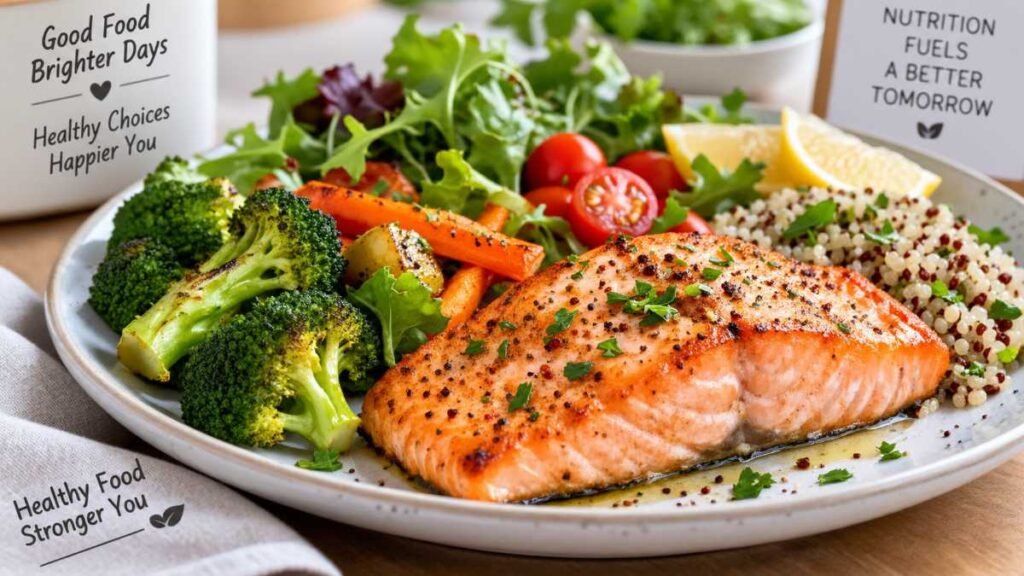
Wild-Caught vs. Farm-Raised: Making the Right Grocery Pick
Walking up to the seafood counter in American supermarkets can feel overwhelming. Choosing between wild and farmed salmon comes down to nutritional preferences, culinary texture, budget, and personal priorities:
Feature | Wild-Caught Salmon | Farm-Raised Salmon |
Common Origin | Pacific Ocean fisheries (e.g., Alaska, Pacific Northwest) | Global aquaculture facilities (e.g., Chile, Norway, Canada) |
General Nutrition | Typically leaner with slightly lower overall fat density | Higher total fat content, yielding higher total calories and high omega-3s |
Color & Texture | Deep ruby red to bright coral; firm, lean texture | Lighter pink with visible white fat lines; soft, buttery texture |
Best Cooking Method | Quick searing, gentle poaching, parchment baking | High-heat roasting, broiling, grilling |
Typical Price | Premium pricing (varies by season and harvest availability) | Generally more accessible year-round budget options |
If you are cooking on a budget, high-quality frozen wild salmon or responsibly farmed Atlantic salmon offer outstanding nutrition. For more strategies on smart grocery shopping, read our guide on buying healthy foods on a budget.
5 Easy, Expert-Level Healthy Salmon Dinner Recipes
Note: Estimated nutrition varies depending on specific ingredient brands, exact portion sizes, and preparation methods.
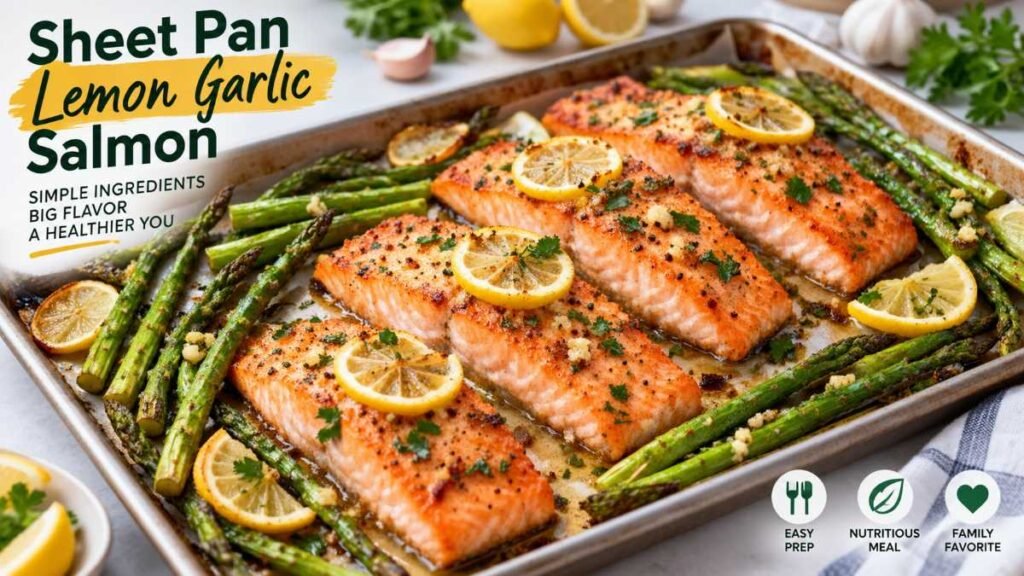
Easy Sheet-Pan Lemon Garlic Herb Salmon with Roasted Asparagus
- Prep time: 10 mins | Cook time: 12 mins | Servings: 4
- Estimated Nutrition (per serving): ~380 Calories | 34g Protein | 22g Fat | 6g Carbs
- Why it works: My Sunday night staple. One tray, zero hassle, and dinner is ready before the dishwasher even starts.
- Ingredients: 4 salmon fillets (6 oz each), 1 lb fresh asparagus (trimmed), 2 tbsp extra virgin olive oil, 3 cloves minced garlic, 1 lemon (sliced), 1 tsp salt, 1/2 tsp black pepper, and 2 tbsp chopped fresh dill.
- Instructions:
- Preheat oven to 400°F (200°C) and line a sheet pan with parchment paper (trust me, don’t skip the paper unless you enjoy scrubbing baked-on skin).
- Arrange salmon fillets and asparagus on the tray with enough breathing room so they roast instead of steam.
- Drizzle with olive oil; top with minced garlic, lemon slices, salt, pepper, and fresh dill.
- Bake for 12–14 minutes. My quick check: poke the thickest part lightly with a fork—the moment it flakes smoothly, pull it out.
Air Fryer Crispy Mediterranean Salmon Bowls
- Prep time: 10 mins | Cook time: 10 mins | Servings: 2
- Estimated Nutrition (per serving): ~520 Calories | 38g Protein | 24g Fat | 38g Carbs
- Why it works: This is my secret weapon for fast lunch prep—crispy on the edges, tender inside.
- Ingredients: 2 salmon fillets (6 oz each, cubed into 1-inch pieces), 1 tbsp extra virgin olive oil, 1 tsp dried oregano, 1/2 tsp garlic powder, 1 cup cooked quinoa, 1/2 cup diced cucumbers, 1/2 cup halved cherry tomatoes, 2 tbsp kalamata olives, and 2 tbsp tzatziki.
- Instructions:
- Toss salmon cubes with olive oil, oregano, garlic powder, salt, and lemon zest until fully coated.
- Air fry at 390°F (200°C) for 8–9 minutes. Pro tip: Give the basket a quick shake halfway through for an even golden crust.
- Serve over cooked quinoa with cucumbers, tomatoes, olives, and a dollop of tzatziki. For a variation, try this technique in our healthy rice bowl recipes.
Pan-Seared Wild Sockeye with Honey-Mustard Glaze
- Prep time: 5 mins | Cook time: 8 mins | Servings: 2
- Estimated Nutrition (per serving): ~410 Calories | 35g Protein | 20g Fat | 12g Carbs
- Why it works: If you love restaurant-style crackling skin with a tangy caramel crust, this is one of the top healthy salmon dinner recipes to master.
- Ingredients: 2 skin-on sockeye salmon fillets (6 oz each), 1 tbsp Dijon mustard, 1 tsp raw honey, 1 tsp low-sodium soy sauce, 1 tbsp avocado oil, and a pinch of salt.
- Instructions:
- The Golden Rule: Pat salmon skin thoroughly dry with paper towels; season skin with salt. Moisture is the enemy of crispiness!
- Heat avocado oil in a cast-iron skillet over medium-high heat until shimmering.
- Place salmon skin-side down; press gently with a spatula for 10 seconds so it doesn’t curl up. Cook for 4–5 minutes until skin is golden and crisp.
- Flip, brush top with whisked honey-mustard sauce, and cook for another 2–3 minutes until just done.
Garlic Butter Salmon Foil Packets with Zucchini
- Prep time: 10 mins | Cook time: 15 mins | Servings: 4
- Estimated Nutrition (per serving): ~390 Calories | 34g Protein | 25g Fat | 5g Carbs
- Why it works: Virtually foolproof. Traps steam to keep the fish moist and juicy without drying out.
- Ingredients: 4 salmon fillets (6 oz each), 2 medium zucchini (thinly sliced), 2 tbsp melted grass-fed butter, 1 tbsp fresh lemon juice, 2 minced garlic cloves, and 1/4 tsp red pepper flakes.
- Instructions:
- Divide zucchini slices and salmon onto 4 large sheets of heavy-duty aluminum foil.
- Whisk melted butter, lemon juice, garlic, and red pepper, then pour generously over each fillet.
- Seal foil packets tightly to trap the steam, then bake at 400°F (200°C) for 15 minutes (or grill over medium heat).
Avocado & Wild Salmon Power Salad
- Prep time: 15 mins | Cook time: 0 mins (using pre-cooked or canned salmon) | Servings: 2
- Estimated Nutrition (per serving): ~460 Calories | 32g Protein | 30g Fat | 14g Carbs
- Why it works: My go-to on hot evenings when turning on the stove feels like a penalty.
- Ingredients: 4 cups mixed baby greens, 1 canned or pre-cooked salmon fillet (6 oz, flaked), 1 medium avocado (diced), 2 tbsp raw pumpkin seeds, 1.5 tbsp extra virgin olive oil, and 1 tbsp fresh lemon juice.
- Instructions:
- Combine baby greens, flaked salmon, diced avocado, and pumpkin seeds in a large salad bowl.
- Dress lightly with extra virgin olive oil and fresh lemon juice, tossing gently to combine. Explore more fresh meal ideas in our collection of healthy salad recipes.
Master the Technique: How I Avoid Overcooking Salmon Every Time
The single biggest mistake people make with healthy salmon dinner recipes is overcooking. Salmon continues to cook slightly after being removed from heat due to residual carryover heat. Here is how I judge doneness in my own kitchen:
- USDA Safety Standards: For food safety, the USDA Seafood Safety Guidelines recommend cooking salmon to an internal temperature of 145°F (63°C), measured at the thickest part with a digital thermometer.
- My Go-To Touch Test: Skip the knife for a second. Press lightly on the top center of the fillet with your finger. If the salmon muscle fibers (myocommata) yield smoothly and separate along natural lines, pull it off the heat immediately.
- Understanding Albumin: That white liquid that squeezes out while cooking is albumin—a harmless protein. It leaks when fish heats up too fast and muscle fibers contract tightly. To minimize it, bring fillets to room temperature for 10 minutes prior to cooking, or soak them in a mild salt brine.
Weekly Meal Prep, Storage, and Workability
Integrating healthy salmon dinner recipes into your weekly routine saves time and keeps your nutrition on point.
Stage | Action | Best Practice / Safety Note |
Sourcing | Purchase fresh or frozen salmon fillets | Buy frozen if not cooking within 24–48 hours. |
Cook Batch 1 | Prepare hot dinner with vegetables | Serve immediately with complex carbs. |
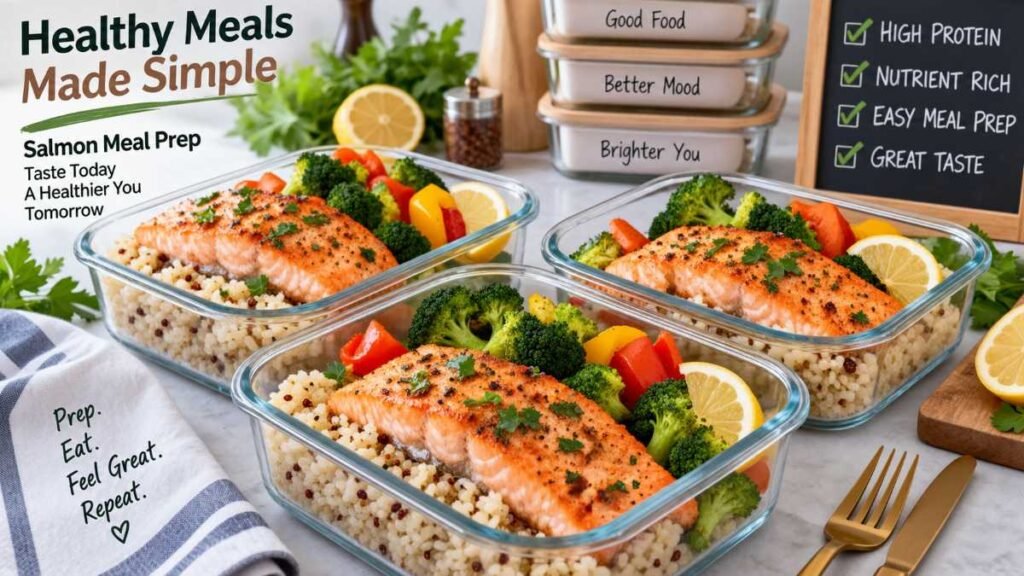
Prep Portion 2 | Save flaked cold salmon for next-day lunch | Store in airtight containers for portable meal prep. |
Refrigeration | Store cooked leftovers within 2 hours | Consume within 3 to 4 days per FDA Seafood Handling Guidelines. |
Work Portability | Bring cold salmon bowls or wraps to office | Avoid microwaving to prevent releasing strong seafood odors and drying out the fish. |
Prep & Work Portability
Salmon makes an outstanding portable protein. If you bring salmon to an office setting, avoid reheating it in a microwave; microwave heating releases strong seafood odors and dries out the texture. Instead, flake cold, pre-cooked salmon over salads, grain bowls, or wrap it in a whole-wheat tortilla. Check out our guide on healthy lunch ideas for work for more portable meal planning.
A Practical 7-Day Healthy Dinner Rotation
To simplify your week, pair these healthy salmon dinner recipes alongside other lean proteins for a balanced diet.
- Monday: Quick Sheet-Pan Lemon Garlic Salmon paired with Roasted Asparagus and Tender Quinoa
- Tuesday: Air Fryer Crispy Salmon Bowls with Tzatziki and Cucumbers
- Wednesday: Healthy chicken recipes paired with steamed broccoli and brown rice
- Thursday: Pan-Seared Sockeye Salmon with Honey-Mustard Glaze over sautéed spinach
- Friday: Healthy fish recipes featuring grilled cod or halibut tacos with cabbage slaw
- Saturday: Garlic Butter Salmon Foil Packets with Zucchini and Roasted Sweet Potatoes
- Sunday: Quick dinner ideas using remaining cold salmon flaked over an Avocado Power Salad
Frequently Asked Questions
Q1. What are the best healthy salmon recipes for weight loss?
Pairing healthy salmon dinner recipes with green veggies keeps you full longer, boosting protein while keeping calories low.
Q2. What are quick salmon dinner ideas with sides for busy weeknights?
Sheet-pan lemon salmon with asparagus or air-fryer salmon bowls are complete healthy salmon dinner recipes ready under 20 minutes.
Q3. Are easy Mediterranean salmon recipes healthy for daily eating?
Yes! Flaking salmon over tzatziki, cucumbers, and olives delivers clean omega-3s and fits an anti-inflammatory routine.
Q4. Can I pair healthy salmon recipes with rice for meal prep?
Absolutely. Pre-cooked salmon over rice or quinoa works great cold—just skip the office microwave to preserve texture and flavor.
Q5. Why do popular salmon dishes turn out dry, and how do I fix it?
Overcooking is the culprit. Master healthy salmon dinner recipes by pulling fillets off heat the second they flake with a fork.
Summary & Expert Final Thoughts
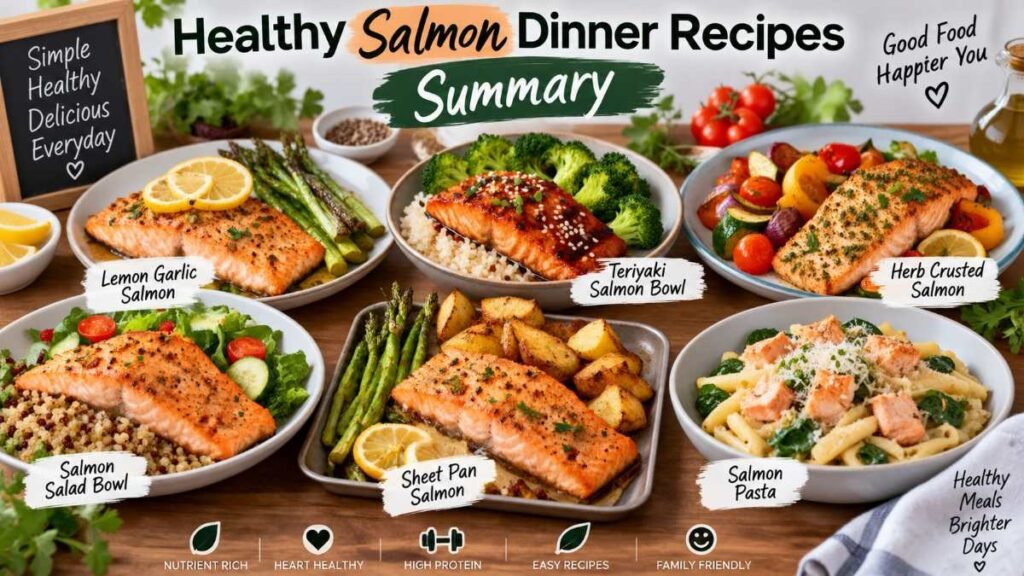
Unlocking the full potential of healthy salmon dinner recipes comes down to three fundamental rules: select high-quality fish, monitor your cooking temperatures, and pair your protein with nutrient-dense, whole-food sides. Whether you opt for a quick sheet-pan meal on a busy Monday or crispy air-fryer salmon bowls for meal prep, salmon provides an unmatched combination of flavor, kitchen convenience, and health benefits.
Sources & References
Editorial & Food Safety Disclaimer
The content provided on FitLifePeak is for informational and educational purposes only and should not replace professional medical advice, diagnosis, or treatment. Always consult a qualified healthcare provider or registered dietitian before making significant changes to your diet. Storage, handling, and cooking temperatures mentioned follow general public health guidelines established by the USDA and FDA for foodborne illness prevention.
✍️ About the Author
Dambar C.P.R. is the founder of FitLifePeak. He focuses on sharing practical nutrition information and simple home-cooking strategies to help readers make informed, healthy dietary choices.