
Coming home to a chaotic kitchen after a exhausting workday is a universal stressor. When time and energy are depleted, default choices often lean toward high-sodium takeout or ultra-processed packaged meals. However, mastering a repertoire of nutritious quick dinner ideas allows you to put wholesome, flavorful food on the table in under 30 minutes without sacrificing your evening rest or breaking your budget.
Test Kitchen Note: Every recipe concept and technique detailed below has been developed for standard household kitchens, prioritizing minimal prep equipment, simple cleanup, affordable staples, and real-world busy schedules.
Core Principles of Building Balanced 20-Minute Dinners
The secret to fast cooking isn’t cutting corners on nutrition—it’s understanding how macronutrients work together to create lasting satiety. A common pitfall in rapid meal prep is relying heavily on plain refined carbohydrates, which digest rapidly and leave you raiding the pantry late at night.
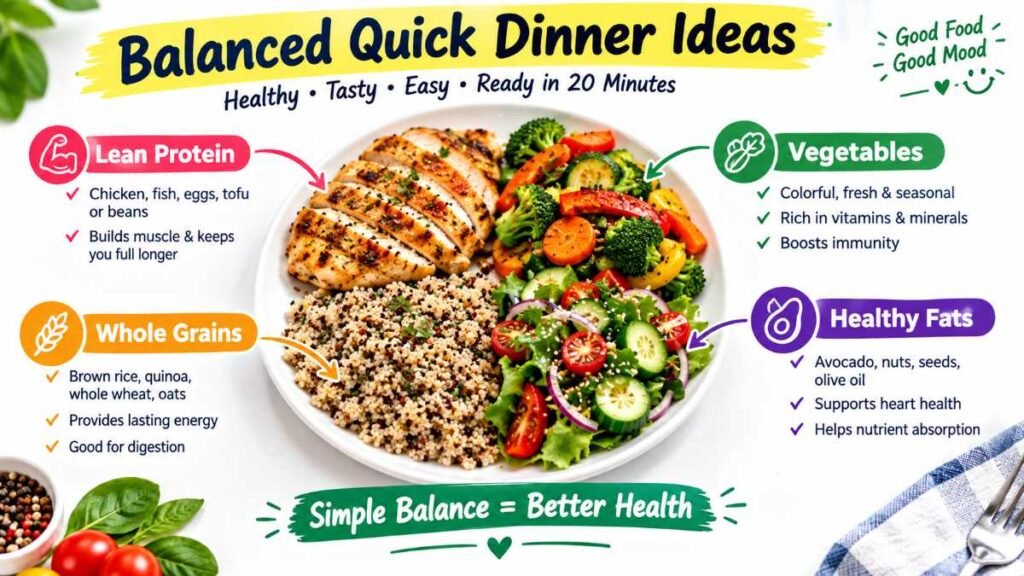
To design a truly satisfying evening meal, anchor every plate around four essential components:
- Lean Protein Foundation: Quick-cooking proteins like skinless chicken breast, eggs, canned fish, tofu, or shrimp.
- Complex Carbohydrates: Quick-cooking grains like quinoa, whole wheat couscous, brown rice, or sprouted tortillas.
- Fiber & Micronutrients: Pre-washed leafy greens, frozen vegetable medleys, or quick-steamed cruciferous veggies.
- Satiating Healthy Fats: Extra virgin olive oil, avocado slices, toasted seeds, or nut butter drizzles.
Combining complex carbs with healthy fat foods slows gastric emptying, preventing sharp blood sugar spikes and encouraging steady overnight energy recovery. Furthermore, adding colorful veggies helps introduce gut healthy foods into your diet effortlessly.
High-Protein Skillet & Sheet Pan Dinners for Quick Satiety
When you need a substantial meal after a workout or a long shift, lean protein provides the structural building blocks for muscle repair and metabolic health. Skillet and sheet pan cooking methods minimize active hands-on time while delivering maximum flavor through high-heat searing.
Pairing lean meats with high-fiber produce ensures your meal provides a solid target of 25 to 35 grams of quality protein. Much like prepping structured healthy chicken recipes, using a single pan simplifies post-dinner cleanup.
20-Minute Garlic Butter Chicken & Broccoli Skillet
This dish combines tender chicken breast strips with crisp-tender broccoli florets in a rich, savory garlic glaze.
- Servings: 2
- Active Prep Time: 10 mins | Cook Time: 10 mins
- Nutritional Estimate (USDA FoodData Central): ~410 Calories | 34g Protein | 6g Fiber | 16g Healthy Fats
Ingredients:
- 1 lb boneless chicken breast, chopped into bite-sized pieces
- 3 cups fresh broccoli florets
- 1 tablespoon extra virgin olive oil
- 1 tablespoon grass-fed butter or ghee
- 3 cloves garlic, minced
- 1/2 teaspoon smoked paprika
- Salt and freshly ground black pepper to taste
- Squeeze of fresh lemon juice
Instructions:
- Warm up the olive oil and butter together in a big skillet on medium-high heat. Add minced garlic and cook for 30 seconds until fragrant.
- Add chicken cubes, paprika, salt, and pepper. Sear for 5 to 6 minutes, stirring occasionally, until cooked through.
- Toss in the broccoli florets and 2 tablespoons of water. Cover with a lid for 3 minutes to steam the broccoli.
- Remove the lid, finish with a fresh lemon squeeze, and serve hot over quinoa or brown rice.

Plant-Forward & Mediterranean Skillet Creations
Plant-forward meals offer a budget-friendly, nutrient-dense way to diversify your diet and create effortless quick dinner ideas without spending hours at the stove. Incorporating legumes, seeds, and vibrant vegetables provides abundant dietary fiber and essential minerals.
Emphasizing healthy plant fats like cold-pressed olive oil, olives, and avocado mimics traditional Mediterranean cooking, which is renowned for supporting heart health and metabolic vitality.
Mediterranean Chickpea & Tomato Warm Skillet
A fast, savory vegetarian dinner that packs rich flavor using pantry staples.
- Servings: 2
- Active Prep Time: 5 mins | Cook Time: 15 mins
- Nutritional Estimate (USDA FoodData Central): ~320 Calories | 12g Protein | 10g Fiber | 11g Healthy Fats
Ingredients:
- 1 can (15 oz) low-sodium chickpeas, rinsed and drained
- 1 cup cherry tomatoes, halved
- 2 cups fresh baby spinach
- 1/2 red onion, thinly sliced
- 2 tablespoons extra virgin olive oil
- 1/4 cup crumbled feta cheese (optional)
- 1 teaspoon dried oregano
Instructions:
- Heat olive oil in a skillet over medium heat. Sauté sliced red onion for 3 minutes until softened.
- Add cherry tomatoes and dried oregano. Cook for 4 to 5 minutes until tomatoes blister and release their juices.
- Stir in chickpeas and baby spinach. Cook for 2 to 3 minutes until spinach is fully wilted and chickpeas are warmed through.
Top with crumbled feta cheese before serving alongside whole grain pita or as part of healthy rice bowl recipes

Smart Pantry Staples & Grocery Budget Comparison
Streamlining your weeknight routine starts at the grocery store. Keeping a stocked pantry of long-lasting, versatile ingredients ensures you always have the foundation for quick dinner ideas on hand, preventing impulse takeout orders.
Ingredient Category | Fresh Option (Shorter Shelf-Life) | Shelf-Stable / Frozen Alternative |
Proteins | Fresh Salmon Fillets (~$12-$15/lb) | Canned Wild Salmon or Tuna (~$3-$4/can) |
Vegetables | Fresh Whole Bell Peppers (~$4-$5/pack) | Pre-sliced Frozen Pepper Mix (~$2/bag) |
Aromatics | Whole Fresh Garlic Bulb (~$0.80) | Pre-minced Jarred Garlic (~$2.50/jar) |
Grains | Raw Long-Grain Rice (20+ min cook) | Microwaveable Quinoa or Brown Rice (90 sec) |
Sauces/Bases | Homemade Herb Marinades (~$6-$8) | Low-Sodium Canned Diced Tomatoes (~$1.50) |
(Note: Estimated U.S. retail prices for illustration; actual grocery costs vary by region and season.)
The 10-Minute Pantry Assembly Method
- Keep a Grain Base: Stock 90-second microwaveable quinoa pouches or precooked brown rice.
- Lean on Canned Legumes: Maintain a steady supply of black beans, lentils, and chickpeas.
- Utilize Frozen Produce: Frozen veggies are flash-frozen at peak ripeness, preserving nutrient density while eliminating prep work like chopping.
- Finish with Punchy Sauces: Use hot sauce, tahini, pesto, or tamari to tie simple ingredients together instantly.
Integrating these pantry habits complements broader strategies for healthy meal prep ideas for lunch and dinners alike.
Food Handling, Leftover Safety, and Portable Storage
Preparing quick dinner ideas rapidly should never come at the expense of proper food hygiene. Managing cooking temperatures and leftover storage correctly protects your household from foodborne illness and preserves the taste and texture of prepped dishes.
According to safe handling guidelines provided by the U.S. Food and Drug Administration (FDA), cooked leftovers should be refrigerated within two hours of preparation (or within one hour if ambient temperatures exceed 90°F / 32°C).
Guidelines for Storage & Workplace Reheating
- Rapid Cooling: Divide large portions of hot food into shallow glass containers to promote rapid cooling in the refrigerator.
- Safe Refrigeration Temps: Ensure your refrigerator maintains a steady temperature below 40°F (4°C) as outlined by FDA food safety standards. Consume refrigerated cooked meats within 3 to 4 days.
- Internal Cooking Temperatures: Always use a digital meat thermometer to verify internal temperatures: 165°F (74°C) for poultry and 145°F (63°C) for whole meats and fish, following USDA Food Safety Guidelines.
- Transporting Meals: When packing cooked meals for work, use sealed, leak-proof containers and insulated lunch bags equipped with frozen gel packs.

Effortless Upgrades: Customizing Flavor Without Extra Sodium
Elevating basic weeknight meals doesn’t require complex sauces or high amounts of salt. Smart culinary shortcuts rely on acid, fresh herbs, and dry spices to build flavor complexity quickly.
- Acidic Brightness: A splash of red wine vinegar, apple cider vinegar, or fresh lime juice instantly cuts through richness and lifts heavy flavors.
- Dry Spice Blends: Keep low-sodium taco seasoning, curry powder, or Italian herb mix on hand for instant seasoning.
- Stress-Reducing Evening Habits: Enjoying a calm, home-cooked meal supports night-time relaxation. Exploring lifestyle steps on how to lower cortisol levels can further enhance your overall wellness routine.
- Healthy Sodium Alternatives: Use nutritional yeast, toasted sesame oil, or umami-rich coconut aminos to add depth without relying on excessive table salt.
Referencing the official Dietary Guidelines for Americans provides additional context on maintaining balanced daily sodium and saturated fat intake.
Sample 7-Day Fast Weeknight Dinner Rotation
Eliminate evening decision fatigue with this structured 7-day meal schedule focused on low prep times and minimal cleanup.
Day | Meal Description | Primary Protein Source | Est. Total Time |
Monday | Garlic Butter Chicken & Broccoli Skillet | Chicken Breast | 20 Mins |
Tuesday | 15-Minute Black Bean & Avocado Tacos | Black Beans | 15 Mins |
Wednesday | Mediterranean Chickpea & Tomato Skillet | Chickpeas & Feta | 20 Mins |
Thursday | Sheet Pan Lemon Herb Salmon & Asparagus | Salmon Fillet | 22 Mins |
Friday | Quick Egg & Vegetable Fried Quinoa | Eggs & Edamame | 15 Mins |
Saturday | Turkey & Spinach Stuffed Whole Wheat Wraps | Lean Ground Turkey | 20 Mins |
Sunday | One-Pot Whole Grain Pasta with Cherry Tomatoes | White Beans / Lentils | 25 Mins |
Rotating simple protein sources and vegetable styles ensures a wide spectrum of nutrients throughout the week, making sustainable quick dinner ideas and home cooking an effortless habit.
Frequently Asked Questions
FAQ 1: What are the best quick dinner ideas on a budget?
Use pantry staples like canned beans, eggs, and frozen veggies. A chickpea skillet costs very little and takes under 20 minutes.
FAQ 2: How can I find quick dinner ideas for 2 people without waste?
Stick to single-pan recipes like garlic chicken or sheet pan salmon. They give exact portion sizes with zero leftover food waste.
FAQ 3: Any lazy quick dinner ideas for tonight when exhausted?
Toss 90-second microwave rice with black beans, salsa, and avocado for a 5-minute taco bowl that needs zero cooking.
FAQ 4: How do I make quick dinner ideas for family that kids love?
Use familiar bases like whole wheat wraps or mild chicken stir-fry, and let kids build their own custom toppings.
FAQ 5: Can quick dinner ideas for busy weeknights be healthy and vegetarian?
Yes! Fast-cooking plant proteins like lentils, tofu, and chickpeas deliver high fiber to keep you full all night.
Conclusion
Stop letting weeknight fatigue dictate your nutrition. By stocking smart pantry staples and mastering simple 20-minute skillet techniques, you can transform simple ingredients into delicious, protein-packed quick dinner ideas that keep you healthy, energized, and completely stress-free.

External Sources
Disclaimer -This content is for informational purposes only and is not medical or nutritional advice. Cooking times, nutrition, and dietary needs vary—always consult a healthcare professional or dietitian for personal advice and verify safe internal food temperatures before serving.
About the Author
Dambar C.P.R. is the founder of FitLifePeak and a health and wellness content creator. He researches official guidelines (like USDA, FDA, and NHS) and tests real-world meal prep routines to write evidence-based articles on nutrition, fitness, and healthy living, making trusted health information simple, practical, and easy to understand.