
Ever woke up after eight hours of sleep feeling completely drained, irritable, and running on pure coffee? That “wired but exhausted” feeling isn’t just a busy schedule—it’s a sign your stress system is trapped on high alert. When your adrenal glands stay overworked, your daily energy, focus, and waistline take a heavy hit.
Discovering how to lower cortisol levels naturally is the secret to shutting off that internal alarm and reclaiming your vitalit
When Stress Stops Protecting You and Starts Damaging You
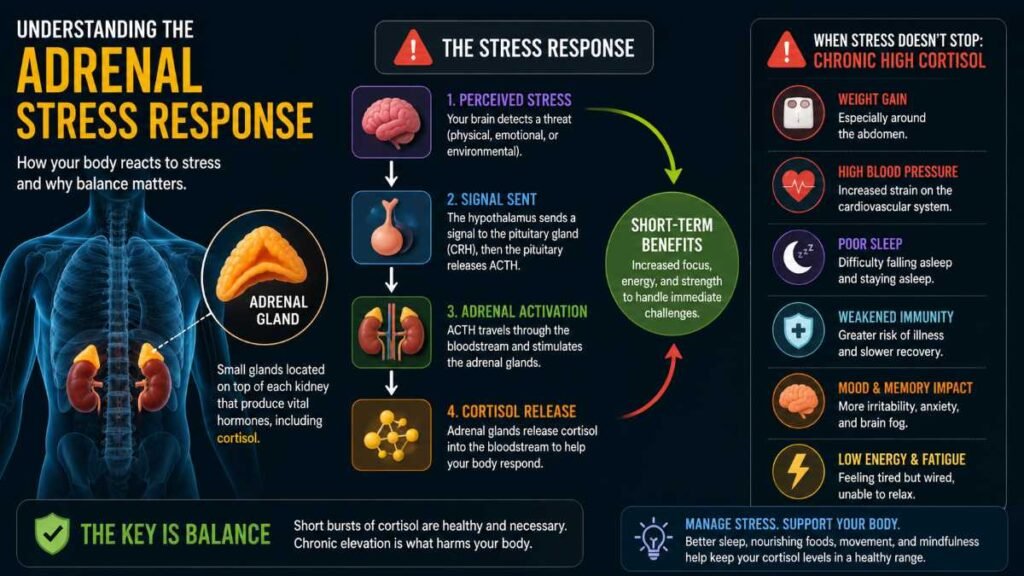
Cortisol is a glucocorticoid steroid hormone synthesized and secreted by your adrenal glands, which rest snugly just above your kidneys. Often labeled simply as the “stress hormone,” it is actually entirely essential for human survival.
In brief, sharp bursts, cortisol acts as your body’s ultimate emergency response system. During acute stress—such as reacting to an immediate physical threat—your sympathetic nervous system triggers an instant rush of adrenaline followed closely by cortisol. This powerful flood of hormones sharpens your focus, temporarily suppresses non-essential housekeeping functions like digestion, and releases stored glucose from your liver to give your skeletal muscles fast, explosive energy.
However, modern life rarely involves short bursts of physical danger. Instead, we face endless streams of digital notifications, relentless career pressure, financial anxiety, and systemic sleep deprivation. When these psychological and environmental stressors are continuous, your body never receives the biological safety signal required to turn off the alarm.
Chronically high cortisol can lead to persistent weight gain around the midsection, high blood pressure, weakened immune responses, and severe sleep disruption According to medical data from trusted authorities like the Cleveland Clinic, long-term high cortisol severely throws off the body’s natural balance across almost every major organ system.
Why Your Daily Routine Keeps Cortisol Elevated
To effectively manage and how to lower cortisol levels, you first need to recognize the invisible daily habits that keep your nervous system trapped in a state of high alert.
The Blood Sugar Rollercoaster
Many exhausted individuals rely heavily on processed carbohydrates, sugary snack bars, and heavy caffeine to push through afternoon energy slumps. Unfortunately, these dietary choices cause rapid, volatile spikes and crashes in blood glucose. Each time your blood sugar plummets, your body perceives it as an internal metabolic emergency, releasing a fresh wave of cortisol to force stored energy back into circulation.
The Blue Light Trap
Exposing your eyes to bright smartphone, tablet, and computer screens late into the night tricks your brain into thinking the midday sun is still shining. This modern habit delays natural melatonin production, ruins your circadian rhythm, and keeps your nighttime cortisol levels elevated right when they should naturally be at their absolute lowest point.
Proven Strategies on How to Lower Cortisol Levels
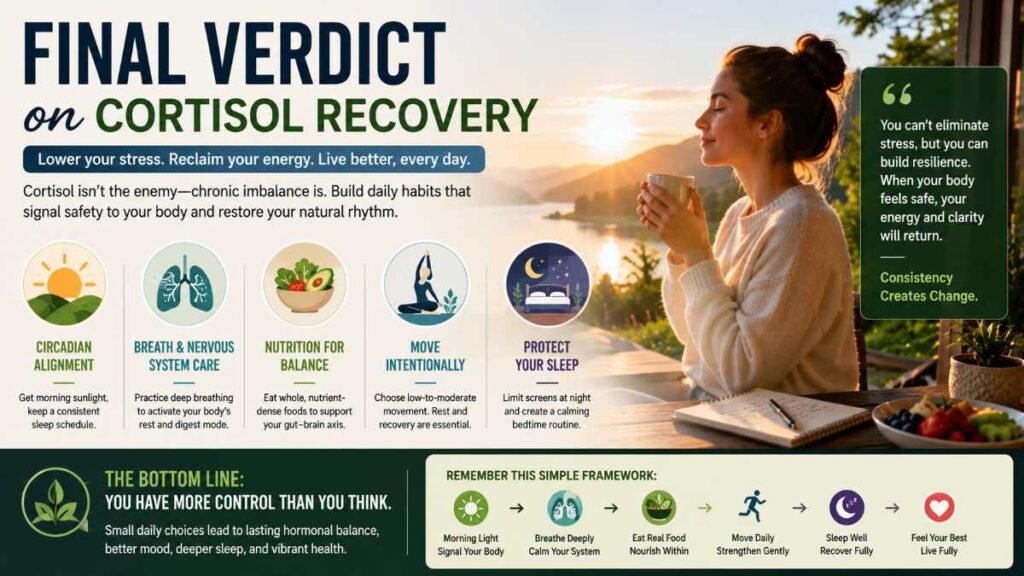
Lowering chronic stress hormones does not require a complete, disruptive lifestyle overhaul overnight. Instead, it relies on consistent micro-habits that signal deep safety to your nervous system.
+————————————————————-+
| Nervous System Balance Plan|
+————————————————————-+
| 1. Circadian Alignment -> Morning sunlight & consistent sleep|
| 2. Vagus Nerve Activation -> Diaphragmatic breathing |
| 3. Metabolic Stability -> Whole foods, fiber, & hydration |
| 4. Strategic Movement -> Low-to-moderate intensity exercise |
+————————————————————-+
Master Circadian Sleep Hygiene
Your cortisol curve is intimately tied to your natural sleep-wake cycle. Healthy individuals experience a sharp rise in cortisol right around waking—known as the cortisol awakening response—followed by a steady, gradual decline throughout the day, hitting rock bottom at night to allow restorative sleep.
Why sleep sometimes fails to lower cortisol often boils down to a disrupted circadian rhythm. Staying up late browsing feeds keeps your brain on high alert, blocking deep and restorative rest. To fix this, stick to a strict sleep schedule every single day. If you stay up late scrolling feeds, your brain remains in an active vigilance state. To fix this, you must lock in your schedule by going to bed and waking up at the exact same time every single day.
Furthermore, spending 10 to 15 minutes outdoors within an hour of waking up exposes your eyes to natural sunlight, anchoring your master circadian clock and helping normalize daily hormone production. Finally, power down all digital screens at least 45 minutes before bed, allowing your mind to transition smoothly into deep, restorative rest without artificial disruptions.
Activate the Vagus Nerve Through Breathing
When you feel overwhelmed by daily pressures, your breathing naturally shifts into a shallow, rapid pattern, which continuously feeds the vicious “fight or flight” loop. You can actively override this physiological response by engaging your parasympathetic nervous system—the body’s natural “rest and digest” mode.
Practicing diaphragmatic or box breathing—inhaling slowly for 4 seconds, holding that breath for 4, exhaling completely for 4, and holding empty for 4—sends an immediate, undeniable physiological signal to your brain stem that you are safe. When comparing movement strategies, understanding that high-intensity morning workouts can sometimes spike cortisol temporarily makes controlled breathwork an essential afternoon anchor. For further clinical insights into stress management and autonomic nervous system regulation, reference educational overviews provided by Healthline.
Move Intelligently Instead of Overtraining
Exercise is undeniably a powerful stress reliever, but the precise intensity and timing matter immensely. While grueling, high-intensity interval training (HIIT) is great in moderation, doing high-stress workouts every single day without adequate rest forces your adrenal glands to pump out even more cortisol to handle the systemic physical trauma.
Instead of burning out your adrenal reserves with punishing daily routines, balance your fitness regimen with low-to-moderate intensity activities such as brisk morning walks, gentle swimming, restorative yoga, or clinical pilates. Aim for roughly 150 to 200 minutes of balanced, heart-rate-controlled movement each week, ensuring you give your muscle tissues adequate downtime to repair, rebuild, and naturally rebalance your endocrine system.
Support Your Gut-Brain Axis with Whole Foods
What you put on your plate directly dictates the stability of your endocrine system. Diets heavy in added sugars, refined vegetable oils, and empty calories promote systemic inflammation and erratic cortisol output throughout the day.
To support your gut-brain axis, focus on whole, nutrient-dense foods: incorporate leafy greens, fiber-rich legumes, complex whole grains, and healthy fats like omega-3 fatty acids found abundantly in wild-caught fish. Additionally, exploring natural adaptogens—such as standardized ashwagandha root extract—can provide targeted botanical support, helping your body adapt more resiliently to psychological stress and maintain a healthy, balanced cortisol rhythm over time.
Moving Forward: Taking Control of Your Well-Being
Managing your stress hormones is never about eliminating every single challenge from your life; it is about building robust physiological resilience so your body actually knows how to recover. By prioritizing consistent sleep hygiene, nourishing your gut microbiome, moving with mindful intention, and taking quiet moments throughout the day to breathe deeply, you can finally break the exhausting cycle of modern burnout.
If you suspect your chronically elevated cortisol levels are tied to an underlying medical condition—such as persistent, unexplainable fatigue, rapid weight fluctuations, or chronic blood pressure issues—always consult a qualified healthcare professional or board-certified endocrinologist for proper clinical testing and personalized medical guidance.
1: Can high cortisol levels cause stubborn weight gain, especially around the belly?
Yes, chronically elevated stress hormones dramatically alter your body’s metabolic patterns, signaling the brain to store fat specifically as visceral tissue around vital organs. When paired with intense cravings for sugary comfort foods, this hormonal shift turns stubborn midsection weight gain into one of the most reliable physical markers of chronic, unmanaged burnout and metabolic strain.
2: How long does it naturally take to lower baseline cortisol levels?
Because hormone regulation relies entirely on resetting your autonomic nervous system and daily circadian rhythm, meaningful physiological improvements typically require 2 to 4 weeks of consistent lifestyle habits. While micro-habits like breathwork offer immediate acute relief, reversing deep HPA-axis fatigue demands patience, strict sleep hygiene, and sustained nutritional consistency.
3: Are there medical tests available to accurately check my cortisol levels?
Yes. If you suspect severe hormonal dysregulation or an underlying clinical condition like Cushing’s syndrome, a board-certified endocrinologist can order specialized evaluations. These diagnostic tests typically include targeted blood draws, 24-hour urinary free cortisol screenings, or precise late-night salivary assessments to map your personal daily hormone curve.
Final Verdict & Closing Thought
Stop running your life on a permanent emergency loop. Learning how to lower cortisol levels isn’t about escaping stress—it’s about building physiological resilience. Protect your sleep, harness morning sunlight, and set firm boundaries. When you teach your body it’s safe, your vibrant energy and clarity will return.
❓ Frequently Asked Questions
Q1: Can high cortisol levels cause belly fat?
Ans: Yes. Elevated stress signals your body to store visceral fat around organs, causing stubborn midsection weight gain.
Q2: How to lower cortisol levels and how long does it take?
Ans: With consistent sleep hygiene and daily stress habits, you can learn how to lower cortisol levels naturally and balance hormones in 2–4 weeks.
Q3: How do doctors medically diagnose high cortisol levels?
Ans: Healthcare providers use simple blood work, 24-hour urine collection, or late-night saliva checks to track your hormonal rhythm and determine the safest path for how to lower cortisol levels.
Q4: Which vitamins help lower cortisol levels?
Ans: Key nutrients like Vitamin D, magnesium, and omega-3s actively support adrenal health. Eating whole foods is a proven strategy for how to lower cortisol levels effectively.
References & Further Reading
Cleveland Clinic – Clinical Overview of Cortisol, Adrenal Health & Hormonal Balance
Healthline Medical Review – Understanding the Vagus Nerve, Autonomic Nervous System & Stress Reduction
National Institutes of Health (NIH) – Research on HPA-Axis Dysfunction, Sleep Hygiene, and Metabolic Health
Medical Disclaimer: The information provided in this article is for educational and informational purposes only and is not intended as medical advice. Always consult a qualified healthcare provider or board-certified endocrinologist regarding any medical condition, hormonal concerns, or lifestyle modifications.
About the AuthorDambar CP.R. is the founder of FitLifePeak and a health and wellness content creator. He creates evidence-based articles on nutrition, fitness, and healthy living, making trusted health information simple, practical, and easy to understand.