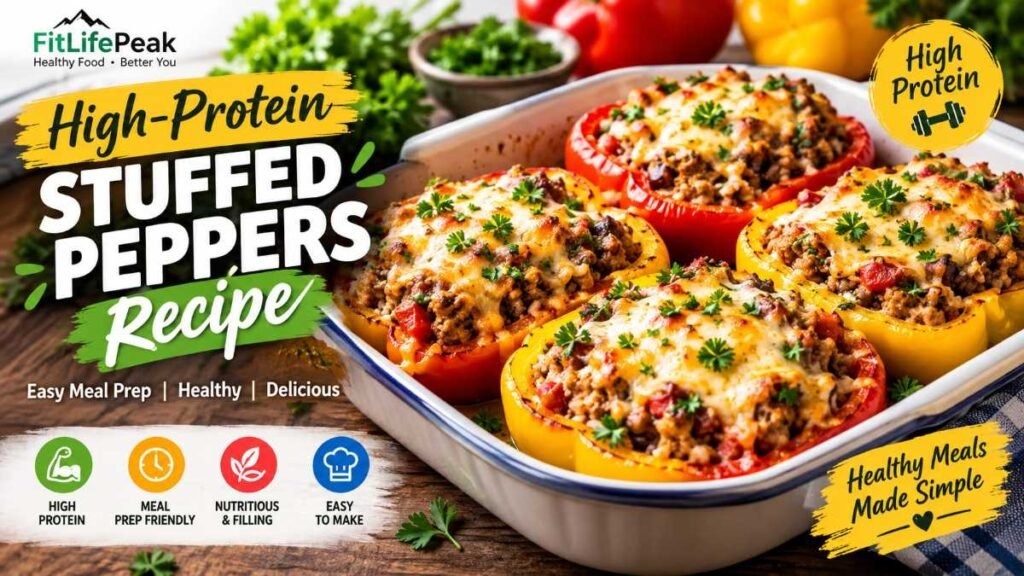
Most weeknight dinners force you to pick between flavor, speed, and real nutritional value. Standard stuffed peppers often turn into a soggy, under-seasoned mess at the bottom of a baking dish. This refined stuffed peppers recipe addresses those common cooking challenges using a double-bake technique, balanced spices, and lean proteins—delivering a comfort-food staple that fits a balanced meal plan.
What Makes This Stuffed Peppers Recipe Truly Reliable?
The typical home-cooked stuffed pepper suffers from three major kitchen issues: watery bell pepper walls, bland ground meat, and unpredictable cook times. Addressing these challenges relies on basic culinary fundamentals:
| Cooking Phase | Technique Used | Why This Step Matters |
| 1. Pre-Bake Shells | 400°F for 10–12 Mins | Releases trapped moisture from raw pepper walls so the base stays crisp |
| 2. Sauté Protein Base | Searing Meat & Aromatics | Locks in rich savory juices while ensuring meat cooks evenly throughout |
| 3. Final Bake | 400°F for 20 Mins | Melts the cheese layer thoroughly and caramelizes the outer pepper edges |
Here is how to avoid the most common cooking mistakes:
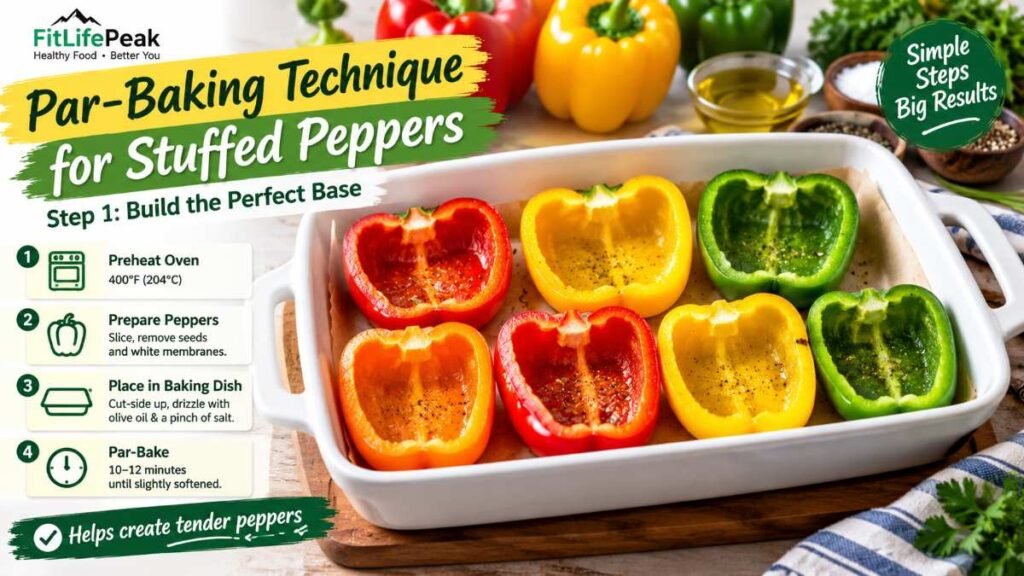
• Par-baking the Pepper Shells: Baking the halved peppers empty for 10–12 minutes reduces excess moisture before adding the filling. This helps create tender peppers without pooling water.
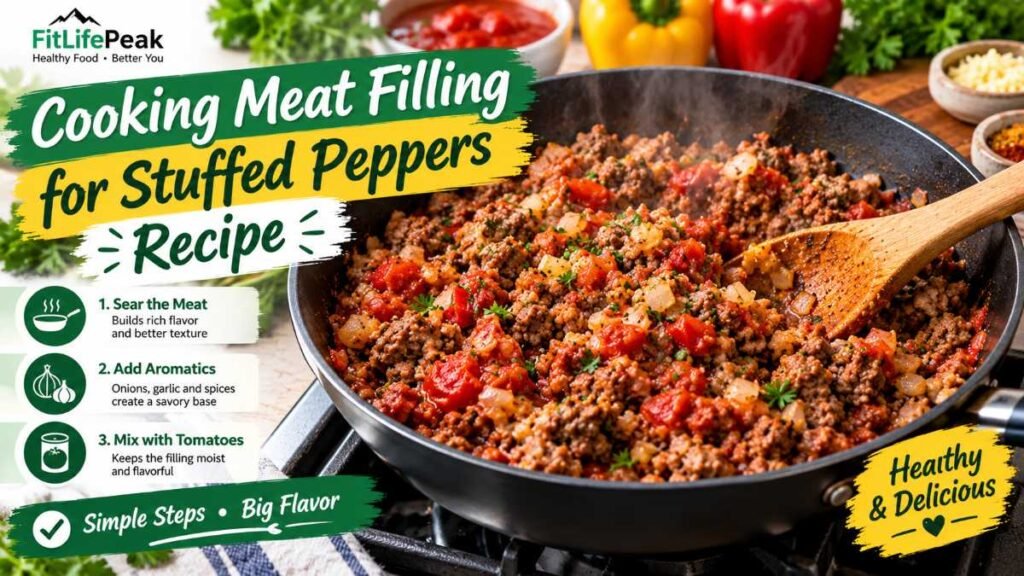
• Pre-cooking and Layering Aromatics: Raw meat placed directly into a pepper shell steams instead of browning. Searing lean beef and turkey with garlic, onions, and tomato paste builds deeper base flavors.
• Moisture-Balancing Grains: Combining cooked long-grain brown rice or quinoa with canned fire-roasted tomatoes keeps the interior moist without making the dish overly soft.
Recipe Development Note: During recipe testing, selecting bell peppers of uniform size and wall thickness proved essential for even cooking. Carefully pouring out any accumulated steam liquid inside each pepper cavity immediately after par-baking keeps the base firm and structured.
Ingredients & Smart Substitutions
To offer a balanced macronutrient profile while maintaining traditional American comfort-food tastes, this recipe combines lean ground turkey and lean ground beef.
Main Ingredients Matrix
Ingredient | Standard Option | Healthy Alternative | Purpose in Recipe |
Bell Peppers | 4 Large Bell Peppers (Red/Yellow) | Green Bell Peppers | Provides structural vessel and Vitamin C |
Lean Protein | 93/7 Ground Beef or Turkey | Ground Bison / Black Beans | Core protein base |
Grains | Cooked Brown Rice | Quinoa or Cauliflower Rice | Textural binder and complex carbs |
Aromatics | Yellow Onion & Fresh Garlic | Shallots & Garlic Powder | Builds savory depth |
Sauce Base | Fire-Roasted Tomatoes (15 oz) | Low-Sodium Tomato Sauce | Moisture balance and acidity |
Cheese | Shredded Sharp Cheddar & Mozzarella | Part-Skim Mozzarella / Nutritional Yeast | Golden crust and binding |
Step-by-Step Cooking Guide
- Prep Time: 15 Minutes
- Cook Time: 35 Minutes
- Total Time: 50 Minutes
- Servings: 4 (8 Pepper Halves)
Prepare and Par-Bake the Peppers
- Preheat your oven to 400°F (204°C). Line a 9×13-inch baking dish with parchment paper or light oil.
- Slice 4 large bell peppers vertically from stem to base. Slice through the stem so both halves remain intact. Scoop out seeds and white membranes.
- Place pepper halves cut-side up in the dish. Drizzle with 1 tablespoon of extra virgin olive oil and season with a pinch of kosher salt.
- Bake uncovered for 10–12 minutes until slightly softened. Remove and set aside. Carefully drain any liquid inside the peppers.
Brown the Protein and Aromatics
- Heat 1 tablespoon of olive oil in a skillet over medium-high heat.
- Add 1 finely diced yellow onion and cook for 4 minutes until translucent. Toss in 3 chopped garlic cloves, cooking for one minute until rich aromas releas.
- Add 1 pound of lean ground meat (turkey or beef). Break it up with a wooden spoon and cook for 6–8 minutes until browned.
- Drain excess grease, leaving about 1 tablespoon for moisture and flavor.
Season and Combine the Filling
- Stir 2 tablespoons of tomato paste into the meat mixture and cook for 1 minute to reduce raw tomato acidity.
- Add 1 can (15 oz) of drained fire-roasted diced tomatoes, 1 cup of cooked brown rice, 1 teaspoon of smoked paprika, 1 teaspoon of Italian seasoning, Season the mixture with 1/2 tsp fine salt and 1/4 tsp coarsely ground black pepper.
- Simmer on low heat for 3–4 minutes until liquids reduce slightly. Turn off heat and fold in 1/2 cup of shredded cheddar cheese.
Fill and Final Roast
- Spoon the warm filling evenly into each par-baked pepper half, pressing down gently to pack them fully.
- Cover the baking dish securely with foil and let it bake at 400°F for 15 minutes so the filling stays moist.
- Remove foil, top each pepper with the remaining 1/2 cup of cheese, and bake uncovered for an additional 5 minutes until the cheese is melted and bubbling.
- Garnish with chopped fresh parsley or cilantro before serving.
Ingredient-Based Nutritional Profile per Serving
Nutritional values are calculated based on standard U.S. raw ingredient entries in USDA FoodData Central (93/7 ground meat, cooked brown rice, medium bell peppers, and low-moisture part-skim cheese).
Nutrient | Amount per Serving (2 Halves) | % Daily Value / Context |
Calories | 385 kcal | Balanced meal portion |
Protein | 34 g | Lean turkey/beef & cheese mix |
Saturated Fat | 6 g | Sourced primarily from cheese and cooking oil |
Carbohydrates | 28 g | Complex carbs from brown rice & peppers |
Dietary Fiber | 6 g | Natural vegetable & grain fiber |
Sodium | 580 mg | Controlled salt & canned tomatoes |
Pairing these peppers with simple side options like healthy vegetable side dishes helps round out a home-cooked lunch or dinner.
High-Protein Variations for Active Lifestyles
Adjust the core filling to suit individual dietary preferences or meal arrangements:
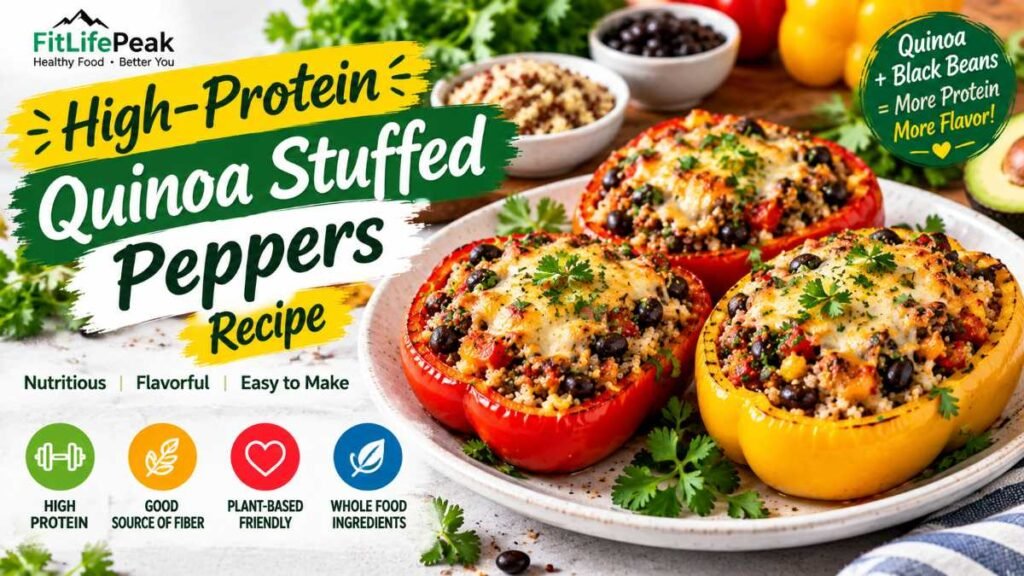
- Post-Workout Meal Option: Swap brown rice for cooked quinoa to vary the amino acid content. To learn more about balancing pre- and post-workout options, read our overview on the best foods before workout.
- Lower-Carb Adaptation: Swap brown rice for riced cauliflower. Sauté the cauliflower rice with the onions to cook off surface moisture before mixing with the meat.
- Plant-Based Option: Replace ground meat with 1 can (15 oz) of drained black beans (providing 15g protein and 15g fiber per cup according to USDA composition data) combined with 1 cup of cooked lentils. Explore more bean-focused ideas in our healthy bean dinner recipes.
Budget-Friendly Meal Prep Strategy
Stuffed peppers hold their shape well in storage containers and reheat evenly for meal prep schedules.
Prep Stage | Schedule | Action Steps |
Batch Prep | Sunday | Cook double batch (8–12 halves) using bulk brown rice/dry beans |
Short-Term Storage | Mon – Wed | Store in glass airtight containers for quick work lunches |
Long-Term Storage | Thursday Onward | Flash-freeze single portions on a baking tray, then wrap securely |
- Batch Preparation: Prepare extra portions on Sunday using budget-conscious pantry staples like brown rice or dry beans. For broader grocery management ideas, review our guide on healthy foods on a budget.
- Workplace Meals: Store two pepper halves in glass airtight containers. Reheat in a microwave on medium power for 2.5 to 3 minutes until heated through. Check out additional portable meal options in healthy lunch ideas for work.
- Weeknight Prep: Assemble peppers through Step 3 ahead of time. Cover and refrigerate unbaked peppers for up to 24 hours. When baking, add 5 minutes to the initial foil-covered bake time.
Storage & Food Safety Protocols
Proper handling maintains food quality and supports safe home storage practices:
- Refrigeration: Store cooked stuffed peppers in airtight containers within two hours of cooking. Keep refrigerated at or below 40°F (4°C) for 3 to 4 days, following standard USDA Safe Food Handling guidelines.
- Freezing Method: Freeze cooked, fully cooled peppers on a baking sheet for 2 hours until firm. Wrap each pepper securely, then store in freezer-safe bags or containers for up to 3 months.
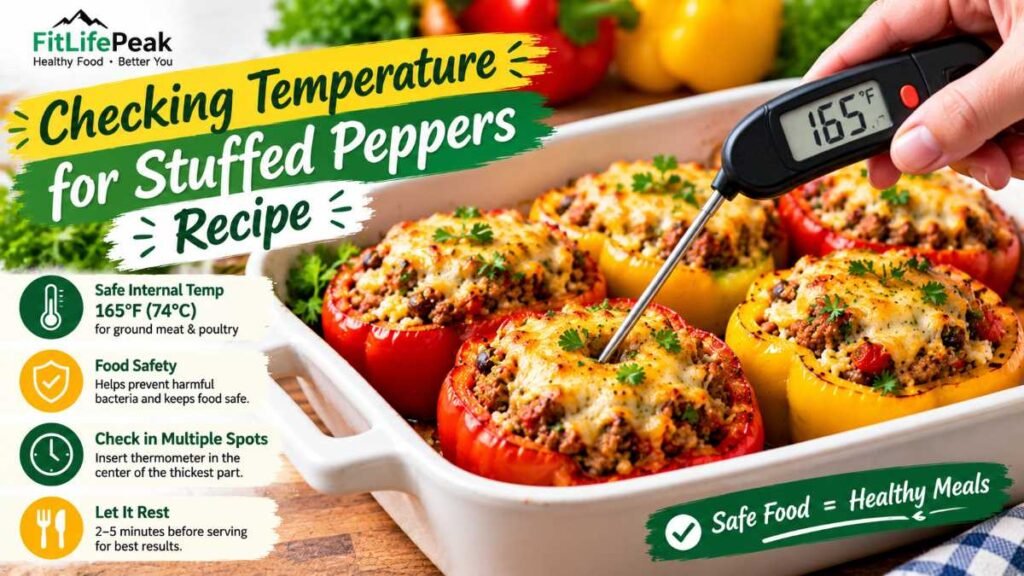
- Reheating: Thaw frozen peppers overnight in the refrigerator. Reheat in an oven set to 350°F (175°C) until the internal temperature reaches a minimum of 165°F (74°C) measured with a food thermometer, as recommended by official USDA Temperature Standards.
Frequently Asked Questions
1. What goes into an old-fashioned stuffed peppers recipe? A classic stuffed peppers recipe features bell peppers packed with ground beef, rice, aromatics, and tomato sauce.
2. How do top chefs like Jamie Oliver or Ina Garten make them? Chef-style versions elevate the basic stuffed peppers recipe by using fresh herbs, garlic, fire-roasted tomatoes, and sharp cheese.
3. Can I make a vegetarian stuffed peppers recipe? Yes, swap meat for black beans, quinoa, or lentils for a protein-rich vegetarian stuffed peppers recipe.
4. Why is rice used in a stuffed peppers recipe with rice? Rice acts as a textural binder, absorbing flavorful juices inside the pepper shell.
5. What serve best alongside a stuffed peppers recipe? Pair your stuffed peppers recipe with fresh green salads or roasted vegetables.
Summary & Kitchen Strategy
Mastering a reliable stuffed peppers recipe gives you an adaptable, meal-prep-friendly dinner option. By par-baking the pepper shells, pre-cooking aromatics, and selecting lean proteins, you achieve consistent texture and flavor without complex techniques. Try this step-by-step method for your next weekly meal prep routine.

Authoritative Sources
- Food Safety and Inspection Service: USDA Safe Minimum Internal Temperatures
- Nutrient Composition Database: USDA FoodData Central
Editorial & Food Safety Disclaimer
This article is provided for educational and culinary purposes only and is not intended as medical or individual nutritional advice. Always practice standard home food safety, including cooking ground meats to a safe internal temperature of 165°F (74°C), in accordance with U.S. Food and Drug Administration guidelines.
About the Author
Dambar C.P.R. is the founder of FitLifePeak. He focuses on creating clear meal prep guides, testing everyday healthy recipes, and presenting verified nutrition data to help readers make informed choices for busy schedules.