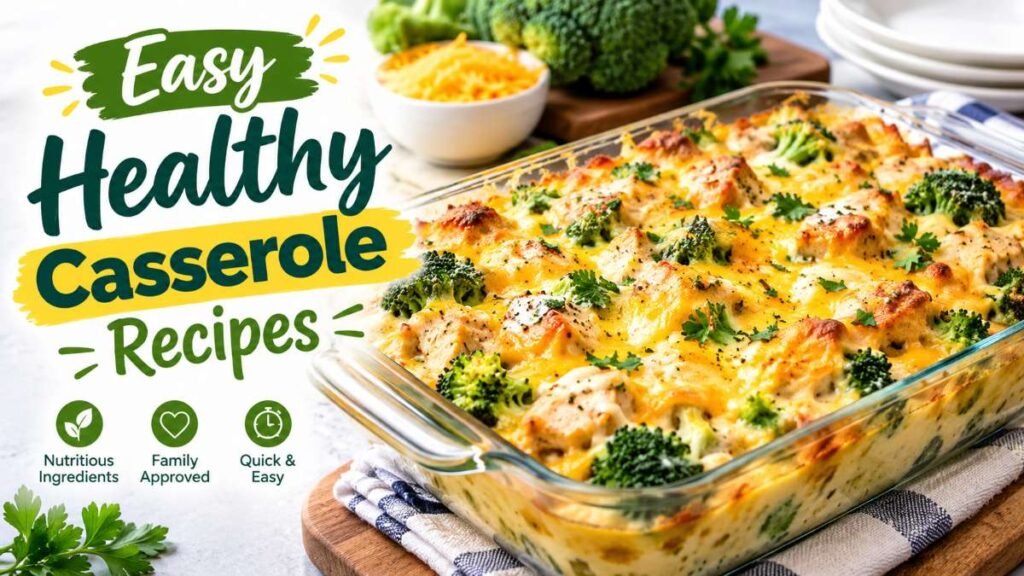
Most store-bought or traditional casserole recipes rely on canned condensed soups and heavy cream, leaving you weighed down after dinner. What if you could enjoy a rich, golden, comfort-food bake that tastes amazing while serving your health goals? With a few simple kitchen adjustments, you can assemble lighter, nutrient-dense meals that save precious time without sacrificing flavor. In this guide, you will learn smart ingredient swaps, explore seven delicious healthy casserole recipes, and streamline your weekly dinner routine.
Why Casseroles Work Great for Daily Meal Planning
Casseroles remain an essential staple in American kitchens because they combine convenience, affordability, and simple portion control into one dish. Baking your ingredients together allows rich flavors to develop without requiring constant attention at the stove.
By using lean proteins, whole grains, and fresh vegetables, baked dishes become balanced meals that provide steady energy. They are also ideal when building a routine around healthy foods to make at home or planning simple dinners for the whole family.
Average Nutrition Breakdown per Serving (4-5 oz Portion)
(Note: Nutrition values are approximate and can vary based on specific ingredients and brand formulations.)
- Calories: ~320–380 kcal
- Protein: 24–32g
- Total Fat: 9–14g
- Saturated Fat: 3–5g
- Carbohydrates: 28–38g
- Dietary Fiber: 5–8g
Combining whole vegetables, complex carbohydrates, and lean poultry or plant proteins makes it much easier to assemble balanced meals throughout the week, especially when paired with high-protein breakfast options for consistent daily nutrition.
How to Lighten Up Traditional Baked Casseroles
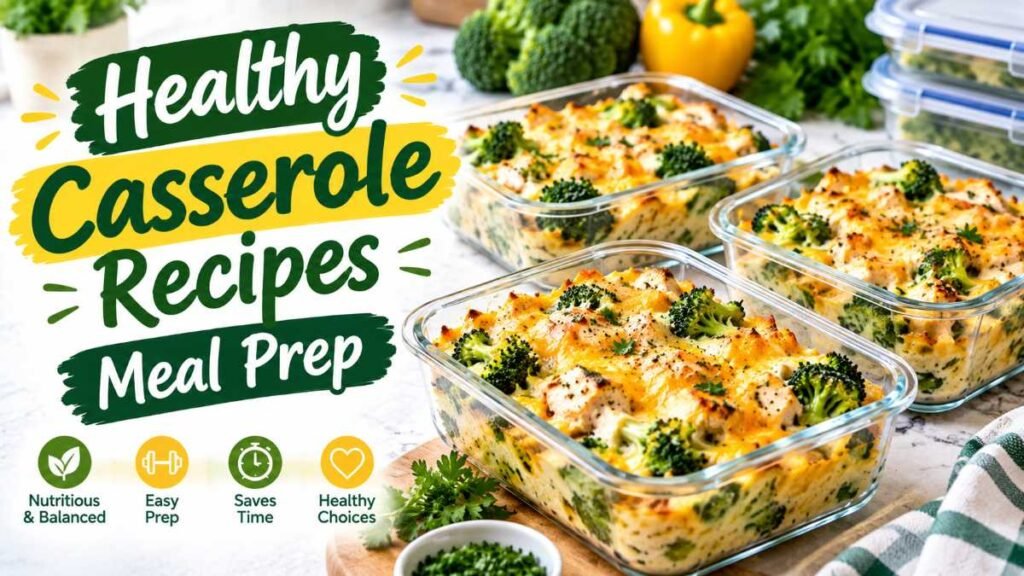
The primary reason traditional casseroles feel heavy is the heavy reliance on processed binders and excess dairy fat. You can easily maintain a creamy texture and rich flavor using simple whole-food substitutions:
- Swap Condensed Soups for Greek Yogurt or Milk Bases: Blend plain Greek yogurt, low-sodium broth, or a light unsweetened almond milk roux instead of canned cream of mushroom soup.
- Bulk Up with Nutrient-Dense Vegetables: Stir in cauliflower rice, diced bell peppers, baby spinach, or zucchini to add volume and texture without extra calories.
- Use Whole Grains or Vegetable Bases: Swap refined white pasta for brown rice, quinoa, or roasted spaghetti squash to boost dietary fiber.
- Layer Flavor with Herbs and Aromatics: Use minced garlic, sweet onions, smoked paprika, and fresh herbs to build deep flavor instead of relying strictly on extra salt or heavy cheese.
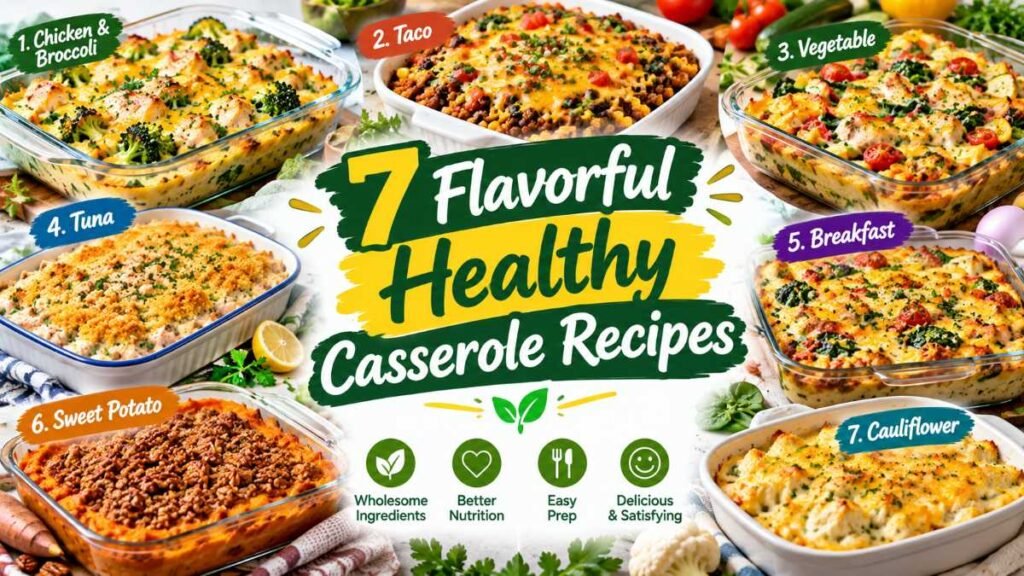
7 Flavorful Healthy Casserole Recipes
30-Minute Cheesy Chicken and Broccoli Bake
This lighter spin on a classic family favorite uses steamed broccoli florets, shredded chicken breast, and a light cheddar sauce made with reduced-fat cheese and unsweetened milk.
- Prep time: 10 minutes | Bake time: 20 minutes | Servings: 6
- Ingredients: 1.5 lbs cooked chicken breast (shredded), 4 cups fresh broccoli florets, 1 cup cooked brown rice, 1 cup sharp cheddar cheese (shredded), 1/2 cup low-sodium chicken broth, 1/2 cup plain Greek yogurt, garlic powder, salt, and black pepper.
- Instructions: Preheat your oven to 375°F (190°C). In a large bowl, whisk the Greek yogurt, chicken broth, garlic powder, salt, and pepper. Fold in the shredded chicken, steamed broccoli florets, and cooked brown rice. Transfer to a 9×13-inch baking dish, top with cheddar cheese, and bake for 20 minutes until bubbling.
Mediterranean Quinoa and Vegetable Casserole
Bursting with complete plant-based protein, roasted zucchini, sweet cherry tomatoes, and briny kalamata olives, this sun-drenched bake brings light coastal flavors straight to your dinner table. It holds its texture remarkably well in the fridge, making it a standout choice if you are following a structured mediterranean diet meal plan or prepping healthy workday lunches ahead of time.
Ingredient Component | Serving Portion | Practical Flavor & Culinary Role |
Fluffy Quinoa Base | 1 cup | Delivers complex carbohydrates and complete plant protein to keep you satisfied. |
Diced Zucchini & Bell Peppers | 1.5 cups | Adds crisp vegetable bulk, natural sweetness, and essential moisture. |
Ripe Tomatoes & Kalamata Olives | 1/2 cup | Offers a vibrant, savory tang to brighten up each layer of the casserole. |
Crumbled Feta Cheese | 1/4 cup | Provides a sharp, salty finish without needing heavy cream sauces. |
- Pro Prep Tip: For a complete Mediterranean-style feast during hot summer months, pair a slice of this warm bake with a crisp, chilled quinoa salad recipe to add refreshing crunch to your table.
Zesty Southwestern Ground Turkey Bake
Skip heavy packaged seasonings laden with excess sodium. This skillet-to-oven bake combines lean ground turkey, black beans, sweet corn, and fire-roasted tomatoes topped with melted pepper jack cheese.
- Cooking Tip: Stir in dark leafy greens like kale or spinach right before baking to add extra fiber and vibrant color. This dish pairs naturally with healthy carbohydrate foods like warm corn tortillas or baked tortilla chips.
Low-Carb Spaghetti Squash Italian Casserole
Using strands of roasted spaghetti squash instead of traditional pasta lowers the carbohydrate load while creating a delicious base for marinara sauce, lean ground beef or turkey, and fresh basil.
- Prep Tip: Roast your spaghetti squash halves in advance at 400°F for 35 minutes, scrape out the strands, and drain excess moisture before mixing with your tomato sauce and meat. For more simple sheet-based cooking techniques, check out these sheet pan dinner recipes.
Creamy Spinach and Artichoke Wild Rice Bake
Inspired by the classic party dip, this hearty vegetarian bake uses brown and wild rice, marinated artichoke hearts, fresh spinach, and a tangy cream cheese and Greek yogurt mixture.
- Flavor Profile: Nutty wild rice combined with savory garlic, wilted spinach, artichoke chunks, and a light layer of melted parmesan cheese on top.
- Pro Tip: Squeeze all excess liquid out of thawed frozen spinach or cooked fresh spinach to keep the rice bake firm and prevent soggy layers.
Greek-Style Meatball and Orzo Bake
Say goodbye to dry, heavy pasta bakes. Combining lean turkey or beef meatballs with whole wheat orzo, diced tomatoes, oregano, and crumbled feta creates built-in moisture pockets during baking. These healthy casserole recipes bring delicious variety to family tables.
- Baking Instructions: Mix cooked whole wheat orzo, diced tomatoes, and broth in your baking dish, nestle your cooked meatballs inside, top with feta, and bake at 375°F for 22–25 minutes. Pair it with a side of fresh, lightly seasoned veggies to round out your dinner table.
Slow-Cooker Enchilada Casserole
A set-and-forget option layered with corn tortillas, shredded chicken breast, red enchilada sauce, pinto beans, and green chilies. It is one of the most reliable healthy casserole recipes for busy weeknights when you want dinner ready when you walk through the door.
- Key Ingredients: Lean chicken breast, corn tortillas, low-sodium red enchilada sauce, pinto beans, diced green chilies, and scallions.
- Method: Layer enchilada sauce, corn tortilla halves, chicken, and beans in your slow cooker. Repeat layers, cover, and cook on LOW for 4 to 5 hours until tender.
Comparing Casserole Base Ingredients
Choosing the right grain or vegetable base helps you match the texture and nutritional profile to your family’s preferences.
Base Ingredient | Protein / Cup | Fiber / Cup | Best Culinary Application |
Cooked Quinoa | 8g | 5g | Mediterranean bakes, protein-dense vegetarian casseroles |
Cooked Brown Rice | 5g | 3.5g | Wholesome poultry bakes, Tex-Mex fiesta casseroles, and grain pans |
Spaghetti Squash | 1g | 2.2g | Low-carb Italian casseroles, meat sauce bakes |
Whole Wheat Pasta | 7g | 4.5g | Classic baked pasta dishes, cheesy skillet bakes, and rich veggie pans |
Storage, Food Safety, and Reheating Rules
Proper handling prevents foodborne illness and maintains optimal texture according to official food safety guidance from the Centers for Disease Control and Prevention (CDC).
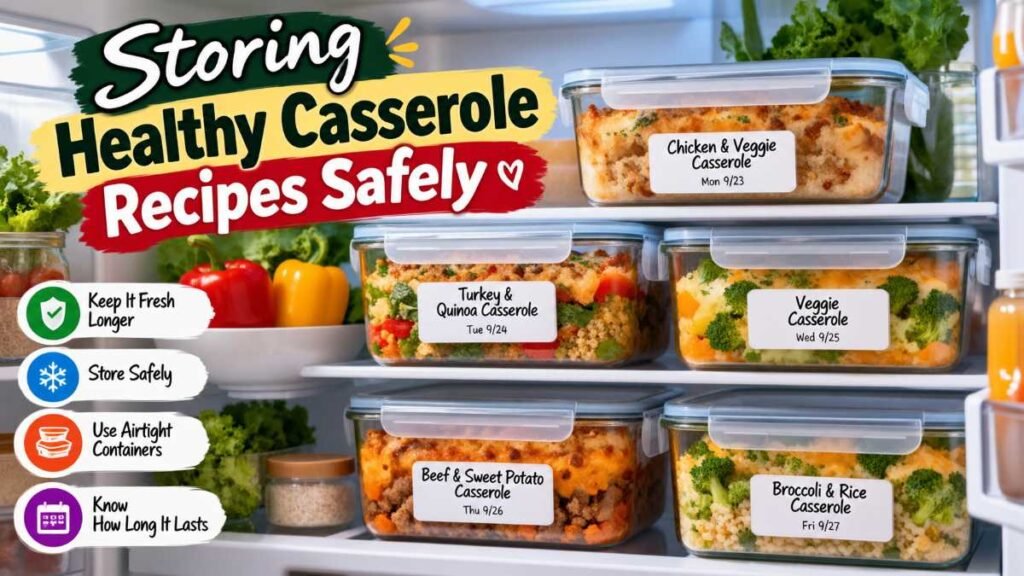
- Refrigeration: Transfer leftover casseroles into shallow, airtight containers and refrigerate them promptly within 2 hours of baking. Cooked baked dishes can generally be stored safely in the refrigerator for up to 3 to 4 days.
- Freezing: Assemble your casserole in a freezer-safe foil or glass dish, wrap tightly with plastic wrap and aluminum foil, and freeze before or after baking. Frozen casseroles maintain their best quality for up to 2 to 3 months according to the U.S. Department of Agriculture (USDA).
- Reheating: Reheat refrigerated individual portions in the microwave or cover the dish with foil and bake in an oven preheated to 350°F (175°C) until the internal temperature reaches a minimum of 165°F (74°C) as verified with a digital food thermometer. If you prep meals in advance, explore healthy meal prep ideas for lunch for further practical organization strategies.
Frequently Asked Questions
FAQ 1: Can I prep healthy casserole recipes ahead of time?
Yes! You can assemble most healthy casserole recipes 24 hours in advance, cover tightly, and chill. Add 5 to 10 extra baking minutes when cooking straight from the fridge.
FAQ 2: How do I prevent my casserole from turning watery?
Pre-cook watery veggies like zucchini and spinach, then drain thoroughly. Always ensure grains fully absorb liquid before baking your favorite healthy casserole recipes.
FAQ 3: What can I swap for canned condensed cream soups?
Blend plain Greek yogurt with low-sodium broth, garlic, and herbs. A light milk-and-olive-oil roux also creates a creamy base for healthy casserole recipes without excess fat.
FAQ 4: Can I freeze baked casserole leftovers safely?
Absolutely. Portion leftovers into airtight containers and freeze for up to 3 months. Thaw overnight in the fridge and reheat to 165°F for food safety.
FAQ 5: How do I reheat individual casserole portions without drying them out?
Cover your dish with foil and bake at 350°F until hot, or microwave with a damp paper towel on top to keep healthy casserole recipes moist and flavorful.
Final Thoughts & Actionable Next Steps
Mastering lighter baked meals does not require complicated cooking methods—just smart ingredient choices, pre-cooked vegetables, and proper temperature control. Trying these healthy casserole recipes this week is an easy way to enjoy comforting home-cooked dinners while keeping your prep work minimal.
Take Action Today: Choose two recipes from this list, add the fresh ingredients to your grocery run this week, and prep a pan on Sunday to simplify your busy weeknight dinners!

Authoritative Sources & References
- U.S. Department of Agriculture (USDA): Freezing and Food Safety Guidelines
- Centers for Disease Control and Prevention (CDC): Food Safety in the Kitchen
- Harvard T.H. Chan School of Public Health: The Nutrition Source – Healthy Eating Plate
Editorial & Food Safety Disclaimer
The information provided in this article is for educational and informational purposes only and should not replace professional medical or nutritional advice. Always cook casserole dishes containing meat or poultry to a minimum internal temperature of 165°F (74°C) as verified with a food thermometer.
About the Author
Dambar C.P.R. is the founder of FitLifePeak, where he shares practical recipes, meal-planning ideas, and evidence-informed food and wellness content to help readers build sustainable daily habits.