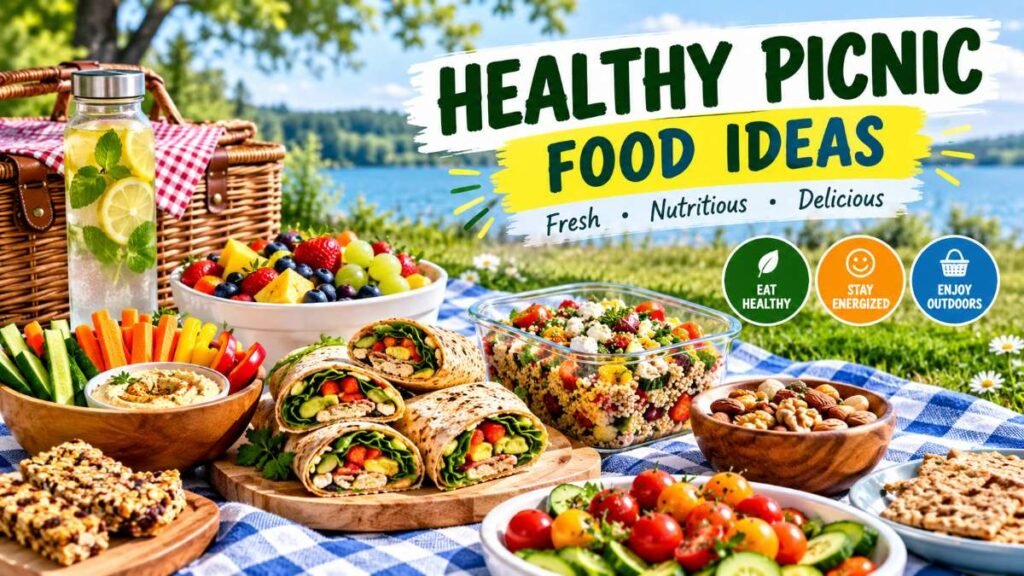
Packing food for a park trip sounds great until real-world weather hits. Direct sun, bumpy roads, and hours without a fridge often turn fresh meals into soggy bread and lukewarm dips. You don’t need a damp sandwich or melted snacks. The secret to great healthy picnic food ideas isn’t complicated nutrition rules—it’s choosing crisp, nutrient-dense ingredients that handle outdoor travel without losing flavor. Here is your practical, food-safe guide to packing fresh outdoor meals that stay delicious all day.
4 Rules for Fresh Outdoor Dining
Traditional picnic meals fail when they ignore moisture control and proper cooling. Packing outdoor lunches that stay fresh relies on practical food organization and temperature management rather than heavy dressings. Before filling your basket with healthy picnic food ideas, keep these basic prep rules in mind:
- Focus on Proper Temperature Control: While traditional mayonnaise dressings are often blamed for spoiling, ambient temperature is the real key factor. Keep all perishable cold dishes below 40°F in an insulated cooler.
- Keep Dressings Separate: Pack dressings, sauces, and juicy tomatoes in small, sealed containers. Toss them with your base right before serving to prevent soggy greens.
- Choose Sturdy Greens: Soft spinach and butter lettuce wilt quickly once dressed. Choose hearty bases like kale, red cabbage, shaved Brussels sprouts, or cooked quinoa that hold up well over long car rides.
- Pick Dense Proteins: Cold rotisserie chicken, hard-boiled eggs, chickpeas, and edamame keep their shape and texture exceptionally well when kept properly chilled in an insulated cooler.
Quick Picnic Snacks & Finger Foods
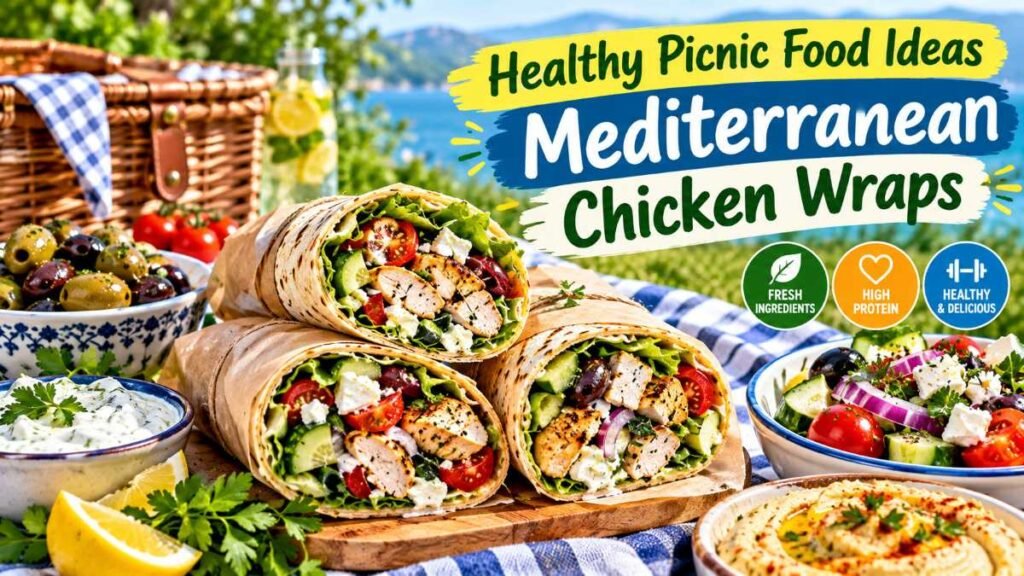
Finger foods keep outdoor gatherings casual and easy. Skip packaged chips and build your spread around hydrating, crisp options.
Snack Option | Prep Time | Main Ingredients | Storage & Serving Tip |
Rainbow Veggie Sticks | 10 mins | Bell peppers, cucumbers, radishes | Pack upright in a container with a damp paper towel to maintain crispness. |
Stuffed Mini Peppers | 15 mins | Mini sweet peppers, goat cheese, herbs | Keep chilled at or below 40°F until serving. Serve directly from the cooler. |
Crispy Roasted Chickpeas | 35 mins | Chickpeas, olive oil, sea salt | Store in an airtight dry container at room temperature for maximum crunch. |
Chilled Edamame Pods | 10 mins | Steamed edamame, sea salt, sesame oil | Pack in a sealed container directly on top of cooler ice packs. |
Pair fresh raw vegetables with homemade dips like hummus or garlic tahini. To keep dips cold without taking up extra space, freeze your dip container for 15 minutes before placing it in your insulated bag. If you are looking for simple options to build your spread, review these healthy snack ideas for adults.
Mess-Free Salads That Stay Crisp
The key to a reliable outdoor salad is choosing ingredients that absorb dressing without turning soft or watery.
Layer Position | Component | Ingredients / Example | Purpose |
Layer 1 (Bottom) | Dressings & Vinaigrettes | Olive oil, lemon juice, vinegar | Keeps moisture isolated at the base. |
Layer 2 (Middle) | Core Nutrient Mix | Garbanzos, cucumber bits, cooked grain base | Drinks up aromatic dressings gently while keeping its fresh snap intact. |
Layer 3 (Top) | Crisp Greens & Herbs | Kale, chopped cabbage, fresh herbs | Stays completely dry until shaken and served. |
Mediterranean Quinoa & Chickpea Bowl
- Prep Time: 15 mins
- Servings: 4
- Best Served: Cold or room temperature
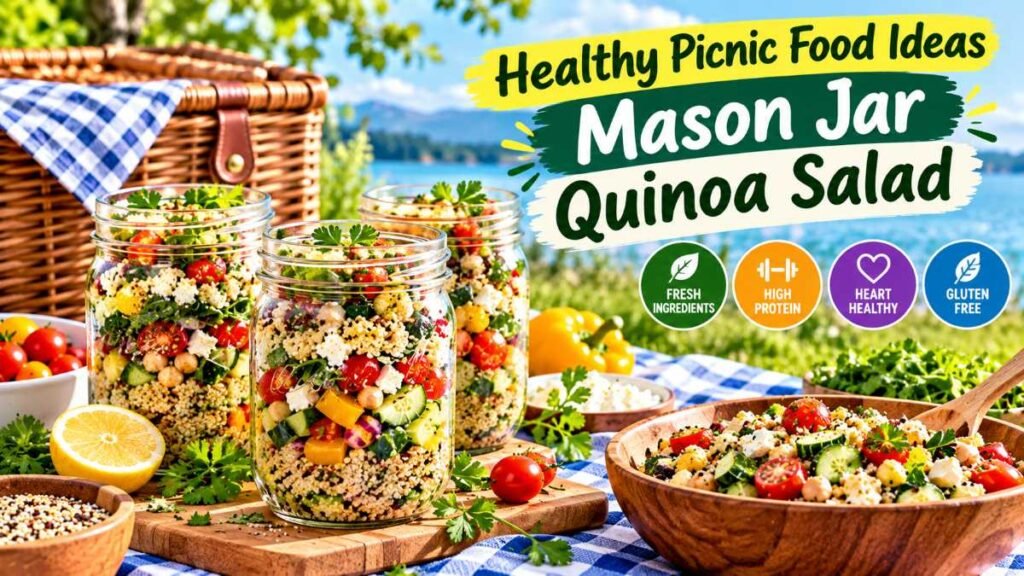
Quinoa is an ideal grain base for outdoor meals because it holds its structure without getting mushy. If you are exploring easy healthy picnic food ideas, combine cooked quinoa with rinsed chickpeas, diced Persian cucumbers, cherry tomatoes, Kalamata olives, and crumbled feta. Dress with extra virgin olive oil, fresh lemon juice, dried oregano, salt, and black pepper.
This bowl tastes better after sitting for an hour because the grains absorb the tangy dressing. If you like pre-making grain bowls for outdoor lunches, try this easy quinoa salad recipe.
Shaved Crunch Slaw with Sesame-Ginger Vinaigrette
- Prep Time: 15 mins
- Servings: 4–6
- Best Served: Chilled
Heavy, mayo-based slaws lose their crispness when exposed to heat. Instead, shred red and green cabbage, carrots, and sugar snap peas. Toss with rice vinegar, sesame oil, freshly grated ginger, and a touch of honey. Add roasted sunflower seeds or sliced almonds right before eating for extra texture.
High-Protein Mains That Hold Up
Skip processed deli meats high in sodium. These filling mains supply clean protein and travel well in insulated bags.
- Mason Jar Salad Layers: Pour vinaigrette at the bottom of a glass jar, then add hard items like chickpeas and diced cucumbers. Layer cooked quinoa or hard-boiled eggs in the middle, and place leafy greens at the top. Shake into a bowl when you’re ready to eat.
- Turkey & Avocado Whole-Grain Wraps: To stop sandwiches from getting soggy, place a barrier leaf of Romaine lettuce between the tortilla and moisture-rich sliced tomatoes. Mash avocado with lime juice to prevent browning, spread onto whole-wheat wraps, add turkey, and roll tightly.
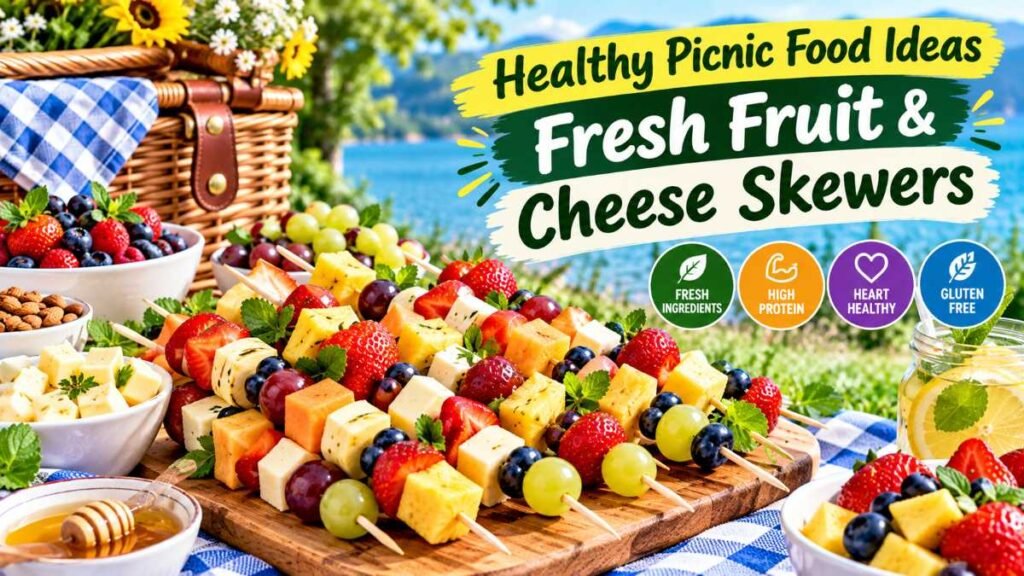
- Herbed Greek Yogurt Chicken Wraps: Swap traditional mayonnaise for plain Greek yogurt mixed with Dijon mustard, fresh dill, chopped celery, and halved grapes. Wrap in high-fiber flatbread for a balanced, portable lunch. For more prep-friendly protein options, check out these healthy chicken recipes.
Having a variety of healthy picnic food ideas on hand makes it simple to pack balanced lunches that keep everyone full throughout the day.
Hydrating Drinks & Simple Desserts
Warm outdoor weather requires extra hydration. Replace sugary sodas and artificial punch with natural options.
Ice-Cold Infused Waters
Store-bought juices are often loaded with added sugar. Prepare insulated flasks filled with ice water and natural flavor combos:
- Cucumber, fresh mint, and lime
- Strawberry, sliced lemon, and basil
- Watermelon chunks and rosemary
Transport-Friendly Fresh Fruit
Whole fruits like apples, plums, and oranges handle transport best during long drives. If you prefer pre-cut fruit, choose watermelon cubes, pineapple, or seedless grapes. Toss sliced apples in lemon juice to prevent browning. For sweet treats, bake oat-and-banana bars ahead of time or pack a handful of dark chocolate almonds. If you enjoy lighter sweet options, try these simple healthy dessert recipes.
Food Safety & Temperature Guidelines
According to safe handling guidelines from the U.S. Food and Drug Administration (FDA), perishable foods should not sit out in temperatures above 90°F (32°C) for more than one hour, or above 40°F (4°C) for more than two hours.
Temperature Threshold | Target Range | Safety Rule |
Cold Food Safety | 40°F (4°C) or below | Keep cold foods chilled with ice packs in insulated coolers. |
Hot Food Safety | 140°F (60°C) or above | Keep hot foods at temperature using thermal containers. |
Danger Zone | 40°F to 140°F | Rapid bacterial growth; limit outdoor exposure. |
Follow these practical steps to protect your food:
- Use Two Coolers: Pack drinks in one cooler and food in another. The drink cooler gets opened more often, letting warm air inside.
- Pack Solid Ice Gel Packs: Melted ice creates standing water that can ruin food packaging. Layer ice packs along the bottom and top of your food containers, as cold air flows downward.
- Verify Internal Temperatures: Cooler duration varies greatly depending on ice quantity, ambient outdoor heat, insulation quality, and how often the lid is opened. Always use a food thermometer to verify that perishable cold items remain safely at or below 40°F (4°C).
- Keep Coolers in the Shade: Always store your cooler under a tree or cover it with a light towel when direct sunlight is unavoidable.
For detailed home food safety protocols and storage duration charts, review the public resources provided by the USDA Food Safety and Inspection Service.
Budget-Friendly Outdoor Meals
Preparing nutritious outdoor lunches doesn’t require expensive specialty foods. These practical healthy picnic food ideas rely on everyday kitchen ingredients:
- Baked Veggie & Egg Muffins: Whisk eggs with chopped spinach, tomatoes, and a sprinkle of feta. Bake the egg mixture in a greased muffin pan, then refrigerate until firm. They are rich in protein, easy to store, and very affordable.
- Peanut Butter & Banana Wraps: Spread natural peanut butter over a whole-grain tortilla, lay a whole peeled banana inside, add chia seeds, and roll up. Slice into pinwheels for a fast energy boost.
- Cold Sesame Peanut Noodles: Toss cooked whole-wheat noodles with peanut butter, low-sodium soy sauce, garlic, and fresh cucumber slices. This dish holds up well at room temperature and is budget-friendly.
When packing meals for busy outdoor work breaks, review these flexible healthy lunch ideas for work.
8.3-Day Sample Outdoor Menu
Planning a multi-day weekend trip or back-to-back outdoor excursions? Use this simple menu structure to organize your grocery list and prep schedule.
Day | Morning Prep | Main Lunch | Side & Snack |
Day 1 | Greek-Style Lemon Quinoa & Chickpea Salad | Herb-Infused Yogurt Chicken Flatbread | Crispy Raw Vegetables with Creamy Tahini Dip |
Day 2 | Sliced Turkey & Lime-Avocado Whole Wheat Wraps | Cold Asian Peanut Noodle Bowl | Fresh Watermelon Slices & Salted Almonds |
Day 3 | Baked Spinach & Egg Mini Muffins | Layered Chickpea Mason Jar Salad | Salted Edamame Pods & Dark Chocolate |
If you want to spend less time cooking over the weekend, explore these quick no-cook meals to streamline your meal prep.
9.Frequently Asked Questions
1. What should I pack for a healthy picnic?
Focus on nutrient-dense options like quinoa bowls, turkey wraps, and fresh veggies. The secret to great healthy picnic food ideas is using crisp ingredients that won’t get soggy in transit.
2. What are the best non-soggy foods to bring to a picnic?
Sturdy greens (kale, cabbage), chickpea salads, and whole-wheat wraps hold up best outdoors. Packing dressings separately keeps these healthy picnic food ideas fresh all afternoon.
3. What are easy finger foods and snacks for an outdoor trip?
Raw veggie sticks, stuffed mini peppers, edamame pods, and roasted chickpeas are perfect. These portable healthy picnic food ideas offer mess-free, bite-sized crunch without needing silverware.
4. What are the most popular finger foods for outdoor appetizers?
Popular crowd-pleasers include hummus with cucumbers, pinwheels, and fruit skewers. Choosing low-moisture healthy picnic food ideas prevents melted messes under direct sunlight.
5. How do I keep picnic meals chilled and safe to eat?
Use an insulated cooler with solid gel ice packs and keep cold dishes at or below $40^\circ\text{F}$. Proper cooling ensures your healthy picnic food ideas remain food-safe and delicious all day.
10.Final Thoughts
Great outdoor dining comes down to simple prep work, sturdy ingredients, and smart cooler management. By replacing delicate greens with whole grains, crisp vegetables, and durable proteins, your outdoor lunches will stay fresh and full of flavor.
Choose two recipes from this guide, freeze your ice packs tonight, and plan your next lunch outdoors. Fresh air always makes good food taste better!
Official Reference Sources
Editorial & Food Safety Disclaimer
The information provided in this guide is for educational and informational purposes only and should not replace professional medical or nutritional advice. Always follow food safety procedures established by authorities like the USDA and FDA when preparing, transporting, and storing food items.
About the Author
Dambar C.P.R. is a writer, researcher, and the founder of FitLifePeak. He focuses on researching practical nutrition concepts, meal prep logistics, and daily wellness strategies. Every article on FitLifePeak goes through a thorough writing and fact-checking process grounded in official dietary and food safety guidelines.